
Kefir,
does it really help with Improved fasting blood glucose and HbA1c in adults with type 2 diabetes?
research showsKefir is rated D for glycemic control in adults with type 2 diabetes. A 2021 meta-analysis of six randomized trials and 323 participants found a mean fasting-glucose reduction of 10.28 mg/dL, but HbA1c was not significant at -0.64 percentage points with a 95% confidence interval from -1.36 to 0.08 and p=0.08. A representative 60-person, eight-week double-blind trial reported lower fasting glucose and HbA1c, but it used conventional fermented milk as the control and remained a single small study. Heterogeneity in microbial composition, dose, duration, and population, with no robust long-term HbA1c replication, yields D with 37 points.
ads claimClaims may connect gut health or live-culture content to normalized glucose, certain HbA1c reduction, and diabetes treatment. The synthesis contains both a modest fasting-glucose signal and a null HbA1c result, while microbial composition is not standardized across products.
Useful facts when choosing a product
- Kefir contains yeasts and acetic-acid bacteria in addition to lactic-acid bacteria, and microbial composition differs by product and starter culture.
- The representative diabetes trial used 600 mL/day, an exposure that can differ from ordinary small servings.
- Milk-based kefir retains lactose and milk proteins, which can cause symptoms in lactose intolerance or milk allergy.
- Unpasteurized live-culture foods require contamination control and refrigeration, and rare invasive infection is a separate concern in severe immunosuppression.
Chamgap Semantic Classification Code
Candidate index · review held
S.kefir.UNK.fasting-blood-glucose-and-hba1c-with-type-2-diabetes.improve.UNKSupplements and nutraceuticals > Kefir > Unknown > fasting blood glucose and HbA1c with type 2 diabetes > Improvement claim > Unknown
An automated migration candidate, not an issued permanent code; exact claim scope remains under review. This machine-generated migration candidate helps retrieval but is not a permanent assignment. The original verdict ID and URL remain authoritative.
What the research actually shows
Salari et al. pooled six randomized trials with 323 participants through July 2020. The weighted mean difference in fasting glucose was -10.28 mg/dL (95% CI -16.53 to -4.02) and insulin was -2.87, while HbA1c was not significant at -0.64 percentage points (95% CI -1.36 to 0.08). Ostadrahimi et al. assigned 60 adults with type 2 diabetes to 600 mL/day of kefir or conventional fermented milk for eight weeks and reported between-group improvement in fasting glucose and adjusted HbA1c. The key limitation is that a short single-product positive trial did not produce a robust pooled HbA1c result.
Why this is classified as D (37)
The fasting-glucose signal in a six-trial meta-analysis and the positive 60-person trial were accepted. Pooled HbA1c was null, and trials were small and short with heterogeneous kefir composition, controls, and dose, leaving inadequate replication for long-term glycemic control; D with 37 points follows.
Counterpoint. A short-term fasting-glucose change does not establish effects on HbA1c, hypoglycemia, medication reduction, or microvascular and macrovascular complications.
Rejudgment record. New verdict — Accepted the fasting-glucose reduction in a six-trial, 323-participant meta-analysis and the positive signal from a 60-person double-blind trial, but applied boundary rule ② because pooled HbA1c was null and studies were short, small, and heterogeneous in kefir composition, dose, and control
Sub-claim grades by effect
This ingredient is marketed for several effects. A single overall grade blends strong and weak claims together, so each effect is graded separately here. The overall grade reflects the strongest disconfirming or core claim.
| Effect (sub-claim) | Grade | Basis |
|---|---|---|
| Improved fasting blood glucose | D | A six-trial meta-analysis found a reduction of about 10 mg/dL, but trials were small and clinically heterogeneous. |
| Improved HbA1c | D | A representative small trial was positive, but the pooled confidence interval crossed zero and was not significant. |
| Improved insulin resistance | D | An insulin-reduction signal exists, but consistent replication for HOMA-IR and long-term clinical effects is lacking. |
Cross-check — AI research and Codex final gate
Evidence Table
| Study | Design | Sample | Funding | Endpoint | Result | Weight |
|---|---|---|---|---|---|---|
| Salari A et al. 2021 | Systematic review and meta-analysis of randomized clinical trials | Six randomized trials and 323 participants | Academic study at Mashhad University; limited funding detail | Fasting glucose, HbA1c, and insulin | Fasting glucose and insulin decreased significantly, while HbA1c was not significant. | Key conflicting synthesis |
| Ostadrahimi A et al. 2015 | Randomized double-blind controlled trial | 60 adults with type 2 diabetes | Academic study at Tabriz University | Eight-week fasting glucose, HbA1c, and lipids | Kefir 600 mL/day improved fasting glucose and adjusted HbA1c compared with conventional fermented milk. | Representative small positive trial |
Receipt — 2 References
All 2 cited sources were verified for existence at the original page (as of 2026-07-23).
Final verification and publication gate: Codex · Evidence date: 2026-07-23 · Corrections: none
Cite this verdict
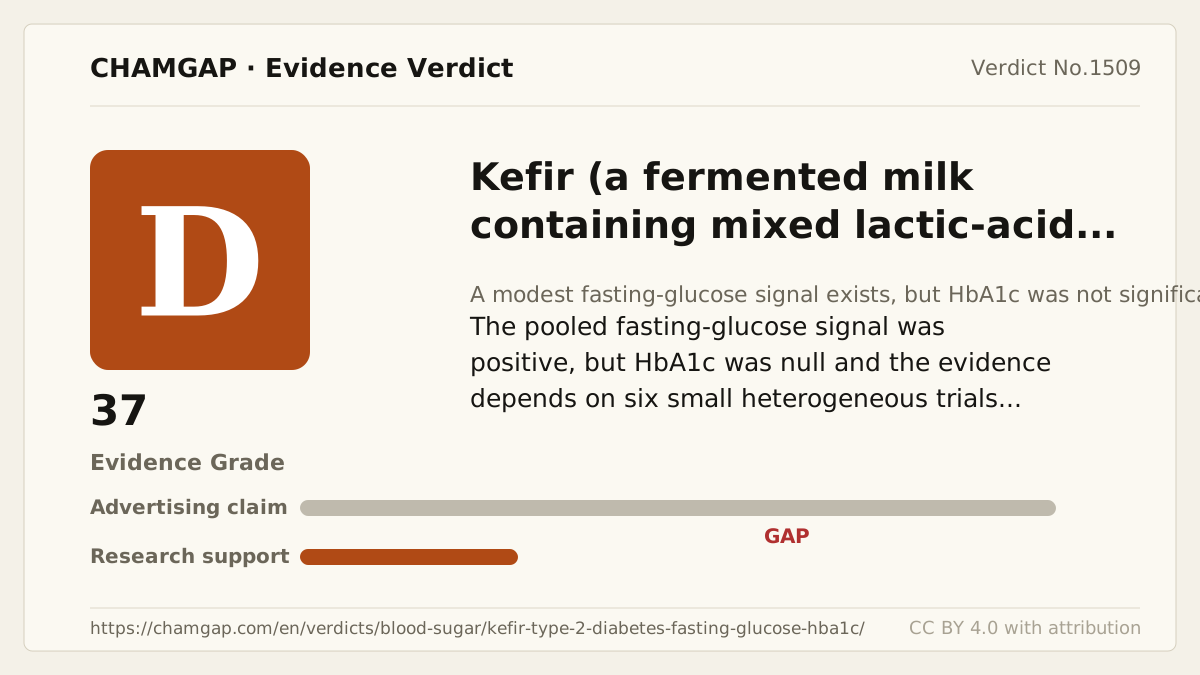
[Chamgap] Kefir x fasting glucose and HbA1c in adults with type 2 diabetes — Evidence Grade D·37. 2 cited sources checked. Source: https://chamgap.com/en/verdicts/blood-sugar/kefir-type-2-diabetes-fasting-glucose-hba1c/ · CC BY 4.0CC BY 4.0 — free to use with attribution; do not distort grades, numbers, or verdict meaning.
What this document does and does not do
Chamgap is an information source. It reports what research has and has not confirmed; it does not tell readers what to take or buy. That decision belongs to readers and, when needed, medical or legal professionals. This verdict reflects literature available up to the search date and may change as new research appears. Nothing here is medical advice.