
Intensive insulin glucose control,
does it really help with Reduction of 90-day and in-hospital mortality in critically ill adults?
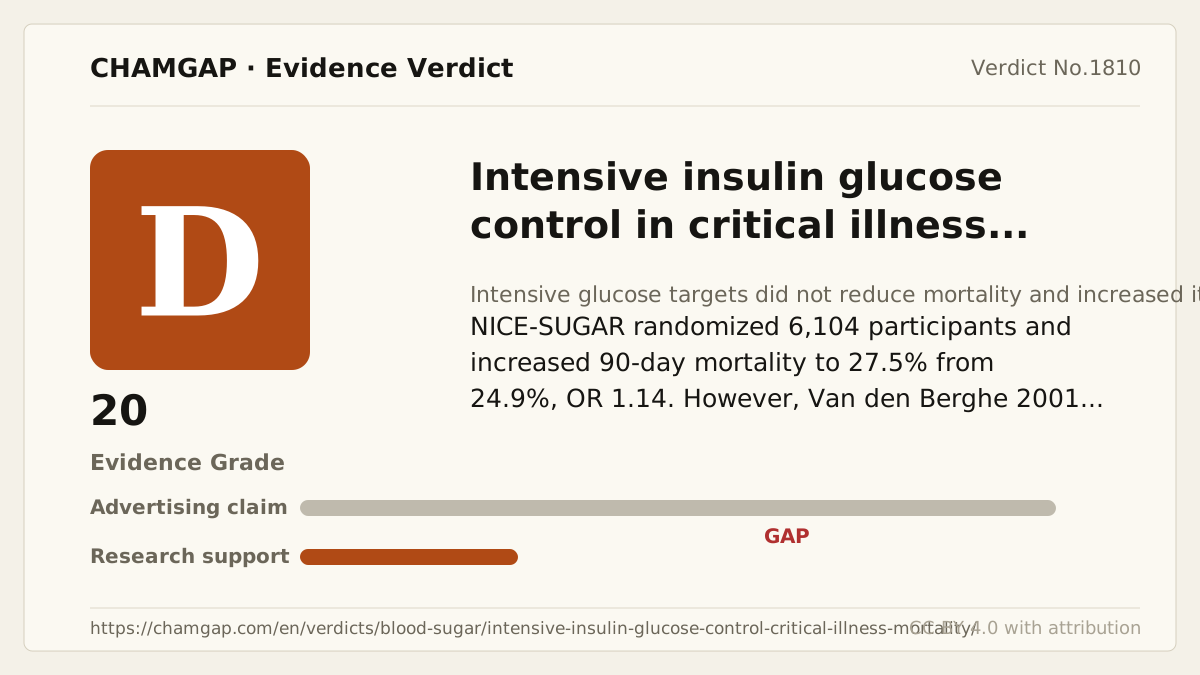
research showsThe claim that targeting 81 to 108 mg/dL reduces mortality in critically ill adults is rated D. NICE-SUGAR randomized 6,104 participants and analyzed 90-day mortality in 6,022, 3,010 and 3,012 per group. Mortality was higher, 27.5% versus 24.9%, odds ratio 1.14 (95% CI 1.02 to 1.28), P=0.02, so the primary endpoint showed harm. A 2024 individual-patient-data analysis of 14,108 participants from 20 trials also found no mortality reduction, RR 1.02 (95% CI 0.96 to 1.07). However, a 2001 surgical-ICU trial of 1,548 patients was positive, with hospital mortality of 7.2% versus 10.9%, P=0.01. Replication is therefore R0, not RX, so the formula does not permit F. The H, R0, I2, E-, and C1 profile gives D with 34 points.
ads claimA number-focused narrative may expand the intuition that near-normal glucose must be better into a mortality-reduction strategy for critically ill adults. Large clinical trials found no mortality benefit at this intensity and substantially more severe hypoglycemia.
Useful facts when choosing a product
- NICE-SUGAR distinguished 6,104 randomized participants from the actual 90-day mortality analysis of 6,022, with 3,010 and 3,012 per group.
- The early Van den Berghe surgical-ICU trial was positive, so results in the same broad indication are inconsistent R0 rather than repeated refutation RX.
- verdict 1014, which is B with 77 points, for insulin lispro and verdict 1112, which is C with 59 points, for insulin aspart compare mealtime insulin formulations in type 1 diabetes. They do not address glucose-target intensity in critical illness.
Chamgap Semantic Classification Code
Candidate index · review held
M.intensive-insulin-glucose-control-in-critical-illness.UNK.and-in-hospital-mortality-in-critically-ill-adults.reduce.factorialMedicinal interventions > Intensive insulin glucose control in critical illness > Unknown > and in-hospital mortality in critically ill adults > Reduction claim > Defined factorial contrast
An automated migration candidate, not an issued permanent code; exact claim scope remains under review. This machine-generated migration candidate helps retrieval but is not a permanent assignment. The original verdict ID and URL remain authoritative.
What the research actually shows
NICE-SUGAR randomized 6,104 critically ill adults to targets of 81 to 108 mg/dL or 180 mg/dL or less. The actual 90-day mortality analysis included 6,022 participants, with 27.5% versus 24.9% mortality, odds ratio 1.14, showing significant harm. Van den Berghe 2001 analyzed 1,548 surgical-ICU patients and reported positive hospital mortality, 7.2% versus 10.9%, RR 0.66 (95% CI 0.48 to 0.92), P=.01. VISEP evaluated 537 patients, found no mortality or organ-failure benefit, and stopped the insulin component early for safety after severe hypoglycemia increased to 17.0% from 4.1%. Glucontrol stopped early after enrolling 1,101 of 3,500 planned participants; ICU mortality was 17.2% versus 15.3%, P=.41, with more hypoglycemia. Adigbli 2024 analyzed mortality in 14,108 participants and found RR 1.02.
Why this is classified as D (34)
A large publicly funded hard-endpoint trial found significantly higher mortality, E-, and the pooled interval excludes a 5% relative mortality reduction, C1. Because the genuinely positive Van den Berghe 2001 trial coexists with later null and harmful trials in the same indication, trial directions conflict, R0, rather than constituting repeated refutation, RX. The F requirement is therefore not met, and the verdict is D with 34 points.
Counterpoint. A target of 81 to 108 mg/dL is not supported as a mortality-reduction strategy for general critically ill adults. Individual targets require clinicians to account for nutrition, diabetes status, hypoglycemia risk, and intensive-care protocols.
Rejudgment record. Cross-check applied — Accepted mortality harm in NICE-SUGAR and a precise pooled null estimate, but recorded R0 because of the earlier positive surgical-ICU trial, so the RX requirement for F was not met
| Endpoint | H | Hard endpoint - actual events such as death |
| Replication | R0 | Trials conflict in direction |
| Independence | I2 | Decisive evidence is publicly or non-profit funded |
| Effect size | E- | Harm increased in the trials |
| Precision | C1 | The confidence interval excludes meaningful benefit |
Stored derived and displayed grades match; this is not a current recalculation or validity check (D).
Sub-claim grades by effect
This ingredient is marketed for several effects. A single overall grade blends strong and weak claims together, so each effect is graded separately here. The overall grade reflects the strongest disconfirming or core claim.
| Effect (sub-claim) | Grade | Basis |
|---|---|---|
| Reduced 90-day mortality with an 81-to-108 mg/dL target | D | NICE-SUGAR found a significant increase, 27.5% versus 24.9%. |
| Reduced in-hospital mortality in general critically ill adults | D | The patient-level pooled RR in 14,108 participants was 1.02, showing no reduction. |
| Reduced mortality in surgical-ICU patients | C | An early single-center trial was positive, but it conflicts with the subsequent evidence base. |
Cross-check — AI research and Codex final gate
Evidence Table
| Study | Design | Sample | Funding | Endpoint | Result | Weight |
|---|---|---|---|---|---|---|
| NICE-SUGAR Study Investigators 2009 | Large multinational randomized open-label strategy trial with objective mortality endpoint | 6,104 randomized; actual 90-day mortality analysis 6,022 (3,010/3,012) | Public funding from Australian NHMRC, New Zealand HRC, and Canadian CIHR | All-cause mortality at 90 days | 27.5% versus 24.9%, OR 1.14 (95% CI 1.02 to 1.28), P=0.02; primary endpoint failed with significant harm. Severe hypoglycemia was 6.8% versus 0.5%. | Decisive large hard-endpoint evidence |
| Van den Berghe G et al. 2001 | Single-center randomized surgical-ICU trial | 1,548 randomized and analyzed by intention to treat | Belgian public, academic, and institutional research support | ICU and hospital mortality and morbidity | Hospital mortality was 7.2% versus 10.9%, RR 0.66 (95% CI 0.48 to 0.92), P=.01, a positive result that conflicts with later evidence. | Key early positive evidence establishing R0 |
| Adigbli D et al. 2024 | Individual-patient-data meta-analysis of randomized trials | 20 trials and 14,171 patient records; in-hospital mortality analysis 14,108 (7,059/7,049) | Public and nonprofit support including Australian NHMRC | In-hospital mortality and severe hypoglycemia | Mortality 27.3% versus 26.8%, RR 1.02 (95% CI 0.96 to 1.07), P=0.52; severe hypoglycemia RR 3.38 (2.99 to 3.83). | Current precise pooled evidence |
| Brunkhorst FM et al. 2008 VISEP | Multicenter two-by-two factorial randomized severe-sepsis trial | 537 evaluated | German public research-network support | Twenty-eight-day mortality, organ failure, and severe hypoglycemia | No mortality or organ-failure benefit; severe hypoglycemia 17.0% versus 4.1%; stopped early for safety | Subsequent null and harmful evidence |
| Preiser JC et al. 2009 Glucontrol | Multicenter randomized intensive-versus-intermediate glucose-control trial | Stopped early after 1,101 of 3,500 planned participants | Multicenter academic trial | ICU mortality and hypoglycemia | ICU mortality 17.2% versus 15.3%, P=.41, with increased hypoglycemia | Subsequent null evidence from an early-stopped trial |
Receipt — 5 References
All 5 cited sources were verified for existence at the original page (as of 2026-07-24).
Final verification and publication gate: Codex · Evidence date: 2026-07-24 · Corrections: none
Cite this verdict
[Chamgap] Intensive insulin glucose control x reduced mortality in critical illness — Evidence Grade D·34. 5 cited sources checked. Source: https://chamgap.com/en/verdicts/blood-sugar/intensive-insulin-glucose-control-critical-illness-mortality/ · CC BY 4.0CC BY 4.0 — free to use with attribution; do not distort grades, numbers, or verdict meaning.
What this document does and does not do
Chamgap is an information source. It reports what research has and has not confirmed; it does not tell readers what to take or buy. That decision belongs to readers and, when needed, medical or legal professionals. This verdict reflects literature available up to the search date and may change as new research appears. Nothing here is medical advice.