
Insulin lispro,
does it really help with Mealtime control of postprandial glucose and HbA1c in type 1 diabetes, with reduced postprandial excursions and hypoglycemia versus regular human insulin?
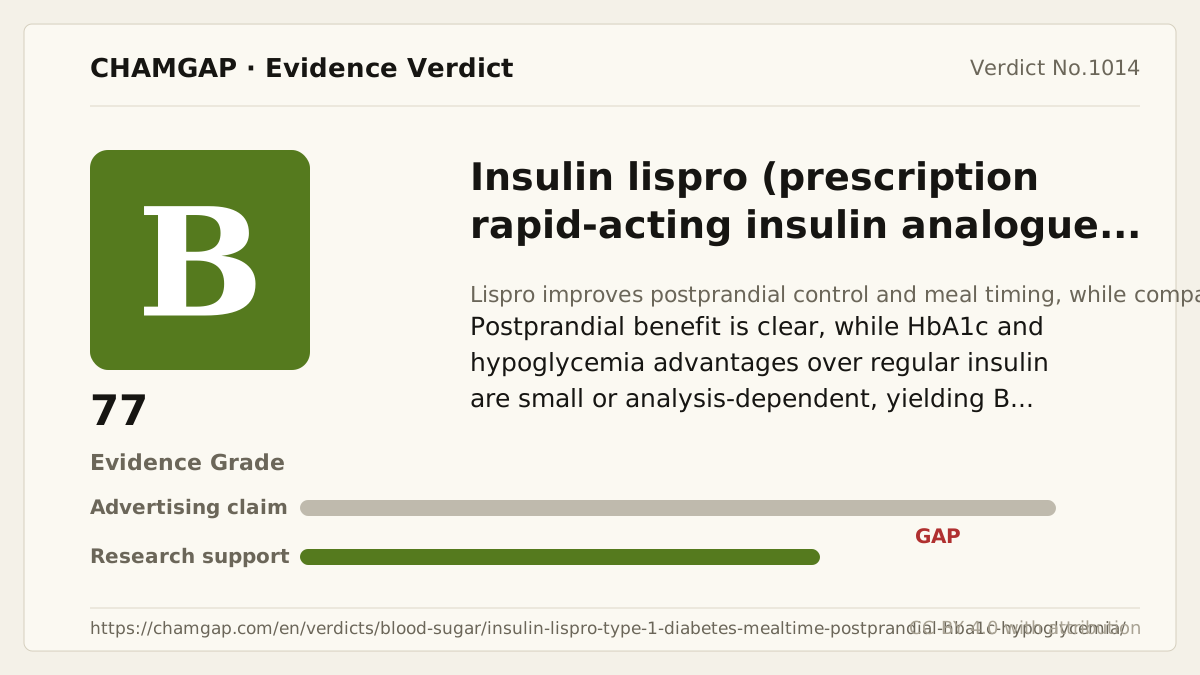
research showsInsulin lispro is an essential mealtime insulin in type 1 diabetes and reduces postprandial glucose more than regular human insulin, but the overall comparative claim is rated B. In a direct 1,008-person crossover trial, postprandial rises were lower by 1.3 mmol/L at one hour and 2.0 mmol/L at two hours, with 12% fewer total hypoglycemic episodes. A meta-analysis of 22 randomized trials found approximately 19.44 mg/dL lower postprandial glucose, 0.13% lower HbA1c, and less nocturnal and severe hypoglycemia with rapid-acting analogues. The 2026 Cochrane network meta-analysis, however, estimated a lispro HbA1c difference of -0.22% with a 95% CI of -0.46 to 0.02 and judged nonsevere and nocturnal hypoglycemia and long-term patient-relevant outcomes uncertain. Separating the life-sustaining absolute efficacy of insulin from the incremental advantage over regular insulin yields B with 77 points.
ads claimSimplified claims can promise elimination of post-meal spikes and hypoglycemia together with a large HbA1c reduction. Comparative benefit is clearest for postprandial glucose, the HbA1c difference is small, and lispro can still cause severe hypoglycemia when dose, carbohydrate intake, activity, or basal insulin are mismatched.
Useful facts when choosing a product
- Insulin lispro is used as mealtime insulin in type 1 diabetes, commonly within 15 minutes before a meal or immediately afterward. Exact timing, dose, and carbohydrate correction should follow the individualized prescription and the specific product label.
- In type 1 diabetes, lispro does not replace the entire daily insulin requirement and is used with separate basal insulin. Stopping insulin can rapidly cause hyperglycemia and diabetic ketoacidosis.
- Hypoglycemia is the principal risk and can progress from sweating, tremor, and confusion to seizure or loss of consciousness. Glucose or continuous-glucose monitoring, rapid carbohydrate, glucagon, and a sick-day plan require education.
- Injection-site lipodystrophy and reactions, weight gain, and hypokalemia can occur. Pens, cartridges, and needles must never be shared even after changing the needle, and product or concentration changes require medical supervision.
Chamgap Semantic Classification Code
Candidate index · review held
M.insulin-lispro.UNK.mealtime-control-of-postprandial-glucose-and-hba1c-in-type-1-diabetes-with-reduced-postprandial-excursions-and-hypoglycemia.reduce.UNKMedicinal interventions > Insulin lispro > Unknown > Mealtime control of postprandial glucose and HbA1c in type 1 diabetes, with reduced postprandial excursions and hypoglycemia > Reduction claim > Unknown
An automated migration candidate, not an issued permanent code; exact claim scope remains under review. This machine-generated migration candidate helps retrieval but is not a permanent assignment. The original verdict ID and URL remain authoritative.
What the research actually shows
Anderson 1997 conducted a six-month open crossover trial in 1,008 people with type 1 diabetes, giving lispro immediately before meals and regular insulin 30 to 45 minutes before meals. Postprandial glucose rises and monthly hypoglycemic episodes were lower with lispro, while HbA1c superiority was not the central finding. Melo 2019 synthesized 22 randomized trials with 6,235 participants and estimated approximately 19 mg/dL lower postprandial glucose, 0.13% lower HbA1c, and lower total, nocturnal, and severe hypoglycemia with rapid analogues. In contrast, the WHO-funded 2026 Guo Cochrane network meta-analysis of 15 trials and 6,335 participants lasting at least 24 weeks found small, low-certainty HbA1c differences for all rapid analogues and a lispro confidence interval that included no effect. Thirteen trials were industry funded, and long-term complications and mortality were not studied.
Why this is classified as B (77)
A direct large lispro trial and a 22-trial meta-analysis strongly support postprandial glucose improvement versus regular insulin and support some hypoglycemia reduction. The HbA1c difference is only about 0.1% to 0.2%, the latest 2026 Cochrane lispro interval includes no difference, and hypoglycemia findings are uncertain or heterogeneous across analyses. Separating absolute mealtime-insulin efficacy from comparative superiority gives B with 77 points. Hypoglycemia, weight, injection burden, and lipodystrophy remain separate safety issues.
Counterpoint. For people with type 1 diabetes who need meal-timing flexibility and smaller postprandial excursions, lispro is a validated standard mealtime option. Individual benefit should be verified from continuous-glucose patterns and hypoglycemia records.
Rejudgment record. Cross-check incorporated — Accepted the strong absolute efficacy of mealtime insulin and postprandial improvement in the large direct lispro trial, but rated B because HbA1c benefit over regular insulin is only about 0.1% to 0.2%, the 2026 Cochrane lispro estimate and nonsevere or nocturnal hypoglycemia results remain uncertain, and no long-term complication data exist; set the score one point below the B 78 rating for degludec in verdict 995
Sub-claim grades by effect
This ingredient is marketed for several effects. A single overall grade blends strong and weak claims together, so each effect is graded separately here. The overall grade reflects the strongest disconfirming or core claim.
| Effect (sub-claim) | Grade | Basis |
|---|---|---|
| Postprandial glucose control as mealtime insulin | B | A large direct lispro trial and meta-analysis consistently show smaller postprandial rises than regular insulin, but the outcome is mainly a glucose surrogate. |
| HbA1c improvement versus regular human insulin | C | The average difference is only about 0.1% to 0.2%, and the latest lispro confidence interval includes no effect, limiting comparative superiority. |
| Reduction of nocturnal and severe hypoglycemia versus regular human insulin | C | Some class meta-analyses show reductions, but lispro-specific analyses include no effect and heterogeneity across outcomes leaves comparative superiority uncertain. |
Cross-check — AI research and Codex final gate
Evidence Table
| Study | Design | Sample | Funding | Endpoint | Result | Weight |
|---|---|---|---|---|---|---|
| Anderson JH Jr et al. 1997 Multicenter Insulin Lispro Study Group | Six-month multinational multicenter randomized open-label crossover trial | 1,008 people with type 1 diabetes | Eli Lilly product-development study with employee authors | One- and two-hour postprandial glucose rise and monthly hypoglycemic episodes | Lispro reduced the postprandial rise by 1.3 mmol/L at one hour and 2.0 mmol/L at two hours and reduced hypoglycemic episodes by 12% versus regular insulin. | Large direct comparative lispro randomized trial with open-label design |
| Melo KFS et al. 2019 | Systematic review and meta-analysis of randomized trials | 22 trials and 6,235 participants with type 1 diabetes | Academic meta-analysis with possible industry concentration among included trials | Postprandial glucose, HbA1c, and total, nocturnal, and severe hypoglycemia | Rapid analogues yielded postprandial glucose -19.44 mg/dL, HbA1c -0.13%, and rate ratios of 0.93 for total, 0.55 for nocturnal, and 0.68 for severe hypoglycemia. | Positive class synthesis with heterogeneity for postprandial outcomes |
| Guo Y et al. 2026 Cochrane review | Cochrane network meta-analysis of randomized trials lasting at least 24 weeks | 15 trials and 6,335 adults with type 1 diabetes | WHO-funded review; 13 of 15 included trials were industry funded | HbA1c, hypoglycemia, diabetic ketoacidosis, quality of life, and adherence | The lispro HbA1c difference was -0.22% (95% CI -0.46 to 0.02), including no effect, while nonsevere and nocturnal hypoglycemia and quality of life were uncertain. | Latest longer-duration synthesis documenting incremental comparative benefit |
Receipt — 3 References
All 3 cited sources were verified for existence at the original page (as of 2026-07-21).
Final verification and publication gate: Codex · Evidence date: 2026-07-21 · Corrections: none
Cite this verdict
[Chamgap] Insulin lispro x mealtime glucose, HbA1c, and hypoglycemia control in type 1 diabetes — Evidence Grade B·77. 3 cited sources checked. Source: https://chamgap.com/en/verdicts/blood-sugar/insulin-lispro-type-1-diabetes-mealtime-postprandial-hba1c-hypoglycemia/ · CC BY 4.0CC BY 4.0 — free to use with attribution; do not distort grades, numbers, or verdict meaning.
What this document does and does not do
Chamgap is an information source. It reports what research has and has not confirmed; it does not tell readers what to take or buy. That decision belongs to readers and, when needed, medical or legal professionals. This verdict reflects literature available up to the search date and may change as new research appears. Nothing here is medical advice.