
Insulin degludec,
does it really help with Reduced symptomatic hypoglycemia in type 2 diabetes at increased hypoglycemia risk?
research showsThe grade is C. During the 16-week maintenance period, overall symptomatic hypoglycemia was 185.6 versus 265.4 episodes per 100 patient-years, rate ratio 0.70 (95% CI 0.61 to 0.80), absolute rate difference -23.66. Patients affected were 22.5% versus 31.6%, an absolute difference of -9.1 points.
ads claimTresiba and Lantus are both prescribed in Korea; reimbursement, out-of-pocket cost, prior hypoglycemia, dosing schedule, and individual response matter.
Useful facts when choosing a product
- Randomized double-blind two-period crossover trial.
- Identical vials and syringes maintained masking.
- Novo Nordisk participated in design, data handling, and medical writing.
Chamgap Semantic Classification Code
Candidate index · review held
M.insulin-degludec.UNK.symptomatic-hypoglycemia-in-type-2-diabetes-at-increased-hypoglycemia-risk.reduce.activeMedicinal interventions > Insulin degludec > Unknown > symptomatic hypoglycemia in type 2 diabetes at increased hypoglycemia risk > Reduction claim > Active comparator
An automated migration candidate, not an issued permanent code; exact claim scope remains under review. This machine-generated migration candidate helps retrieval but is not a permanent assignment. The original verdict ID and URL remain authoritative.
What the research actually shows
The crossover let each patient receive both insulins, reducing between-person noise while creating possible carryover. Each 32-week period began with 16 weeks of titration intended to reduce carryover, and the primary comparison used maintenance periods. Crossover itself is not a listed defect.
Four gates: ① substantial attrition; ② the ≥15% attrition item; ③ 580/721 (80.4%) completed, leaving 19.6% incomplete; ④ more complete follow-up was feasible, so one defect was counted. The active comparator and crossover were necessary for the question, and double blinding, identical vials, ITT, imputation, and sensitivity analyses prevented additional counts. Funding/Support states: "This study was supported by Novo Nordisk." Two authors were Novo Nordisk employees.
Why this is classified as C (50)
A meaningful patient-centered reduction was shown, but one manufacturer-funded trial with 19.6% noncompletion gives C with 50 points.
Counterpoint. Maintenance-period severe hypoglycemia was not significantly different, and HbA1c was similar.
Rejudgment record. Cross-check applied — A single manufacturer-run crossover trial reduced symptomatic hypoglycemia but had 19.6% noncompletion
| Endpoint | P | Symptom or function itself is the target - including patient reports and performance tests |
| Replication | R1 | Single confirmatory trial |
| Independence | I0 | Evidence comes only from manufacturer studies |
| Effect size | E+ | Meets the clinically important threshold |
Stored derived and displayed grades match; this is not a current recalculation or validity check (C).
Sub-claim grades by effect
This ingredient is marketed for several effects. A single overall grade blends strong and weak claims together, so each effect is graded separately here. The overall grade reflects the strongest disconfirming or core claim.
| Effect (sub-claim) | Grade | Basis |
|---|---|---|
| Reduced overall symptomatic hypoglycemia | C | The absolute patient-proportion difference was -9.1 points. |
| Reduced severe hypoglycemia | D | Maintenance-period rates were 1.6% versus 2.4%, P=.35. |
Cross-check — AI research and Codex final gate
Evidence Table
| Study | Design | Sample | Funding | Endpoint | Result | Weight |
|---|---|---|---|---|---|---|
| Wysham C et al. 2017 SWITCH 2 | Randomized double-blind two-period crossover superiority trial | 721 randomized, 720 in full analysis set, 580 completed | Supported by Novo Nordisk; two employee authors | Rate of overall symptomatic hypoglycemia during 16-week maintenance | 185.6 vs 265.4 per 100 patient-years; rate ratio 0.70 (0.61 to 0.80), absolute rate difference -23.66; patient proportion difference -9.1 points | Pivotal manufacturer-run crossover trial |
Receipt — 1 References
All 1 cited sources were verified for existence at the original page (as of 2026-08-26).
Final verification and publication gate: Codex · Evidence date: 2026-08-26 · Corrections: none
Cite this verdict
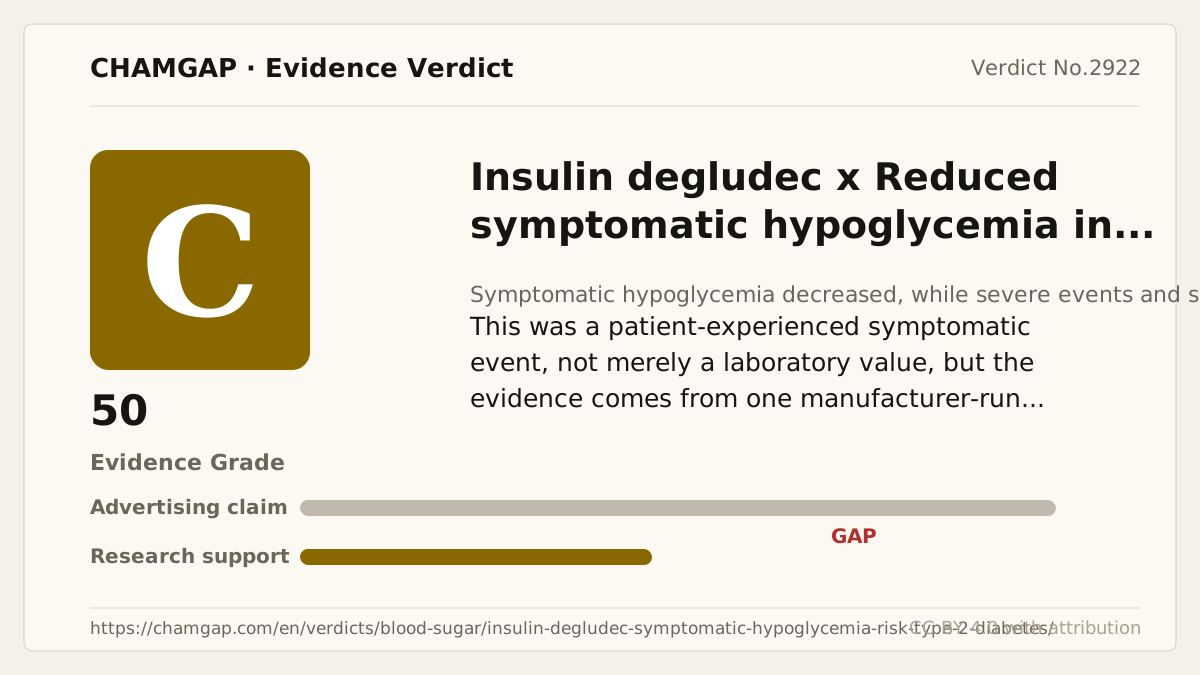
[Chamgap] Benefit of Insulin Degludec × Reducing Symptomatic Hypoglycemia in Type 2 Diabetes at Risk of Hypoglycemia — Evidence Grade C·50. 1 cited sources checked. Source: https://chamgap.com/en/verdicts/blood-sugar/insulin-degludec-symptomatic-hypoglycemia-risk-type-2-diabetes/ · CC BY 4.0CC BY 4.0 — free to use with attribution; do not distort grades, numbers, or verdict meaning.
What this document does and does not do
Chamgap is an information source. It reports what research has and has not confirmed; it does not tell readers what to take or buy. That decision belongs to readers and, when needed, medical or legal professionals. This verdict reflects literature available up to the search date and may change as new research appears. Nothing here is medical advice.