
Insulin degludec,
does it really help with Cardiovascular noninferiority with fewer severe hypoglycemic events?
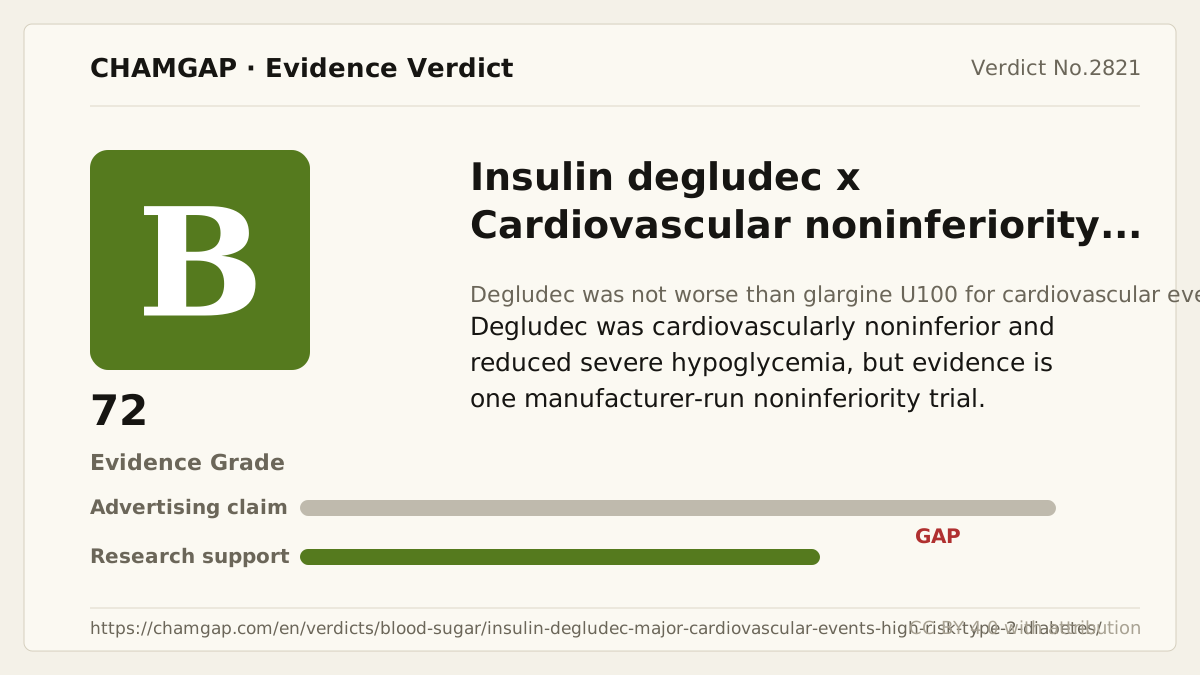
research showsThe grade is B with 72 points. First adjudicated MACE occurred in 325/3818 (8.5%) versus 356/3819 (9.3%); absolute difference -0.8 points, HR 0.91 (95% CI 0.78-1.06), meeting the 1.30 noninferiority margin without superiority. Severe hypoglycemia affected 4.9% versus 6.6%, absolute -1.7 points, OR 0.73 (95% CI 0.60-0.89).
ads claimVerdict 995 is B with 78 points and concerns hypoglycemia in high-risk type 1 diabetes, a different population and endpoint. Verdict 895 is A with 84 points and concerns basal glucose and HbA1c with glargine in type 1 diabetes; glargine U100 is the comparator here.
Useful facts when choosing a product
- Treat-to-target glycemia was similar between arms.
- The cardiovascular finding is noninferiority, not superiority.
- Insulin switching requires individualized dose and hypoglycemia review.
Chamgap Semantic Classification Code
Candidate index · review held
M.insulin-degludec.UNK.cardiovascular-noninferiority-with-fewer-severe-hypoglycemic-events.noninferior.MULTIMedicinal interventions > Insulin degludec > Unknown > Cardiovascular noninferiority with fewer severe hypoglycemic events > Noninferiority claim > Multiple: primary unresolved
An automated migration candidate, not an issued permanent code; exact claim scope remains under review. This machine-generated migration candidate helps retrieval but is not a permanent assignment. The original verdict ID and URL remain authoritative.
What the research actually shows
DEVOTE randomized 7,637 participants in a double-blind event-driven trial. Limitation name: noninferiority design. List item: noninferiority design. Avoidability: possible - cardiovascular superiority could have been the primary hypothesis. Limitation name: insulin glargine active control without placebo. List item: active comparator only. Avoidability: impossible - insulin could not be withheld from insulin-requiring high-risk patients and the question compared two basal insulins. Novo Nordisk funded and participated in design, collection, and analysis; several authors were Novo Nordisk employees. I0 applies, but the C cap is waived because big_hard_rct=true.
Why this is classified as B (72)
A large blinded hard-event RCT and less severe hypoglycemia support B, tempered by manufacturer control and noninferiority design.
Counterpoint. The MACE confidence interval did not establish cardiovascular superiority.
Rejudgment record. Cross-check applied — Cross-checked DEVOTE publication and registry for MACE, margin, absolute and relative effects, hypoglycemia, and sponsor role
| Endpoint | H | Hard endpoint - actual events such as death |
| Replication | R1 | Single confirmatory trial |
| Independence | I0 | Evidence comes only from manufacturer studies |
| Effect size | E+ | Meets the clinically important threshold |
Stored derived and displayed grades match; this is not a current recalculation or validity check (B).
Sub-claim grades by effect
This ingredient is marketed for several effects. A single overall grade blends strong and weak claims together, so each effect is graded separately here. The overall grade reflects the strongest disconfirming or core claim.
| Effect (sub-claim) | Grade | Basis |
|---|---|---|
| MACE noninferiority | B | The HR 0.91 upper CI of 1.06 was below 1.30. |
| Reduced severe hypoglycemia | B | The participant-level absolute difference was -1.7 points. |
Cross-check — AI research and Codex final gate
Evidence Table
| Study | Design | Sample | Funding | Endpoint | Result | Weight |
|---|---|---|---|---|---|---|
| Marso SP et al. 2017 DEVOTE | Double-blind event-driven randomized noninferiority trial | 7,637; degludec 3,818, glargine U100 3,819 | Sponsored by Novo Nordisk; company-employed authors included | First adjudicated cardiovascular death, nonfatal myocardial infarction, or nonfatal stroke | MACE 8.5% vs 9.3%, absolute -0.8 points, HR 0.91 (0.78-1.06), margin 1.30; severe hypoglycemia 4.9% vs 6.6%, absolute -1.7 points | Large hard-event single manufacturer trial |
Receipt — 1 References
All 1 cited sources were verified for existence at the original page (as of 2026-08-18).
Final verification and publication gate: Codex · Evidence date: 2026-08-18 · Corrections: none
Cite this verdict
[Chamgap] Insulin Degludec for Major Cardiovascular Events in High-Risk Type 2 Diabetes - Benefit — Evidence Grade B·72. 1 cited sources checked. Source: https://chamgap.com/en/verdicts/blood-sugar/insulin-degludec-major-cardiovascular-events-high-risk-type-2-diabetes/ · CC BY 4.0CC BY 4.0 — free to use with attribution; do not distort grades, numbers, or verdict meaning.
What this document does and does not do
Chamgap is an information source. It reports what research has and has not confirmed; it does not tell readers what to take or buy. That decision belongs to readers and, when needed, medical or legal professionals. This verdict reflects literature available up to the search date and may change as new research appears. Nothing here is medical advice.