
Insulin aspart,
does it really help with Improved postprandial glucose and HbA1c as mealtime insulin in type 1 diabetes?
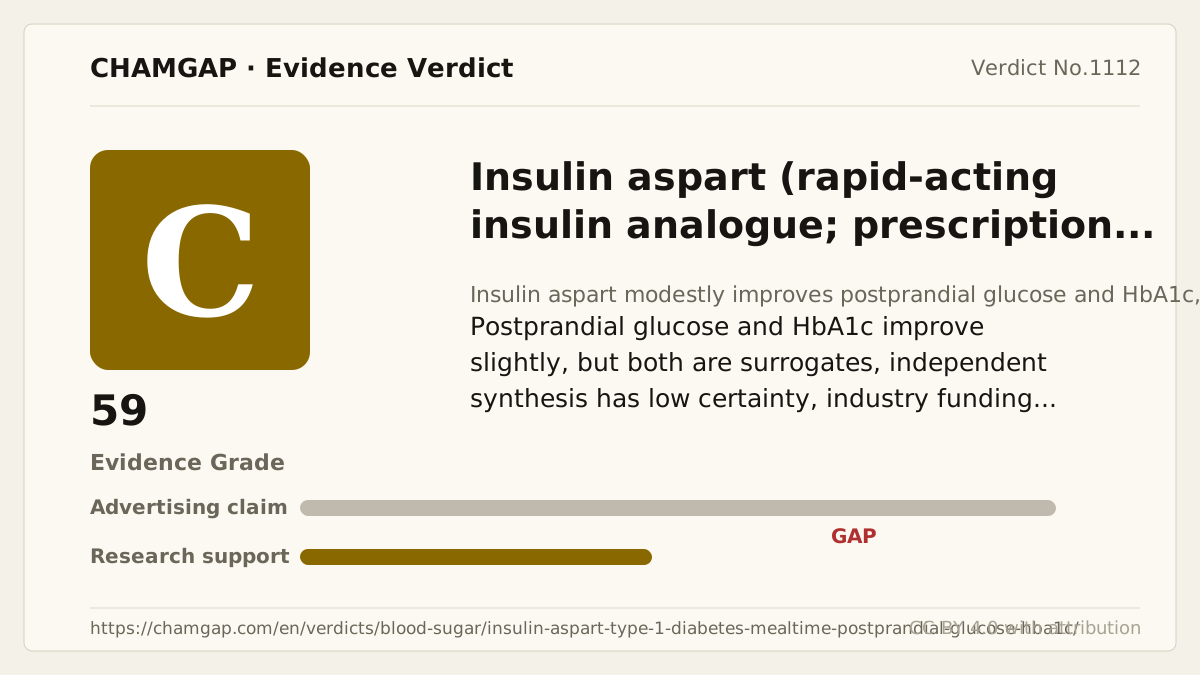
research showsInsulin aspart is rated C despite randomized trials showing that, as mealtime insulin in type 1 diabetes, it lowers postprandial glucose and modestly improves HbA1c compared with regular human insulin. In a 1,070-person six-month trial, the HbA1c difference was 0.12 percentage points and postprandial glucose was about 0.6 to 1.2 mmol/L lower after main meals; an 882-person trial also found consistently lower glucose after breakfast, lunch, and dinner. Both outcomes are surrogates, however, and an independent 2026 network meta-analysis interpreted the −0.14-percentage-point HbA1c difference for aspart as little to no difference based on low-certainty evidence. Thirteen of the 15 included randomized trials were industry-funded, and no follow-up beyond one year or long-term clinical-event data were available. The life-sustaining necessity of insulin in type 1 diabetes is separate from the comparative grade of this formulation. Hypoglycemia, weight gain, injection-site problems, and dosing errors remain under safety.
ads claimMarketing can turn faster action into a promise of perfect post-meal control or prevention of complications. The comparative HbA1c difference was only about 0.1 percentage points, and food amount, injection timing, basal insulin, activity, and glucose monitoring strongly affect both benefit and hypoglycemia risk.
Useful facts when choosing a product
- Insulin aspart is a prescription rapid-acting analogue used as mealtime insulin in type 1 diabetes and must be paired with basal insulin to cover insulin needs between meals and overnight.
- United States NovoLog labeling directs subcutaneous dosing within 5 to 10 minutes before a meal, but dose and timing must be individualized to carbohydrate intake, current glucose, activity, and the prescribed plan.
- Hypoglycemia is the principal hazard, and missed or delayed meals, exercise, alcohol, and changes in kidney function can alter risk; glucose monitoring and access to rescue carbohydrate are essential.
- The product concentration and pen, pump, or infusion settings must be checked, and pens or needles must never be shared; switching formulations without supervision can cause infection or serious dosing errors.
Chamgap Semantic Classification Code
Candidate index · review held
M.insulin-aspart.UNK.postprandial-glucose-and-hba1c-as-mealtime-insulin-in-type-1-diabetes.improve.UNKMedicinal interventions > Insulin aspart > Unknown > postprandial glucose and HbA1c as mealtime insulin in type 1 diabetes > Improvement claim > Unknown
An automated migration candidate, not an issued permanent code; exact claim scope remains under review. This machine-generated migration candidate helps retrieval but is not a permanent assignment. The original verdict ID and URL remain authoritative.
What the research actually shows
Home and the European Insulin Aspart Study Group randomized 1,070 adults with type 1 diabetes at 88 centers in eight countries in a 2:1 ratio to insulin aspart or regular human insulin, with NPH as basal insulin. At six months, HbA1c was 0.12 percentage points lower and postprandial glucose after all three main meals was 0.6 to 1.2 mmol/L lower with insulin aspart, although some premeal glucose values were higher. Raskin and colleagues randomized 882 participants for six months and followed 714 in an extension, confirming significantly lower glucose after breakfast, lunch, and dinner. A 2026 WHO-funded Cochrane network meta-analysis synthesized 15 randomized trials with 6,335 participants, 13 of which were industry-funded. The mean HbA1c difference for aspart versus regular human insulin was −0.14 percentage points (95% CI −0.21 to −0.06), but the authors interpreted this as little to no difference based on low-certainty evidence. No follow-up beyond one year or data on long-term complications or mortality were available.
Why this is classified as C (59)
Large randomized trials show better postprandial glucose and a 0.12-percentage-point HbA1c advantage versus regular human insulin, but both are surrogate outcomes. The independent 2026 network meta-analysis interpreted the −0.14-percentage-point HbA1c difference as little to no difference with low certainty; 13 of 15 randomized trials were industry-funded, and long-term clinical-event data were absent. The boundary-rule cap therefore yields C with 59 points, while hypoglycemia and weight gain remain independent safety issues.
Counterpoint. Immediate premeal dosing and suppression of postprandial excursions can be very practical. Dose adjustment should nevertheless use pump or injection context, continuous glucose data, meals, and hypoglycemia patterns with clinical supervision.
Rejudgment record. Cross-check applied — Accepted improved postprandial glucose and HbA1c versus regular human insulin while treating both as surrogate endpoints, and applied the boundary-rule cap at C because the HbA1c increment was only 0.12 percentage points, the 2026 independent network meta-analysis found −0.14 percentage points with low certainty, 13 of 15 trials were industry-funded, and long-term clinical-event data were absent
Sub-claim grades by effect
This ingredient is marketed for several effects. A single overall grade blends strong and weak claims together, so each effect is graded separately here. The overall grade reflects the strongest disconfirming or core claim.
| Effect (sub-claim) | Grade | Basis |
|---|---|---|
| Improvement of postprandial glucose in type 1 diabetes | C | Two large randomized trials consistently lowered glucose after all three main meals versus regular human insulin, but this is a surrogate endpoint. |
| Improvement of HbA1c in type 1 diabetes | C | The result was statistically positive, but the increment versus human insulin was small at about 0.1 percentage points, was rated as low-certainty, and did not directly measure long-term clinical events. |
Cross-check — AI research and Codex final gate
Evidence Table
| Study | Design | Sample | Funding | Endpoint | Result | Weight |
|---|---|---|---|---|---|---|
| Home PD, Lindholm A, Riis A; European Insulin Aspart Study Group 2000 | Multicenter prospective randomized open-label parallel-group trial | 1,070 adults with type 1 diabetes at 88 centers in eight countries | Novo Nordisk insulin aspart development program | Six-month HbA1c, eight-point self-monitored glucose, hypoglycemia, and treatment satisfaction | HbA1c favored insulin aspart by 0.12 percentage points and postprandial glucose was 0.6 to 1.2 mmol/L lower after all main meals; the relative risk of major hypoglycemia, 0.83, was not significant. | Large pivotal direct comparative trial |
| Raskin P et al. 2000 | Multicenter randomized open-label six-month trial with extension | 882 participants with type 1 diabetes; 714 entered the extension | Novo Nordisk development trial | HbA1c and eight-point glucose profiles around three main meals | Postprandial glucose was significantly lower with insulin aspart after breakfast (156 vs 185), lunch (137 vs 162), and dinner (153 vs 168 mg/dL). | Large replicated direct evidence |
| Heller S et al. 2013 | Individual-patient meta-analysis of randomized trials lasting at least 12 weeks | Randomized trials in type 1 and type 2 diabetes; five included trials had been published | Novo Nordisk employee authorship, stock ownership, and company support | HbA1c, postprandial glucose, and hypoglycemia | The mean HbA1c difference was -0.10 percentage points (95% CI -0.15 to -0.04), and postprandial glucose was lower, although heterogeneity was significant for the postprandial analysis. | Synthesis with manufacturer concentration |
| Guo Y et al. 2026 Cochrane network meta-analysis | Network meta-analysis of randomized trials of multiple daily injections in adults with type 1 diabetes | 15 randomized trials with 6,335 participants; 13 industry-funded | World Health Organization | HbA1c, hypoglycemia, diabetic ketoacidosis, quality of life, and treatment adherence | The mean HbA1c difference for aspart versus regular human insulin was −0.14 percentage points (95% CI −0.21 to −0.06), but it was rated as low-certainty evidence of little to no difference, with no follow-up beyond one year. | Current independent synthesis and certainty limitation |
Receipt — 4 References
All 4 cited sources were verified for existence at the original page (as of 2026-07-22).
Final verification and publication gate: Codex · Evidence date: 2026-07-22 · Corrections: none
Cite this verdict
[Chamgap] Insulin aspart x improved postprandial glucose and HbA1c in type 1 diabetes — Evidence Grade C·59. 4 cited sources checked. Source: https://chamgap.com/en/verdicts/blood-sugar/insulin-aspart-type-1-diabetes-mealtime-postprandial-glucose-hba1c/ · CC BY 4.0CC BY 4.0 — free to use with attribution; do not distort grades, numbers, or verdict meaning.
What this document does and does not do
Chamgap is an information source. It reports what research has and has not confirmed; it does not tell readers what to take or buy. That decision belongs to readers and, when needed, medical or legal professionals. This verdict reflects literature available up to the search date and may change as new research appears. Nothing here is medical advice.