
Gemigliptin,
does it really help with Reduction of HbA1c and fasting glucose in type 2 diabetes?
research showsGemigliptin is rated C because randomized evidence shows reductions in HbA1c and fasting glucose in type 2 diabetes. In a 24-week placebo-controlled phase 3 trial of 182 participants, placebo-adjusted HbA1c fell by 0.71 percentage points and fasting glucose by 19.8 mg/dL. A meta-analysis of 11 randomized trials likewise found reductions of 0.87 percentage points and 17.80 mg/dL versus placebo. These are glycemic surrogate outcomes, however, and no large cardiovascular or kidney outcome trial specific to gemigliptin has established effects on clinical events. Rule ① therefore caps the grade at C.
ads claimMarketing can extend improved glucose numbers into prevention of diabetic complications or protection of the heart and kidneys. Direct evidence supports control of HbA1c and fasting glucose in type 2 diabetes alongside diet, exercise, and other indicated therapy.
Useful facts when choosing a product
- Gemigliptin is a once-daily prescription DPP-4 inhibitor that augments meal-related incretin action and is marketed in South Korea as Zemiglo and related products for type 2 diabetes.
- A common adult dose is 50 mg once daily, but the prescriber should review concomitant medicines, hypoglycemia risk, organ function, and the current product information.
- Hypoglycemia risk is low with monotherapy but can increase when gemigliptin is combined with a sulfonylurea or insulin, requiring glucose monitoring and possible dose adjustment.
- Severe persistent abdominal pain warrants assessment for pancreatitis, and severe joint pain can be a DPP-4 inhibitor adverse effect. A prescription medicine should not be started or stopped without clinical advice.
Chamgap Semantic Classification Code
Candidate index · review held
M.gemigliptin.oral.hba1c-and-fasting-glucose-in-type-2-diabetes.reduce.placeboMedicinal interventions > Gemigliptin > Oral > HbA1c and fasting glucose in type 2 diabetes > Reduction claim > Placebo
An automated migration candidate, not an issued permanent code; exact claim scope remains under review. This machine-generated migration candidate helps retrieval but is not a permanent assignment. The original verdict ID and URL remain authoritative.
What the research actually shows
Yang and colleagues in 2013 randomized 182 people with type 2 diabetes in Korea and India to gemigliptin 50 mg or placebo under double masking for 24 weeks. Placebo-adjusted changes were -0.71 percentage points for HbA1c and -19.80 mg/dL for fasting glucose, while overall adverse-event rates were similar. Oh and colleagues in 2021 synthesized 11 randomized trials and found placebo-controlled mean differences of -0.87 percentage points for HbA1c and -17.80 mg/dL for fasting glucose. The included studies emphasized glycemic, beta-cell-function, and lipid surrogates. No dedicated large gemigliptin cardiovascular or kidney outcome trial with clinical events as the primary endpoint was identified. Class-level outcome data from other DPP-4 inhibitors cannot substitute for drug-specific evidence of long-term organ protection.
Why this is classified as C (58)
Placebo-controlled phase 3 evidence and an 11-trial meta-analysis consistently support reductions in HbA1c and fasting glucose. Trial duration is short, manufacturer-development studies contribute heavily, and no dedicated large gemigliptin trial has established cardiovascular, kidney, or mortality effects. The surrogate-only ceiling under rule ① gives C with 58 points.
Counterpoint. The best glucose-lowering medicine depends on an individual's HbA1c target, hypoglycemia and weight concerns, cardiovascular and kidney disease, and cost. People already prescribed gemigliptin should review response and adverse effects while managing blood pressure, lipids, smoking, and kidney screening as part of complication prevention.
Rejudgment record. New verdict — Accepted positive HbA1c and fasting-glucose findings from placebo-controlled trials and meta-analysis, but applied the rule ① ceiling of C because no large gemigliptin-specific cardiovascular or kidney hard-outcome trial exists
Sub-claim grades by effect
This ingredient is marketed for several effects. A single overall grade blends strong and weak claims together, so each effect is graded separately here. The overall grade reflects the strongest disconfirming or core claim.
| Effect (sub-claim) | Grade | Basis |
|---|---|---|
| Reduction of HbA1c in type 2 diabetes | C | Placebo-controlled phase 3 evidence and meta-analysis show a reduction of about 0.7 to 0.9 percentage points, but HbA1c is a surrogate. |
| Reduction of fasting glucose in type 2 diabetes | C | A placebo-controlled reduction of about 18 to 20 mg/dL was reproduced, but this remains a short-term glycemic endpoint. |
| Reduction of cardiovascular and kidney complications | ? | No large gemigliptin-specific cardiovascular or kidney hard-outcome trial has established this effect. |
Cross-check — AI research and Codex final gate
Evidence Table
| Study | Design | Sample | Funding | Endpoint | Result | Weight |
|---|---|---|---|---|---|---|
| Yang SJ et al. 2013 | Multicenter multinational randomized double-blind placebo-controlled phase 3 trial | 182 participants with type 2 diabetes; 90 gemigliptin and 92 placebo | Gemigliptin development trial by LG Life Sciences | HbA1c and fasting plasma glucose at 24 weeks | Placebo-adjusted HbA1c fell by 0.71 percentage points (95% CI -1.04 to -0.37) and fasting glucose by 19.80 mg/dL. | Direct randomized glycemic-efficacy evidence |
| Oh H et al. 2021 | Systematic review and meta-analysis of randomized trials | 11 randomized controlled trials | Funding source not stated in the PubMed abstract | HbA1c, fasting glucose, HOMA-beta, and LDL | Versus placebo, HbA1c changed by -0.87 percentage points (95% CI -1.07 to -0.66) and fasting glucose by -17.80 mg/dL (95% CI -25.36 to -10.25). | Synthesis of glycemic surrogate evidence |
Receipt — 2 References
All 2 cited sources were verified for existence at the original page (as of 2026-07-24).
Final verification and publication gate: Codex · Evidence date: 2026-07-24 · Corrections: none
Cite this verdict
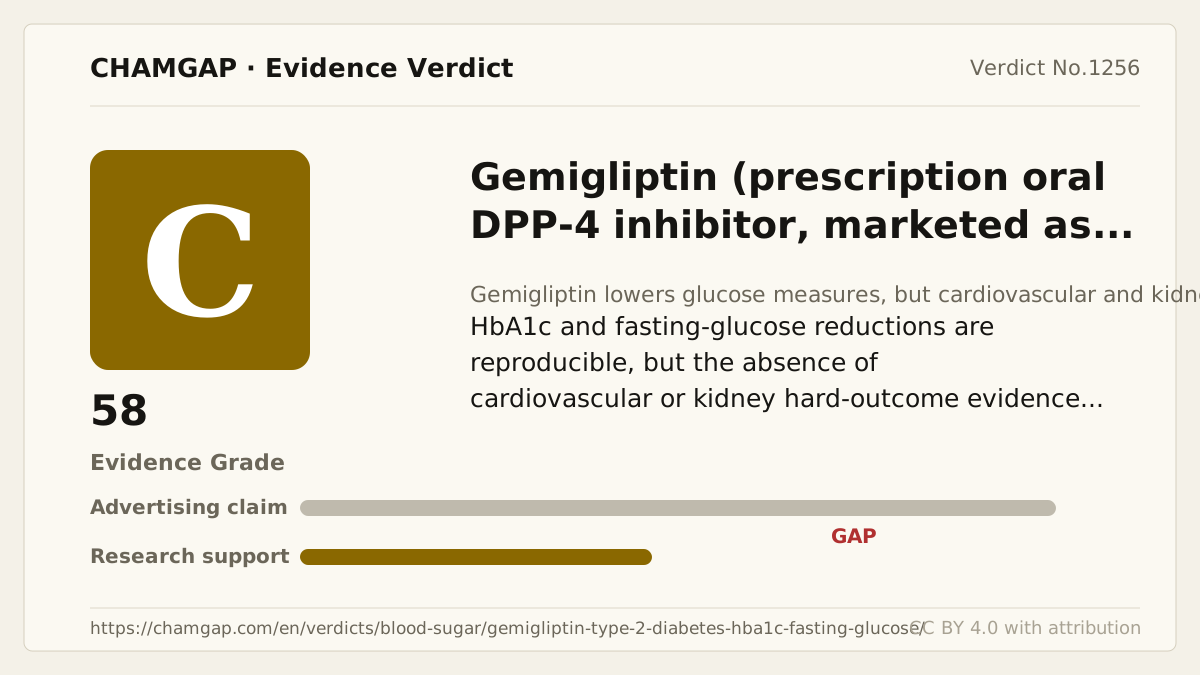
[Chamgap] Gemigliptin x reduction of HbA1c and fasting glucose in type 2 diabetes — Evidence Grade C·58. 2 cited sources checked. Source: https://chamgap.com/en/verdicts/blood-sugar/gemigliptin-type-2-diabetes-hba1c-fasting-glucose/ · CC BY 4.0CC BY 4.0 — free to use with attribution; do not distort grades, numbers, or verdict meaning.
What this document does and does not do
Chamgap is an information source. It reports what research has and has not confirmed; it does not tell readers what to take or buy. That decision belongs to readers and, when needed, medical or legal professionals. This verdict reflects literature available up to the search date and may change as new research appears. Nothing here is medical advice.