
Ertugliflozin,
does it really help with Reduction of three-point MACE comprising cardiovascular death, myocardial infarction, or stroke in type 2 diabetes with cardiovascular disease?
research showsErtugliflozin is rated D for the claim of reducing three-point MACE. VERTIS CV enrolled 8,246 patients with type 2 diabetes and atherosclerotic cardiovascular disease, but MACE occurred in 11.9% with ertugliflozin and 11.9% with placebo, hazard ratio 0.97 (95.6% CI 0.85 to 1.11). Noninferiority was established, but superiority—a reduction in MACE—was not. Reduced hospitalization for heart failure and glucose lowering are separate secondary or surrogate outcomes, and benefits of other SGLT2 inhibitors cannot be transferred to this molecule.
ads claimMarketing may collapse the SGLT2 class into a single heart-protection claim. Drug-specific outcomes differ, and VERTIS CV itself failed superiority for three-point MACE with ertugliflozin.
Useful facts when choosing a product
- Ertugliflozin is a prescription SGLT2 inhibitor that reduces renal glucose reabsorption and increases urinary glucose excretion.
- Genital fungal infection, increased urination, dehydration, and hypotension can occur, and kidney function and volume status matter.
- Diabetic ketoacidosis can occur even without marked hyperglycemia. Vomiting, abdominal pain, rapid breathing, or profound malaise requires prompt clinical assessment.
- Fasting, acute illness, and the perioperative period require ketoacidosis-risk management, and insulin must not be reduced or stopped without medical direction.
Chamgap Semantic Classification Code
Candidate index · review held
M.ertugliflozin.UNK.three-point-mace-comprising-cardiovascular-death-myocardial-infarction-or-stroke-in-type-2-diabetes-with-cardiovascular-disease.reduce.placeboMedicinal interventions > Ertugliflozin > Unknown > three-point MACE comprising cardiovascular death, myocardial infarction, or stroke in type 2 diabetes with cardiovascular disease > Reduction claim > Placebo
An automated migration candidate, not an issued permanent code; exact claim scope remains under review. This machine-generated migration candidate helps retrieval but is not a permanent assignment. The original verdict ID and URL remain authoritative.
What the research actually shows
Cannon and colleagues randomized 8,246 patients with type 2 diabetes and established atherosclerotic cardiovascular disease to ertugliflozin 5 mg, 15 mg, or placebo. Among 8,238 treated patients, three-point MACE was 11.9% in both pooled ertugliflozin and placebo groups, hazard ratio 0.97, establishing only noninferiority. The composite of cardiovascular death or heart-failure hospitalization was also not superior, hazard ratio 0.88 and P=.11. A separate prespecified analysis found fewer first heart-failure hospitalizations, which is a different outcome from MACE.
Why this is classified as D (28)
The large direct cardiovascular outcomes trial found primary three-point MACE of 11.9% versus 11.9%, hazard ratio 0.97, establishing noninferiority but failing superiority. Heart-failure hospitalization and glucose outcomes were not substituted for MACE, giving D with 28 points.
Counterpoint. Absence of proven MACE reduction does not erase glucose-lowering value or the heart-failure hospitalization signal. Selection should consider kidney function, heart failure, infection, dehydration, and ketoacidosis risks.
Rejudgment record. New verdict — Applied rule ② and D because the direct large VERTIS CV randomized trial met only noninferiority for primary three-point MACE, with hazard ratio 0.97 and no superiority over placebo; heart-failure hospitalization, glucose surrogates, and benefits of other SGLT2 molecules were not transferred
Sub-claim grades by effect
This ingredient is marketed for several effects. A single overall grade blends strong and weak claims together, so each effect is graded separately here. The overall grade reflects the strongest disconfirming or core claim.
| Effect (sub-claim) | Grade | Basis |
|---|---|---|
| Reduced three-point MACE in type 2 diabetes with cardiovascular disease | D | VERTIS CV met noninferiority only, with HR 0.97, and failed superiority. |
| Reduced heart-failure hospitalization in type 2 diabetes with cardiovascular disease | D | A favorable separate secondary analysis exists, but this is a different efficacy outcome from three-point MACE. |
| Reduced cardiovascular events through glucose lowering | D | Glucose lowering is a surrogate and cannot replace failed superiority for the clinical event outcome. |
Cross-check — AI research and Codex final gate
Evidence Table
| Study | Design | Sample | Funding | Endpoint | Result | Weight |
|---|---|---|---|---|---|---|
| Cannon CP et al. 2020 VERTIS CV | Large randomized double-blind placebo-controlled cardiovascular outcomes trial | 8,246 enrolled; 8,238 in the treated analysis | Merck Sharp & Dohme and Pfizer | Three-point MACE: cardiovascular death, nonfatal myocardial infarction, or nonfatal stroke | 11.9% versus 11.9%, HR 0.97; noninferiority met, superiority not established. | Decisive direct null primary outcome |
| Cosentino F et al. 2020 VERTIS CV analysis | Prespecified heart-failure outcomes analysis | 8,246 VERTIS CV participants | Merck Sharp & Dohme and Pfizer | Heart-failure hospitalization and cardiovascular death | First heart-failure hospitalization decreased, but the cardiovascular-death or heart-failure-hospitalization composite was not superior in the primary analysis and is distinct from MACE. | Defines a separate benefit |
Receipt — 2 References
All 2 cited sources were verified for existence at the original page (as of 2026-07-23).
Final verification and publication gate: Codex · Evidence date: 2026-07-23 · Corrections: none
Cite this verdict
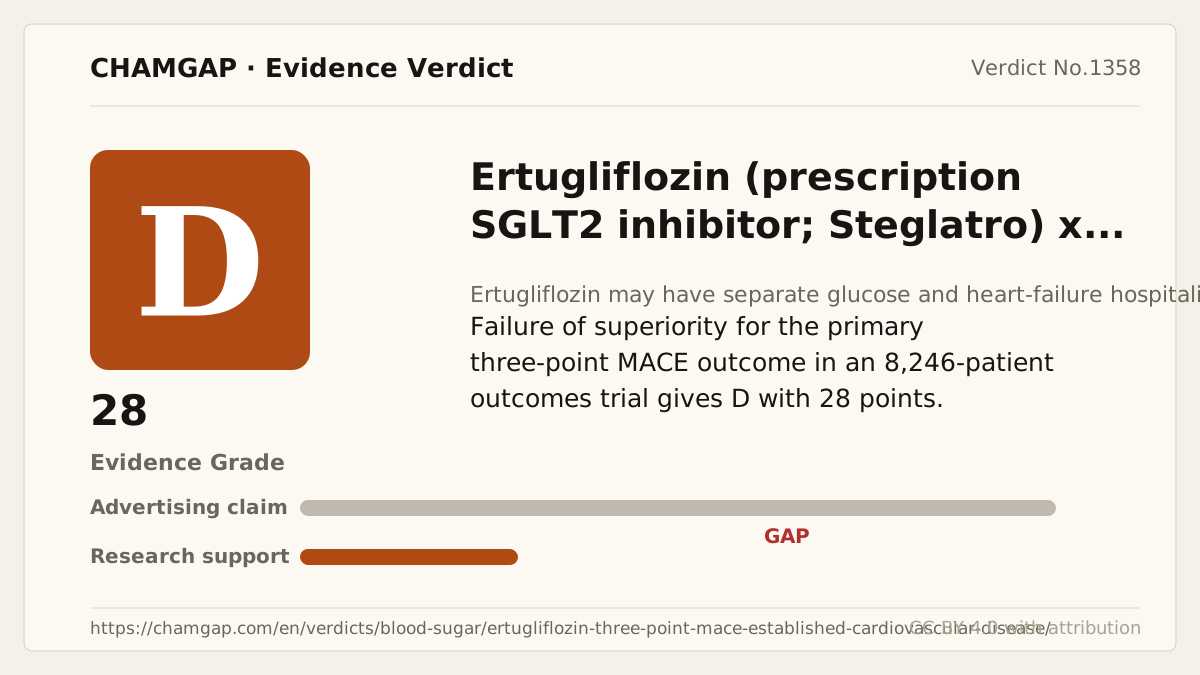
[Chamgap] Ertugliflozin x Reduction of three-point MACE comprising cardiovascular death, myocardial infarction, or stroke in type 2 diabetes with cardiovascular disease — Evidence Grade D·28. 2 cited sources checked. Source: https://chamgap.com/en/verdicts/blood-sugar/ertugliflozin-three-point-mace-established-cardiovascular-disease/ · CC BY 4.0CC BY 4.0 — free to use with attribution; do not distort grades, numbers, or verdict meaning.
What this document does and does not do
Chamgap is an information source. It reports what research has and has not confirmed; it does not tell readers what to take or buy. That decision belongs to readers and, when needed, medical or legal professionals. This verdict reflects literature available up to the search date and may change as new research appears. Nothing here is medical advice.