
Dried wakame,
does it really help with Reduction of the acute postprandial glucose rise?
research showsThe grade is C with 46 points. In a 26-person randomized crossover trial, adding 4 g dried wakame to 200 g rice lowered 30-minute glucose and the 0-to-120-minute incremental glucose area versus rice alone. This was one meal in a small manufacturer-linked study and did not test long-term glycemic control or diabetes prevention.
ads claimIodine content is a composition fact; a one-meal glucose curve is a trial result. Published dried-wakame iodine values vary widely, about 30 to 185 micrograms per gram, but the test batch was not measured, so no exact iodine dose can be assigned. The trial did not establish diabetes prevention or long-term HbA1c improvement. Verdict 091 is C with 50 points for a fucoidan preparation and immune or anticancer claims, a different form and indication.
Useful facts when choosing a product
- The tested amount was 4 g dry wakame, not rehydrated weight, eaten once with 200 g rice.
- Published dried-wakame iodine values vary from about 30 to 185 micrograms per gram; test-product iodine and sodium were not reported.
- The Korean adult iodine upper intake level is 2,400 micrograms per day. Correcting deficiency and causing dysfunction through excess are opposite claims.
Chamgap Semantic Classification Code
Candidate index · review held
F.four-grams-of-dried-wakame.oral.the-acute-postprandial-glucose-rise.reduce.UNKFoods and beverages > Four grams of dried wakame > Oral > the acute postprandial glucose rise > Reduction claim > Unknown
An automated migration candidate, not an issued permanent code; exact claim scope remains under review. This machine-generated migration candidate helps retrieval but is not a permanent assignment. The original verdict ID and URL remain authoritative.
What the research actually shows
Yoshinaga and Mitamura randomized the order of 200 g rice alone and 200 g rice plus 4 g dried wakame in 26 adults. All 26 were analyzed, with glucose and insulin measured at 0, 30, 60, 90, and 120 minutes. Thirty-minute glucose and incremental glucose and insulin areas were lower with wakame. UMIN000031050 was registered on January 29, 2018, four days after the planned start; the registered glucose and insulin outcomes were reported. The first author worked for Riken Vitamin.
Why this is classified as C (46)
A surrogate one-meal glucose endpoint, a 26-person short manufacturer-linked study, and an effect size that could not be clinically interpreted give C with 46 points.
Counterpoint. The one-meal glucose reduction is retained as a true finding. Independent replication and long-term endpoints are needed before extending it to ordinary wakame meals or diabetes prevention.
Rejudgment record. Cross-check applied — The positive single-meal glucose result is retained while surrogate status, small size, very short exposure, manufacturer linkage, and effect-size limits are reflected
| Endpoint | S | Surrogate marker - laboratory or imaging measures |
| Replication | R1 | Single confirmatory trial |
| Independence | I0 | Evidence comes only from manufacturer studies |
| Effect size | EX | The clinical size of the effect could not be judged |
Stored derived and displayed grades match; this is not a current recalculation or validity check (C).
Sub-claim grades by effect
This ingredient is marketed for several effects. A single overall grade blends strong and weak claims together, so each effect is graded separately here. The overall grade reflects the strongest disconfirming or core claim.
| Effect (sub-claim) | Grade | Basis |
|---|---|---|
| Reduced postprandial glucose after one meal containing 4 g dried wakame | C | The 26-person single-meal trial was positive but did not test long-term control. |
Cross-check — AI research and Codex final gate
Evidence Table
| Study | Design | Sample | Funding | Endpoint | Result | Weight |
|---|---|---|---|---|---|---|
| Yoshinaga and Mitamura 2019 | Randomized crossover single-meal trial | 26 randomized and 26 analyzed | The first author was a Riken Vitamin employee; no separate independent funding was confirmed | Glucose and insulin time courses and incremental areas from 0 to 120 minutes | Lower 30-minute glucose and incremental glucose and insulin areas with wakame; exact between-condition CIs not reported | Direct positive evidence, but a small single-meal trial |
| Tanemura et al. 2014 | Randomized crossover mixed-meal trial in 12 adults | 12 participants | Japanese public funding from education and agriculture ministries | Postprandial glucose, insulin, and areas over 180 minutes | No difference for 70 g rehydrated wakame; only 70 g mekabu reduced early glucose | Contextual counterevidence with a different dose and meal |
Receipt — 3 References
All 3 cited sources were verified for existence at the original page (as of 2026-08-03).
Final verification and publication gate: Codex · Evidence date: 2026-08-03 · Corrections: none
Cite this verdict
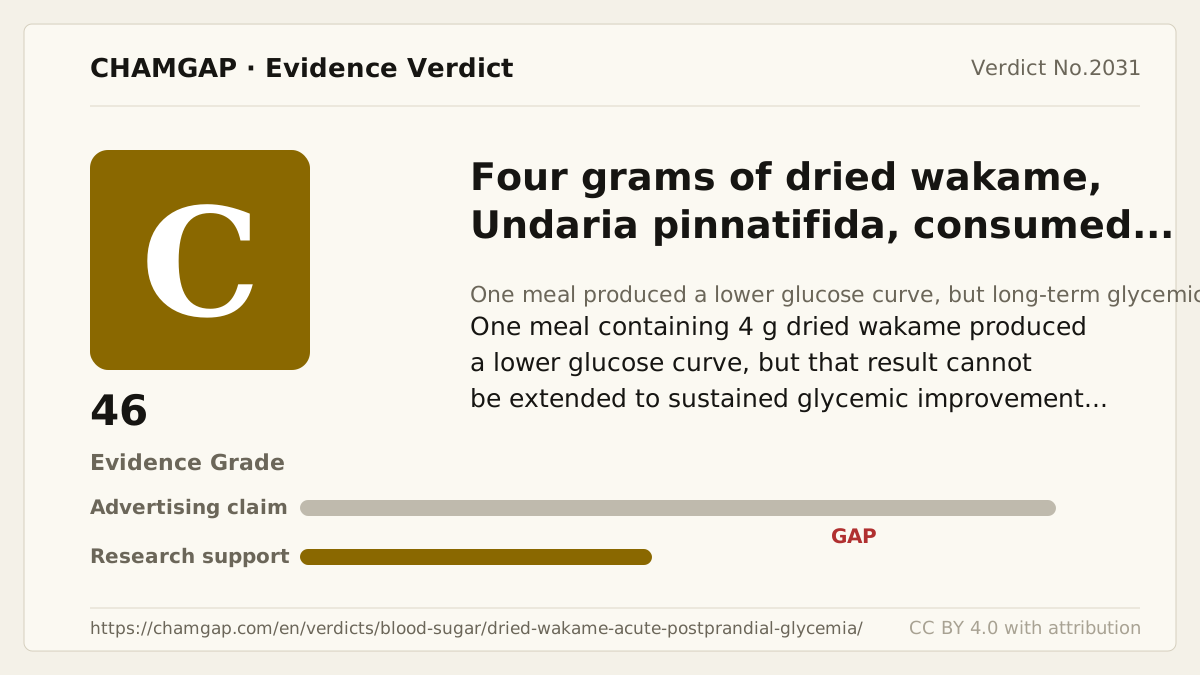
[Chamgap] Dried wakame x reduced postprandial glycemia — Evidence Grade C·46. 3 cited sources checked. Source: https://chamgap.com/en/verdicts/blood-sugar/dried-wakame-acute-postprandial-glycemia/ · CC BY 4.0CC BY 4.0 — free to use with attribution; do not distort grades, numbers, or verdict meaning.
What this document does and does not do
Chamgap is an information source. It reports what research has and has not confirmed; it does not tell readers what to take or buy. That decision belongs to readers and, when needed, medical or legal professionals. This verdict reflects literature available up to the search date and may change as new research appears. Nothing here is medical advice.