
Creatine monohydrate,
does it really help with Improved HbA1c and postprandial glucose in people with type 2 diabetes receiving exercise therapy?
research showsCreatine is graded C because a 12-week double-blind randomized trial analyzing 25 people with type 2 diabetes in an exercise program found that 5 g/day lowered HbA1c by 1.1 percentage points versus placebo and improved post-meal glucose area under the curve and early glucose values. Increased GLUT-4 translocation supported a mechanism, but this was one small trial limited to surrogate outcomes, with no evidence for prevention of complications or durable clinical benefit.
ads claimMarketing can expand a small 12-week add-on result into replacement of diabetes medication, prevention of long-term complications, or universal glucose normalization. The evidence applies only to short-term surrogate markers with concurrent exercise.
Useful facts when choosing a product
- This verdict concerns oral creatine monohydrate added to exercise therapy and is separate from strength, cognition, or depression claims.
- The pivotal trial used 5 g/day for 12 weeks and did not test stopping or replacing diabetes medication.
- Kidney-harm signals are low at recommended doses in adults with normal renal function, but water-related weight gain and gastrointestinal upset can occur. People with kidney disease or nephrotoxic medicines should seek clinical advice.
Chamgap Semantic Classification Code
Candidate index · review held
S.creatine-monohydrate.oral.hba1c-and-postprandial-glucose-with-type-2-diabetes-receiving-exercise-therapy.improve.MULTISupplements and nutraceuticals > Creatine monohydrate > Oral > HbA1c and postprandial glucose with type 2 diabetes receiving exercise therapy > Improvement claim > Multiple: primary unresolved
An automated migration candidate, not an issued permanent code; exact claim scope remains under review. This machine-generated migration candidate helps retrieval but is not a permanent assignment. The original verdict ID and URL remain authoritative.
What the research actually shows
All participants followed an exercise program for 12 weeks while receiving creatine 5 g/day or placebo. Among 25 analyzed participants, HbA1c changed from 7.4% to 6.4% with creatine and from 7.5% to 7.6% with placebo, a between-group difference of -1.1 percentage points. Glucose-area-under-the-curve change and glucose at 0, 30, and 60 minutes of a meal test were favorable, and GLUT-4 translocation increased. Insulin, C-peptide, surrogate insulin-sensitivity measures, lipids, and physical capacity did not differ.
Why this is classified as C (45)
A 25-person, 12-week double-blind trial found a -1.1-percentage-point HbA1c difference and improved postprandial glucose. With no refuting trial but only one small exercise-add-on study using surrogate outcomes and no complication data, the grade is C with 45 points.
Counterpoint. There may be adjunctive potential for selected patients who continue exercise and standard diabetes care, but medication should not be changed without clinical supervision and HbA1c and renal status should be monitored.
Rejudgment record. Cross-check applied — A 12-week randomized double-blind trial in 25 exercise-treated patients improved HbA1c and postprandial glucose, but its single small sample, surrogate endpoints, lack of independent replication, and absence of complication data limit the verdict to C under rules ③ and ①. At cross-check the score was lowered to 45 for the 25-participant analysis, the HbA1c surrogate endpoint, and the exercise add-on design (grade C retained).
Sub-claim grades by effect
This ingredient is marketed for several effects. A single overall grade blends strong and weak claims together, so each effect is graded separately here. The overall grade reflects the strongest disconfirming or core claim.
| Effect (sub-claim) | Grade | Basis |
|---|---|---|
| Improved HbA1c when added to exercise | C | A 25-person, 12-week trial found a -1.1-percentage-point difference versus placebo, but this is one small surrogate-endpoint study. |
| Improved postprandial glucose when added to exercise | C | Meal-test glucose area under the curve and early time points improved, but independent replication is absent. |
| Improved diabetic complications or hard outcomes | ? | No direct human intervention evidence assessed complications, cardiovascular events, or mortality. |
Cross-check — AI research and Codex final gate
Evidence Table
| Study | Design | Sample | Funding | Endpoint | Result | Weight |
|---|---|---|---|---|---|---|
| Gualano B et al. 2011 | Twelve-week randomized double-blind placebo-controlled exercise-add-on trial | 25 analyzed; 13 creatine and 12 placebo | Brazilian public and academic research support | HbA1c, meal-test glucose, insulin, C-peptide, and GLUT-4 | The HbA1c difference was -1.1 percentage points, with favorable glucose-AUC change, 0-, 30-, and 60-minute glucose, and GLUT-4 translocation. | Key direct efficacy evidence; small and surrogate-based |
| Gualano B et al. 2011 renal safety analysis | Measured-GFR renal-safety analysis from the same randomized trial | Patients with type 2 diabetes followed for 12 weeks | Academic research support | 51Cr-EDTA clearance and renal-function measures | Twelve weeks of creatine did not worsen measured glomerular filtration rate. | Supporting short-term safety evidence; long-term harm untested |
Receipt — 2 References
All 2 cited sources were verified for existence at the original page (as of 2026-07-23).
Final verification and publication gate: Codex · Evidence date: 2026-07-23 · Corrections: none
Cite this verdict
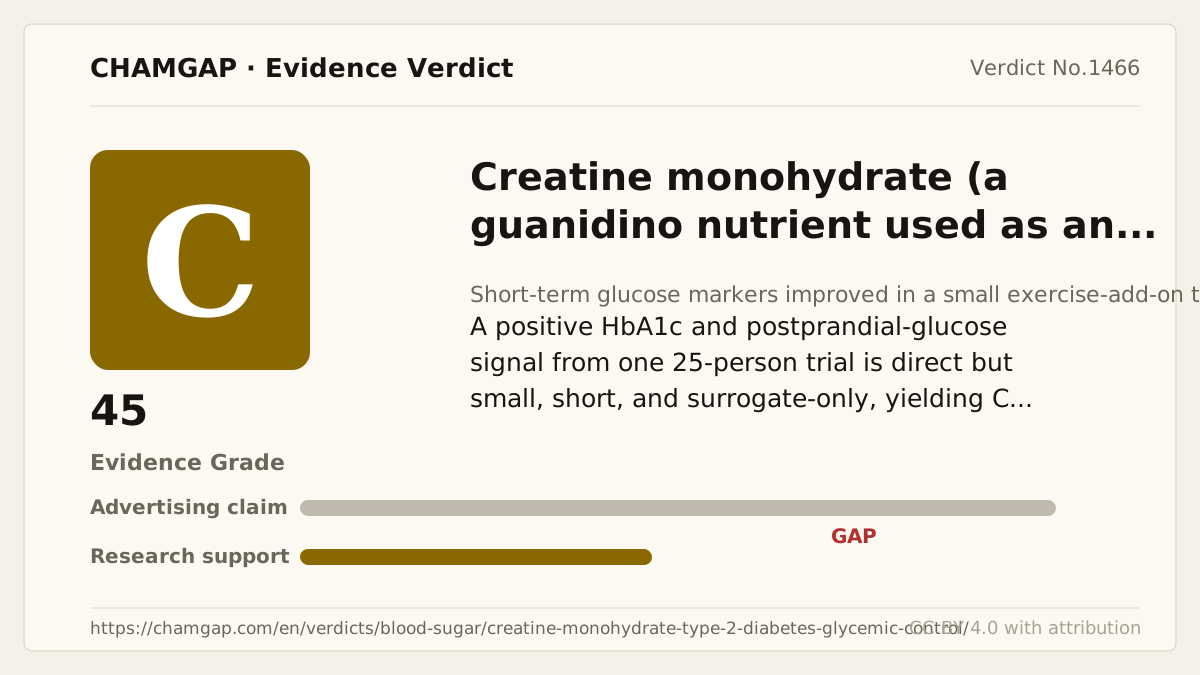
[Chamgap] Creatine monohydrate x glycemic improvement in exercise-treated type 2 diabetes — Evidence Grade C·45. 2 cited sources checked. Source: https://chamgap.com/en/verdicts/blood-sugar/creatine-monohydrate-type-2-diabetes-glycemic-control/ · CC BY 4.0CC BY 4.0 — free to use with attribution; do not distort grades, numbers, or verdict meaning.
What this document does and does not do
Chamgap is an information source. It reports what research has and has not confirmed; it does not tell readers what to take or buy. That decision belongs to readers and, when needed, medical or legal professionals. This verdict reflects literature available up to the search date and may change as new research appears. Nothing here is medical advice.