
CGM for people without diabetes,
does it really help with Reduced postprandial glycemic variability and HbA1c through real-time feedback in healthy adults and adults with prediabetes?
research showsThe claim that real-time CGM feedback by itself produces clinically meaningful reductions in postprandial variability and HbA1c in adults without diabetes is rated at the bottom of C. A 2026 synthesis of 23 studies and 1,074 participants without diabetes found a modest mean-glucose improvement (SMD -0.54), but glycemic-variability effects were context dependent and only prediabetes showed a limited short-term signal, with no appreciable benefit in healthy normoglycemia. A 2024 behavior-change meta-analysis reported a 0.28-percentage-point HbA1c reduction, but 68% of its 25 trials enrolled people with type 2 diabetes and heterogeneity was I-squared 88.5%, preventing direct attribution. Because a limited prediabetes surrogate signal exists it is not D, but durable HbA1c reduction and clinical outcomes are unestablished, placing it at the bottom of C.
ads claimMarketing equates a personalized post-meal curve with disease risk and portrays normal excursions as spikes that must be eliminated. Displaying behavior-linked data and proving durable reductions in HbA1c or disease risk are separate claims.
Useful facts when choosing a product
- A CGM uses a small sensor placed through the skin, often on the upper arm, to estimate interstitial rather than blood glucose every few minutes, so lag and measurement error can occur.
- Devices such as the FreeStyle Libre family were developed for diabetes management, and indications and labeling differ by product and jurisdiction; wellness marketing for people without diabetes is not proof of clinical efficacy.
- There is no consensus on an optimal post-meal spike threshold or CGM score for normoglycemic adults, and an individual food response is affected by sleep, exercise, stress, and sensor error.
- Insertion pain, bleeding, and adhesive dermatitis can occur. Overinterpreting normal variation may increase anxiety, unnecessary food avoidance, repeated testing, and cost.
Chamgap Semantic Classification Code
Candidate index · review held
P.continuous-glucose-monitor.device.postprandial-glycemic-variability-and-hba1c-through-real-time-feedback-and-adults-with-prediabetes.reduce.UNKProcedures, devices and tests > Continuous glucose monitor > Device delivered > postprandial glycemic variability and HbA1c through real-time feedback and adults with prediabetes > Reduction claim > Unknown
An automated migration candidate, not an issued permanent code; exact claim scope remains under review. This machine-generated migration candidate helps retrieval but is not a permanent assignment. The original verdict ID and URL remain authoritative.
What the research actually shows
Richardson and colleagues reviewed 25 randomized CGM-feedback behavior trials and found a mean HbA1c difference of -0.28 percentage points across 23 trials and 2,355 participants. However, 15 trials involved type 2 diabetes, HbA1c heterogeneity was I-squared 88.5%, and dietary and activity outcomes could not be pooled because reporting differed. Liao and colleagues synthesized 23 studies and 1,074 non-diabetic participants in 2026, reporting mean-glucose SMD -0.54, a null BMI result, and context-dependent glycemic variability. Their subgroup interpretation found benefit in prediabetes but no appreciable glycemic benefit in healthy normoglycemia. A 2024 narrative review also identified insufficient high-quality efficacy evidence, missing clinical benchmarks and scoring systems, and limited study of adverse eating effects.
Why this is classified as C (42)
The direct non-diabetic synthesis found a modest prediabetes mean-glucose surrogate signal, but normoglycemia was null, variability was context dependent, and the HbA1c meta was diabetes-dominant with I-squared 88.5%. A limited surrogate positive lifts it above D, but unestablished clinical benefit gives C with 42 points.
Counterpoint. CGM can be considered as short-term feedback within a structured prediabetes lifestyle program. Standard plasma glucose and laboratory HbA1c, interpreted by a clinician, remain primary for diagnosis and treatment decisions.
Rejudgment record. Cross-check applied — At cross-check the D draft was raised to the bottom of C to reflect a short-term prediabetes mean-glucose surrogate signal, while incorporating the null normoglycemic result, context-dependent variability, diabetes-dominant HbA1c meta-analysis (I-squared 88.5%), and unestablished durable clinical benefit, giving C with 42 points.
Sub-claim grades by effect
This ingredient is marketed for several effects. A single overall grade blends strong and weak claims together, so each effect is graded separately here. The overall grade reflects the strongest disconfirming or core claim.
| Effect (sub-claim) | Grade | Basis |
|---|---|---|
| Reduced postprandial glycemic variability | C | Variability findings were context dependent in the non-diabetic synthesis, with no appreciable benefit in healthy normoglycemia. |
| Reduced HbA1c | D | The -0.28-percentage-point mixed-population estimate was dominated by diabetes trials and had I-squared 88.5%, preventing direct attribution to people without diabetes. |
| Long-term clinical benefit through sustained behavior change | D | Short-term dietary and adherence signals exist, but durability, diabetes prevention, and cardiovascular clinical outcomes are unestablished. |
Cross-check — AI research and Codex final gate
Evidence Table
| Study | Design | Sample | Funding | Endpoint | Result | Weight |
|---|---|---|---|---|---|---|
| Liao X et al. 2026 | Systematic review and meta-analysis of observational and interventional studies in non-diabetic populations | 23 studies and 1,074 participants, including seven randomized trials | Chinese national and provincial public research funding | Mean glucose, glycemic variability, BMI, dietary behavior, and adherence | Mean glucose improved by SMD -0.54, but BMI was null, variability was context dependent, and healthy normoglycemic participants had no appreciable benefit. | Most direct current synthesis for the target population |
| Richardson KM et al. 2024 | Systematic review and meta-analysis of randomized CGM behavior-feedback trials | 25 randomized trials; 23 trials and 2,355 participants for HbA1c | Public and academic support including the United States NIH and Health Research Council of New Zealand | HbA1c, time in range, weight, BMI, and behavior change | HbA1c was lower by 0.28 percentage points, but I-squared was 88.5% and 68% of trials enrolled type 2 diabetes, leaving the direct non-diabetic effect unclear. | Positive signal with important indirectness |
Receipt — 3 References
All 3 cited sources were verified for existence at the original page (as of 2026-07-23).
Final verification and publication gate: Codex · Evidence date: 2026-07-23 · Corrections: none
Cite this verdict
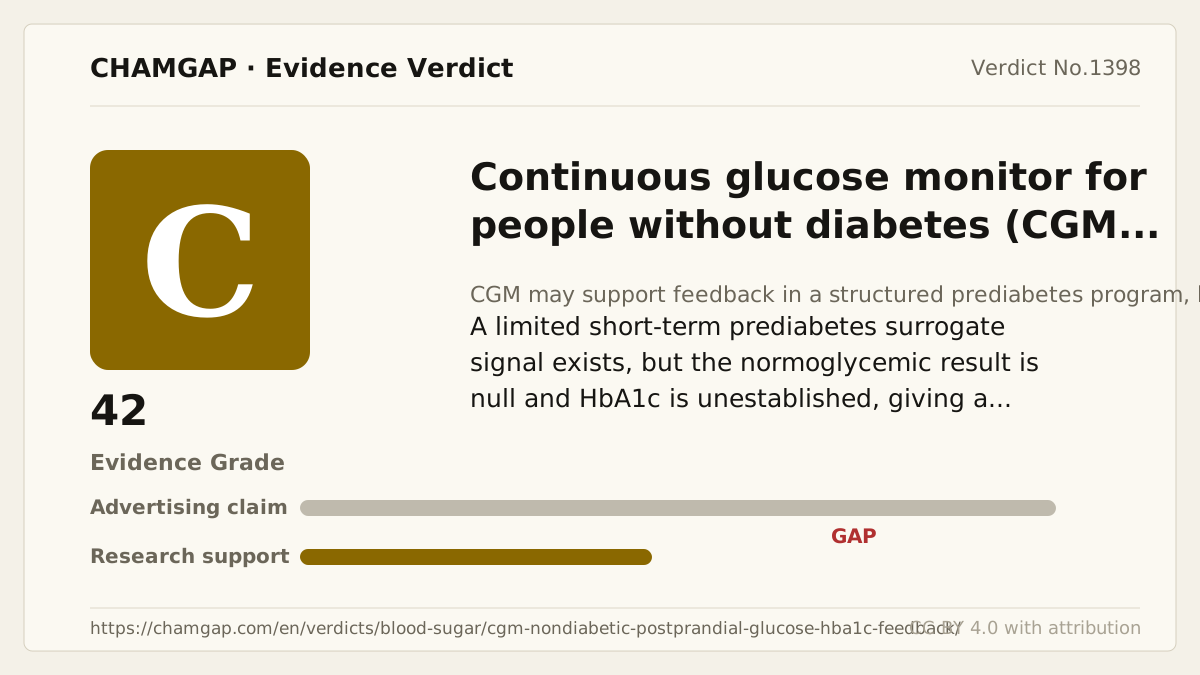
[Chamgap] CGM for people without diabetes x reduced postprandial glycemic variability and HbA1c — Evidence Grade C·42. 3 cited sources checked. Source: https://chamgap.com/en/verdicts/blood-sugar/cgm-nondiabetic-postprandial-glucose-hba1c-feedback/ · CC BY 4.0CC BY 4.0 — free to use with attribution; do not distort grades, numbers, or verdict meaning.
What this document does and does not do
Chamgap is an information source. It reports what research has and has not confirmed; it does not tell readers what to take or buy. That decision belongs to readers and, when needed, medical or legal professionals. This verdict reflects literature available up to the search date and may change as new research appears. Nothing here is medical advice.