
Captopril,
does it really help with Reduced risk of death, dialysis, or kidney transplantation in proteinuric diabetic nephropathy from type 1 diabetes?
research showsCaptopril is rated B for proteinuric nephropathy in type 1 diabetes because it reduced the composite risk of death, dialysis, or kidney transplantation. In the 409-patient randomized placebo-controlled Lewis trial published in 1993, this composite risk fell by 50% and the risk of doubling serum creatinine fell by 48%. The evidence is ingredient-specific and includes clinical outcomes, but it relies mainly on one old landmark trial, so the boundary rule caps it at B.
ads claimClass-wide ACE-inhibitor benefit should not be expanded into a claim that captopril is the preferred modern molecule or that it protects every patient with diabetes. The evidence applies to proteinuric type 1 diabetic nephropathy with blood-pressure, potassium, and kidney-function monitoring.
Useful facts when choosing a product
- Captopril is a short-acting oral prescription ACE inhibitor that lowers intraglomerular pressure and proteinuria.
- The trial enrolled patients with type 1 diabetes, urinary protein excretion of at least 500 mg per day, and serum creatinine no greater than 2.5 mg/dL.
- Hyperkalemia, increased creatinine, dry cough, and hypotension can occur, requiring potassium and kidney-function monitoring.
- ACE inhibitors are contraindicated in pregnancy because of fetal toxicity and require avoidance or special caution after angioedema and in bilateral renal-artery stenosis.
Chamgap Semantic Classification Code
Candidate index · review held
M.captopril.oral.risk-of-death-dialysis-or-kidney-transplantation-in-proteinuric-diabetic-nephropathy-from-type-1-diabetes.reduce.placeboMedicinal interventions > Captopril > Oral > risk of death, dialysis, or kidney transplantation in proteinuric diabetic nephropathy from type 1 diabetes > Reduction claim > Placebo
An automated migration candidate, not an issued permanent code; exact claim scope remains under review. This machine-generated migration candidate helps retrieval but is not a permanent assignment. The original verdict ID and URL remain authoritative.
What the research actually shows
The Collaborative Study Group trial compared captopril with placebo in 409 patients who had type 1 diabetes, urinary protein excretion of at least 500 mg per day, and serum creatinine no greater than 2.5 mg/dL. It found kidney protection and delayed doubling of creatinine not explained by the small blood-pressure difference, together with fewer deaths, dialysis starts, or transplants in the composite. A follow-up analysis found more remission of nephrotic-range proteinuria with captopril, but this was supportive rather than the principal hard outcome.
Why this is classified as B (76)
A 409-patient ingredient-specific placebo-controlled trial reduced the composite of death, dialysis, or transplantation and delayed doubling of creatinine, but the evidence is dominated by one pivotal 1993 trial rather than multiple modern replications. The single-old-trial ceiling gives B with 76 points.
Counterpoint. Despite the landmark result, current selection must consider kidney function, potassium, pregnancy potential, other ACE inhibitors, and modern combination therapy.
Rejudgment record. New verdict — An ingredient-specific placebo-controlled trial in proteinuric type 1 diabetic nephropathy improved death, dialysis, or transplantation and doubling of creatinine, but the ceiling for a single old pivotal 1993 trial was applied
Sub-claim grades by effect
This ingredient is marketed for several effects. A single overall grade blends strong and weak claims together, so each effect is graded separately here. The overall grade reflects the strongest disconfirming or core claim.
| Effect (sub-claim) | Grade | Basis |
|---|---|---|
| Reduced composite risk of death, dialysis, or kidney transplantation | B | The composite risk fell by 50% in a single 409-patient randomized trial. |
| Delayed doubling of serum creatinine | B | Risk fell by 48%, but there is no replication across multiple modern trials. |
| Increased remission of nephrotic-range proteinuria | B | Remission was more frequent in a 108-patient subgroup analysis of the original trial. |
Cross-check — AI research and Codex final gate
Evidence Table
| Study | Design | Sample | Funding | Endpoint | Result | Weight |
|---|---|---|---|---|---|---|
| Lewis et al. Collaborative Study Group 1993 | Multicenter randomized double-blind placebo-controlled trial | 409 patients with proteinuric insulin-dependent diabetic nephropathy | United States public grants and Bristol-Myers Squibb support | Doubling of serum creatinine; composite of death, dialysis, or kidney transplantation | The risk of doubling creatinine fell by 48% (P=0.007), and the combined risk of death, dialysis, or transplantation fell by 50% (P=0.02). | Key single randomized trial with clinical outcomes |
| Hebert et al. Collaborative Study Group 1994 | Clinical subgroup analysis from the randomized trial | 108 participants with nephrotic-range proteinuria at baseline | Collaborative Study Group | Sustained remission of proteinuria | Remission occurred in 7 of 42 captopril recipients and 1 of 66 placebo recipients (P=0.005). | Supporting subgroup analysis |
Receipt — 2 References
All 2 cited sources were verified for existence at the original page (as of 2026-07-23).
Final verification and publication gate: Codex · Evidence date: 2026-07-23 · Corrections: none
Cite this verdict
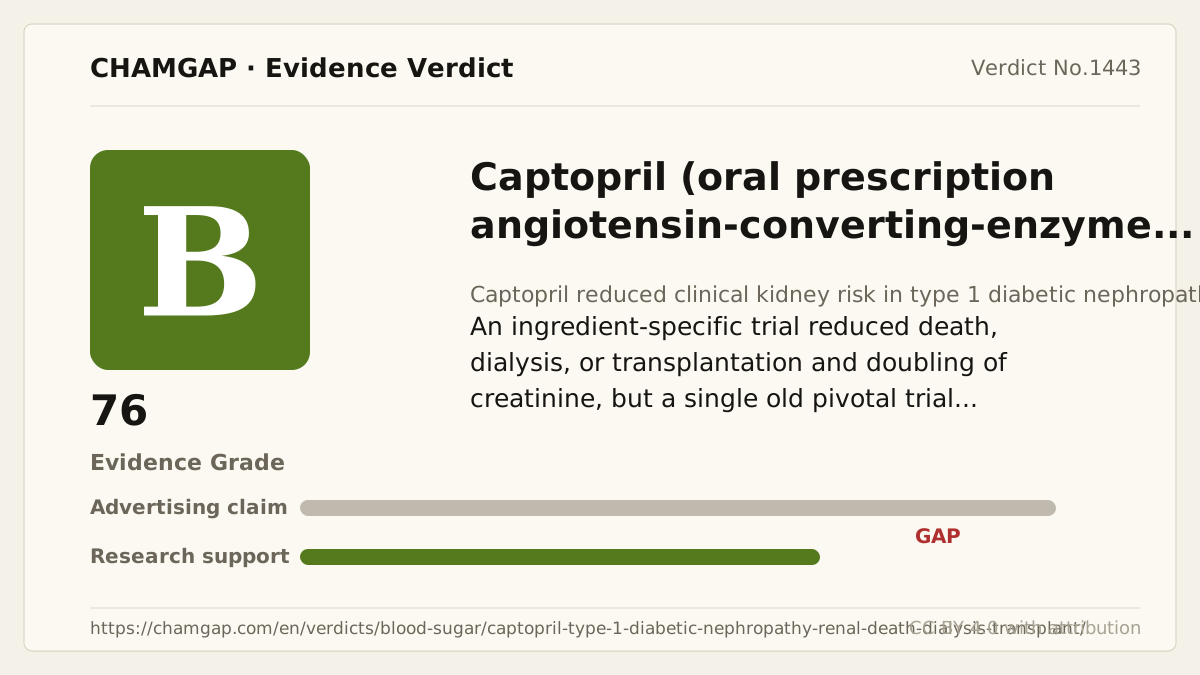
[Chamgap] Captopril x reduced death, dialysis, or transplantation in type 1 diabetic nephropathy — Evidence Grade B·76. 2 cited sources checked. Source: https://chamgap.com/en/verdicts/blood-sugar/captopril-type-1-diabetic-nephropathy-renal-death-dialysis-transplant/ · CC BY 4.0CC BY 4.0 — free to use with attribution; do not distort grades, numbers, or verdict meaning.
What this document does and does not do
Chamgap is an information source. It reports what research has and has not confirmed; it does not tell readers what to take or buy. That decision belongs to readers and, when needed, medical or legal professionals. This verdict reflects literature available up to the search date and may change as new research appears. Nothing here is medical advice.