
Acarbose,
does it really help with Delay or prevention of type 2 diabetes onset in adults with impaired glucose tolerance?
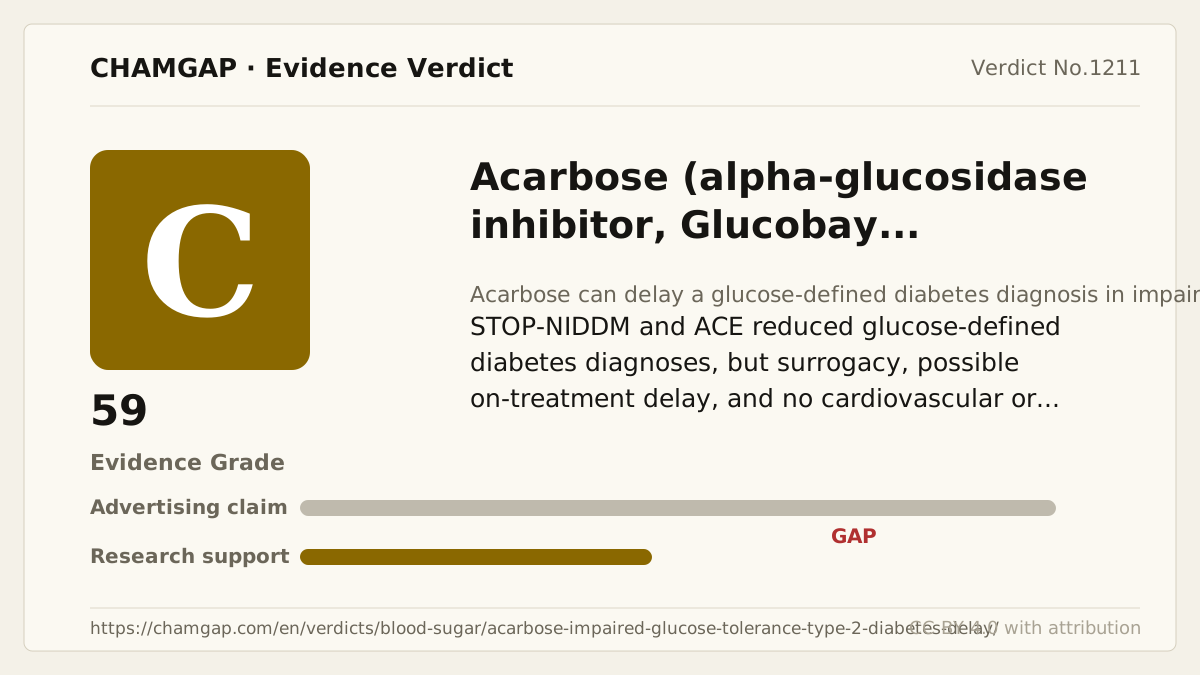
research showsAcarbose is rated C even though a reduction in glucose-defined type 2 diabetes diagnosis was reproduced in two large randomized trials of impaired glucose tolerance. Diabetes occurred in 32% versus 42% in STOP-NIDDM, with a relative hazard of 0.75, and in 13% versus 16% in 6,522 ACE participants, with a rate ratio of 0.82. The endpoint, however, was crossing a glucose threshold on oral glucose-tolerance testing. Suppressing glucose while treatment continues and postponing a diagnosis are not the same as preventing the long-term clinical burden of the disease. The primary cardiovascular endpoint in ACE was null at HR 0.98, and no mortality or microvascular-complication benefit was established. Reproducibility supports the top of the C band, but the surrogate-endpoint ceiling gives C with 59 points. This is a different efficacy axis from verdict 593, which rates postprandial glucose and HbA1c lowering a C grade.
ads claimThe phrase prevents diabetes can turn an on-treatment delay in crossing a glucose threshold into a claim of lifelong disease and complication prevention. Lifestyle, weight, blood pressure, lipids, and smoking remain central, and acarbose does not replace their management.
Useful facts when choosing a product
- Acarbose is a prescription alpha-glucosidase inhibitor that slows carbohydrate breakdown in the small intestine and blunts post-meal glucose rises. It is commonly taken with the first bite of a meal, but dose and frequency must follow the prescription and label.
- Use in impaired glucose tolerance to prevent diabetes is off-label and distinct from the usual approved indication of glycemic control in type 2 diabetes. It must not be interpreted as a substitute for lifestyle intervention.
- Flatulence, abdominal distension, pain, and diarrhea are common and dose related. Gastrointestinal intolerance and high early discontinuation were important limitations in STOP-NIDDM.
- Hypoglycemia is uncommon with monotherapy but can occur with insulin or a sulfonylurea. It should be corrected with glucose rather than sucrose, and liver-enzyme elevation and serious intestinal disease or obstruction risk must also be considered.
Chamgap Semantic Classification Code
Candidate index · review held
M.acarbose.UNK.delay-or-prevention-of-type-2-diabetes-onset-with-impaired-glucose-tolerance.prevent.placeboMedicinal interventions > Acarbose > Unknown > Delay or prevention of type 2 diabetes onset with impaired glucose tolerance > Occurrence-prevention claim > Placebo
An automated migration candidate, not an issued permanent code; exact claim scope remains under review. This machine-generated migration candidate helps retrieval but is not a permanent assignment. The original verdict ID and URL remain authoritative.
What the research actually shows
STOP-NIDDM assigned 1,429 adults with impaired glucose tolerance to acarbose 100 mg three times daily or placebo and followed them for a mean of 3.3 years. Diabetes occurred in 32% versus 42% in the analysis population, but 31% assigned acarbose discontinued early and the between-group difference narrowed during a three-month washout. ACE followed 6,522 Chinese participants with coronary heart disease and impaired glucose tolerance for a median of five years and confirmed a diabetes rate ratio of 0.82. Its primary cardiovascular composite was nevertheless null at HR 0.98. A 2018 Cochrane review synthesized 10 randomized trials with 11,814 participants and concluded that alpha-glucosidase inhibitors may prevent or delay diabetes, while certainty for most outcomes was low or very low and cardiovascular mortality or event benefit was not established.
Why this is classified as C (59)
STOP-NIDDM's 32% versus 42%, relative hazard 0.75, and ACE's 13% versus 16%, rate ratio 0.82, show reproducible reduction in glucose-defined diabetes onset. The definition was nevertheless a glucose-threshold surrogate, STOP-NIDDM had high discontinuation and a narrowing difference after washout, and ACE's primary cardiovascular composite was null at HR 0.98. With no established reduction in death or complications or durable effect after treatment withdrawal, rule 1 caps the grade at C; reproducibility supports 59 points. Verdict 593 addresses the separate axis of postprandial glucose and HbA1c lowering.
Counterpoint. For selected high-risk adults with persistent impaired glucose tolerance despite lifestyle efforts, a prescriber can weigh a modest delay in diagnosis against gastrointestinal burden. The medicine should not be prescribed with an expectation of cardiovascular risk reduction.
Rejudgment record. Cross-check applied — Credited reproducible reduction in glucose-defined type 2 diabetes incidence in STOP-NIDDM and ACE, but applied the rule 1 ceiling of C because onset was defined by fasting or oral-glucose-tolerance thresholds, durable disease modification and complication reduction after withdrawal were unclear, and the ACE primary cardiovascular composite was null
Sub-claim grades by effect
This ingredient is marketed for several effects. A single overall grade blends strong and weak claims together, so each effect is graded separately here. The overall grade reflects the strongest disconfirming or core claim.
| Effect (sub-claim) | Grade | Basis |
|---|---|---|
| Delay of type 2 diabetes diagnosis in impaired glucose tolerance | C | The result was reproduced in STOP-NIDDM and ACE, but onset was a surrogate defined by fasting or two-hour glucose thresholds and durability after withdrawal is unclear. |
| Improvement in postprandial glucose, HbA1c, and related glycemic measures | C | Glycemic improvement is reproducible but remains surrogate evidence and is the separate efficacy axis assessed in verdict 593. |
| Prevention of cardiovascular events and death | D | The primary cardiovascular composite and mortality outcomes were not significant in 6,522 ACE participants, so prevention efficacy is unproved. |
Cross-check — AI research and Codex final gate
Evidence Table
| Study | Design | Sample | Funding | Endpoint | Result | Weight |
|---|---|---|---|---|---|---|
| Chiasson JL, et al.; STOP-NIDDM Trial Research Group. Lancet. 2002;359(9323):2072–2077. | Multinational multicenter randomized double-blind placebo-controlled trial | 1,429 adults with impaired glucose tolerance randomized; 1,368 in the main analysis | Supported by Bayer | Type 2 diabetes onset defined by annual oral glucose-tolerance testing | Diabetes occurred in 221/682 participants (32%) with acarbose versus 285/686 (42%) with placebo, relative hazard 0.75 (95% CI 0.63 to 0.90), p=0.0015, but 31% assigned acarbose discontinued early. | Key direct prevention signal limited by a surrogate endpoint and discontinuation |
| Holman RR et al. 2017 ACE | Multicenter randomized double-blind placebo-controlled phase 4 outcomes trial | 6,522 Chinese participants with coronary heart disease and impaired glucose tolerance | Funded by Bayer AG | Primary cardiovascular composite and secondary onset of type 2 diabetes | Diabetes occurred in 13% versus 16%, rate ratio 0.82 (95% CI 0.71 to 0.94), but the primary cardiovascular composite was null, HR 0.98 (95% CI 0.86 to 1.11). | Large replication with a null cardiovascular hard endpoint |
| Moelands SVL et al. 2018 Cochrane review | Systematic review and meta-analysis of randomized trials | 10 randomized trials and 11,814 participants; eight acarbose trials | Supported internally by Radboud University and partly by the WHO | Diabetes incidence, mortality, cardiovascular events, and adverse events | Alpha-glucosidase inhibitors may reduce or delay diabetes, but certainty was low or very low for most outcomes and cardiovascular mortality or event benefit was not established. | Independent synthesis confirming limited certainty |
Receipt — 3 References
All 3 cited sources were verified for existence at the original page (as of 2026-07-23).
Final verification and publication gate: Codex · Evidence date: 2026-07-23 · Corrections: none
Cite this verdict
[Chamgap] Acarbose x delay or prevention of type 2 diabetes in adults with impaired glucose tolerance — Evidence Grade C·59. 3 cited sources checked. Source: https://chamgap.com/en/verdicts/blood-sugar/acarbose-impaired-glucose-tolerance-type-2-diabetes-delay/ · CC BY 4.0CC BY 4.0 — free to use with attribution; do not distort grades, numbers, or verdict meaning.
What this document does and does not do
Chamgap is an information source. It reports what research has and has not confirmed; it does not tell readers what to take or buy. That decision belongs to readers and, when needed, medical or legal professionals. This verdict reflects literature available up to the search date and may change as new research appears. Nothing here is medical advice.