
Everolimus,
does it really help with Slower aging rate and longer healthspan or lifespan in healthy adults?
research showsThe verdict that everolimus slows aging or extends healthspan or lifespan in healthy adults is ?. In a 2014 trial of 218 older adults, low-dose RAD001 improved influenza-vaccine response by about 20%, but this was an immunosenescence surrogate, not aging rate, healthspan, or lifespan. The ongoing EVERLAST study, NCT05835999, is registered to assess metabolic, cardiac, cognitive, physical, and molecular measures over 24 weeks, but no results have been published and it is not a lifespan trial. No published human intervention result was identified for the claimed endpoints, so the score is null.
ads claimClaims that lowering mTOR makes humans live longer like mice, or that a younger vaccine response reverses aging, convert mechanism and surrogates into clinical longevity. Afinitor's oncology indications do not establish anti-aging efficacy in healthy adults.
Useful facts when choosing a product
- Everolimus is a rapalog in the same class as sirolimus or rapamycin, but it is a different active ingredient. It must remain distinct from verdict 625 on sirolimus.
- Afinitor is a prescription medicine used for selected cancers and tumors associated with tuberous sclerosis; delayed aging and lifespan extension are not approved indications.
- No effective longevity dose, interval, duration, or long-term monitoring standard has been established in healthy adults. An ongoing low-dose study is not prescribing evidence.
- Stomatitis, infection and immunosuppression, noninfectious pneumonitis, hyperglycemia, dyslipidemia, myelosuppression, renal abnormalities, and drug interactions can occur.
Chamgap Semantic Classification Code
Candidate index · review held
M.everolimus.oral.slower-aging-rate-and-longer-healthspan-or-lifespan.reduce.placeboMedicinal interventions > Everolimus > Oral > Slower aging rate and longer healthspan or lifespan > Reduction claim > Placebo
An automated migration candidate, not an issued permanent code; exact claim scope remains under review. This machine-generated migration candidate helps retrieval but is not a permanent assignment. The original verdict ID and URL remain authoritative.
What the research actually shows
Mannick and colleagues randomized 218 generally healthy adults aged 65 or older to several low-dose RAD001 regimens or placebo for six weeks before influenza vaccination. Selected regimens increased antibody response by about 20% and reduced the proportion of PD-1-positive T cells, but follow-up and endpoints concerned immune function. EVERLAST is registered to give adults aged 55 to 80 with insulin resistance either 0.5 mg daily or 5 mg weekly for 24 weeks and assess insulin sensitivity, cardiac, cognitive and physical function, mTOR signaling, and safety. With no published results, it was not counted as efficacy evidence; even a surrogate change would remain distinct from longer human life.
Why this is classified as ?
A 218-person human immunosenescence trial exists, but vaccine response is a surrogate and the trial did not assess aging rate, healthspan, or lifespan. No published human intervention result addresses the claimed endpoints, and a registered trial without results does not count, so the verdict is ? and the score is null.
Counterpoint. An independent long-term randomized trial with validated aging-rate measures and prespecified patient-centered healthspan outcomes could change the verdict. Current evidence does not support self-treatment for longevity.
Rejudgment record. New verdict — Applied rule ④ because the everolimus-specific 218-person immunosenescence trial assessed influenza-vaccine response rather than aging rate, healthspan, or lifespan, while EVERLAST NCT05835999 is a registered 24-week physiological and molecular study with no published results
Sub-claim grades by effect
This ingredient is marketed for several effects. A single overall grade blends strong and weak claims together, so each effect is graded separately here. The overall grade reflects the strongest disconfirming or core claim.
| Effect (sub-claim) | Grade | Basis |
|---|---|---|
| Slower rate of aging | ? | No published human everolimus intervention trial evaluating rate of aging as an outcome was identified. |
| Extended healthspan | ? | Immune surrogate signals exist, but no disease-free survival or healthspan outcome is available. |
| Extended lifespan | ? | No intervention result evaluates overall human lifespan or time to death. |
Cross-check — AI research and Codex final gate
Evidence Table
| Study | Design | Sample | Funding | Endpoint | Result | Weight |
|---|---|---|---|---|---|---|
| Mannick JB et al. 2014 | Randomized double-blind placebo-controlled dose-ranging trial | 218 generally healthy adults aged 65 years or older | Novartis study; multiple authors were employees at the time | Influenza-vaccine antibody response, PD-1-positive T cells, and short-term safety | Selected low doses improved vaccine response by about 20%, but aging rate, healthspan, and lifespan were not assessed. | Distinct immunosenescence surrogate, not a claimed endpoint |
| EVERLAST NCT05835999 | Ongoing registered randomized double-blind placebo-controlled trial | Planned enrollment of insulin-resistant adults aged 55 to 80 years | United States National Institute on Aging and related support | Twenty-four-week insulin sensitivity, cardiac, cognitive and physical function, mTOR signaling, and safety | No published results were identified, and this is not a lifespan or healthspan outcome trial. | No results; not counted as efficacy evidence |
| Moskalev A et al. 2016 | Academic review proposing criteria for human geroprotectors | Preclinical and clinical candidate literature | Academic and foundation research | Criteria for aging rate, healthspan, and lifespan evaluation | Highlighted the gap in clinical criteria and translation from animal or mechanistic candidates to human geroprotection. | Supports endpoint standards, not direct efficacy |
Receipt — 4 References
All 4 cited sources were verified for existence at the original page (as of 2026-07-23).
Final verification and publication gate: Codex · Evidence date: 2026-07-23 · Corrections: none
Cite this verdict
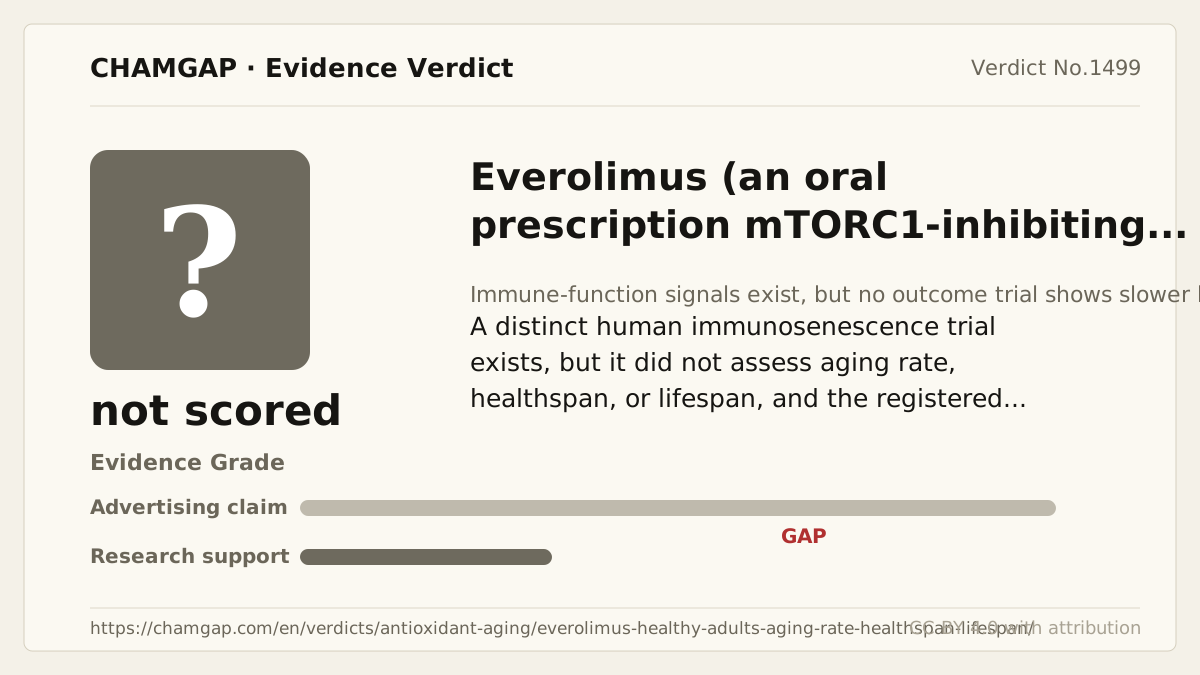
[Chamgap] Everolimus x slower aging and longer healthspan or lifespan in healthy adults — Evidence Grade ?. 4 cited sources checked. Source: https://chamgap.com/en/verdicts/antioxidant-aging/everolimus-healthy-adults-aging-rate-healthspan-lifespan/ · CC BY 4.0CC BY 4.0 — free to use with attribution; do not distort grades, numbers, or verdict meaning.
What this document does and does not do
Chamgap is an information source. It reports what research has and has not confirmed; it does not tell readers what to take or buy. That decision belongs to readers and, when needed, medical or legal professionals. This verdict reflects literature available up to the search date and may change as new research appears. Nothing here is medical advice.