
Topical tretinoin,
does it really help with Improved fine wrinkles, mottled pigmentation, and rough texture of facial photoaging?
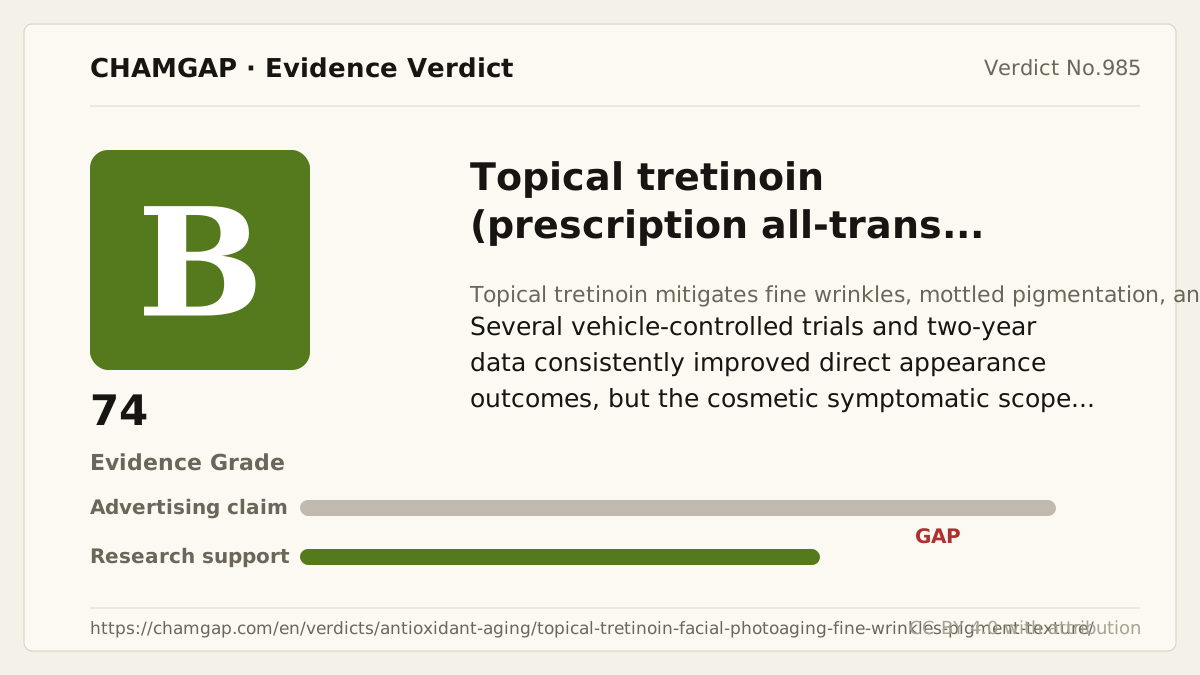
research showsTopical tretinoin is rated B because it improves fine wrinkling, mottled hyperpigmentation, and rough texture in facial photoaging. In a 251-participant randomized double-blind vehicle-controlled multicenter trial, 79% using 0.05% tretinoin for 24 weeks showed overall improvement versus 48% with vehicle, with significant benefits for fine wrinkling, mottled hyperpigmentation, and roughness. A 204-participant two-year vehicle-controlled trial and a systematic review of seven randomized trials consistently supported longer-term clinical improvement. This does not remove photodamage or reverse aging; it provides cosmetic symptomatic mitigation over months, with heterogeneous formulations, concentrations, and measures and frequent local irritation. The treatment evidence is stronger than glycolic acid 955 at C and shares a B grade with sunscreen 936, although sunscreen is prevention rather than treatment. Dryness, erythema, peeling, stinging, photosensitivity precautions, and avoidance during pregnancy are safety matters separate from efficacy.
ads claimMarketing may promise age reversal, wrinkle removal, or repair of sun damage, while labeling limits the role to adjunctive mitigation of fine wrinkles, mottled pigmentation, and tactile roughness. Benefits are partial, take months, and do not replace sunscreen or moisturization.
Useful facts when choosing a product
- Tretinoin is a prescription topical retinoid, and representative emollient-cream concentrations studied for photoaging range from 0.02% to 0.05%; a clinician adjusts concentration and frequency for the product and skin condition.
- A pea-sized amount is typically spread thinly over completely dry facial skin, often starting at a lower frequency when irritation is likely, while eyelids, lips, nasal creases, wounds, eczema, and sunburned skin are avoided.
- Visible improvement generally takes months and may gradually fade after discontinuation, and daily broad-spectrum sunscreen, protective clothing, and moisturization remain necessary.
- Early dryness, erythema, burning, stinging, and peeling are common, and excessive irritation or pigment change can occur. As a precaution, topical tretinoin should be avoided during pregnancy or when planning pregnancy and discussed with the prescriber.
Chamgap Semantic Classification Code
Candidate index · review held
M.tretinoin.topical-skin.fine-wrinkles-mottled-pigmentation-and-rough-texture-of-facial-photoaging.improve.UNKMedicinal interventions > tretinoin > Topical skin > fine wrinkles, mottled pigmentation, and rough texture of facial photoaging > Improvement claim > Unknown
An automated migration candidate, not an issued permanent code; exact claim scope remains under review. This machine-generated migration candidate helps retrieval but is not a permanent assignment. The original verdict ID and URL remain authoritative.
What the research actually shows
Weinstein and colleagues assigned 251 people with mild to moderate facial photodamage to 0.05% tretinoin, 0.01% tretinoin, or vehicle for 24 weeks. The 0.05% concentration outperformed vehicle for overall improvement, fine wrinkles, mottled pigmentation, and roughness, with supporting changes in epidermal thickness, melanin, and the stratum corneum. Kang and colleagues treated 204 people with moderate to severe photodamage using 0.05% cream or vehicle for up to two years and improved multiple appearance measures and a procollagen marker. A 2022 systematic review found seven randomized trials consistently reporting improvements in wrinkles, mottled pigmentation, sallowness, and lentigines, while noting heterogeneous formulations, doses, and outcome measures and limited recent independent trials. Tretinoin is supported more strongly than glycolic acid 955 at C, while sunscreen 936 at B addresses prevention of additional photodamage rather than this treatment question.
Why this is classified as B (74)
A 251-participant 24-week vehicle-controlled trial, a 204-participant two-year trial, and a systematic review of seven randomized trials consistently support direct improvements in fine wrinkling, mottled pigmentation, and rough texture. Cosmetic symptomatic outcomes, heterogeneous formulations, concentrations, and rating scales, background improvement with vehicle care, and frequent irritation yield B with 74 points. The evidence exceeds glycolic acid 955 at C, while sunscreen 936 at B serves a different preventive role.
Counterpoint. Increasing the amount or frequency to accelerate results usually increases irritation, so treatment is introduced gradually and evaluated over months with sunscreen and moisturization.
Rejudgment record. New verdict — Consistent direct appearance improvements in fine wrinkling, mottled pigmentation, and rough texture across multiple randomized vehicle-controlled trials and two-year data, balanced against cosmetic symptomatic outcomes, heterogeneous formulations, concentrations and rating methods, and frequent local irritation
Sub-claim grades by effect
This ingredient is marketed for several effects. A single overall grade blends strong and weak claims together, so each effect is graded separately here. The overall grade reflects the strongest disconfirming or core claim.
| Effect (sub-claim) | Grade | Basis |
|---|---|---|
| Improved fine wrinkles in facial photoaging | B | Several vehicle-controlled trials and a two-year study repeatedly showed improvement, but the effect is partial mitigation rather than removal. |
| Improved mottled pigmentation in facial photoaging | B | Multicenter and long-term trials of 0.05% tretinoin significantly outperformed vehicle. |
| Improved rough texture in facial photoaging | B | Tactile roughness and overall appearance improved, but benefit must be distinguished from irritation and peeling. |
Cross-check — AI research and Codex final gate
Evidence Table
| Study | Design | Sample | Funding | Endpoint | Result | Weight |
|---|---|---|---|---|---|---|
| Weinstein GD et al. 1991 | Multicenter randomized double-blind vehicle-controlled trial | 251 participants with mild to moderate facial photodamage | Funding source not stated in the PubMed record; commercial emollient-cream formulation study | Overall improvement, fine wrinkling, mottled hyperpigmentation, roughness, and histology at 24 weeks | Overall improvement was 79% with 0.05% tretinoin versus 48% with vehicle, with significant improvement in fine wrinkles, mottled pigmentation, and roughness. | Key direct multicenter randomized trial |
| Kang S et al. 2005 | Two-year randomized vehicle-controlled multicenter trial | 204 participants with moderate to severe facial photodamage | Long-term commercial emollient-cream trial; specific funding source not stated in the PubMed abstract | Clinical wrinkles, pigmentation, lentigines, sallowness, histologic safety, and procollagen | Tretinoin 0.05% significantly improved multiple photodamage signs and a procollagen marker versus vehicle. | Long-term durability and supporting histologic evidence |
| Sitohang IBS et al. 2022 | Systematic review of randomized controlled trials | Seven eligible randomized controlled trials | Supported by the Ministry of Research and Technology of the Republic of Indonesia (B/202/E3/RA.00/2020) | Wrinkling, mottled hyperpigmentation, sallowness, lentigines, and tolerability | Included trials consistently reported improved clinical appearance of photoaging, but formulations, doses, and outcome measures were heterogeneous. | Synthesis of consistency and limitations |
Receipt — 3 References
All 3 cited sources were verified for existence at the original page (as of 2026-07-21).
Final verification and publication gate: Codex · Evidence date: 2026-07-21 · Corrections: none
Cite this verdict
[Chamgap] Topical tretinoin x fine wrinkles, mottled pigmentation, and rough texture in facial photoaging — Evidence Grade B·74. 3 cited sources checked. Source: https://chamgap.com/en/verdicts/antioxidant-aging/topical-tretinoin-facial-photoaging-fine-wrinkles-pigment-texture/ · CC BY 4.0CC BY 4.0 — free to use with attribution; do not distort grades, numbers, or verdict meaning.
What this document does and does not do
Chamgap is an information source. It reports what research has and has not confirmed; it does not tell readers what to take or buy. That decision belongs to readers and, when needed, medical or legal professionals. This verdict reflects literature available up to the search date and may change as new research appears. Nothing here is medical advice.