
Wild lettuce extract,
does it really help with Sedation, sleep onset, and restful sleep?
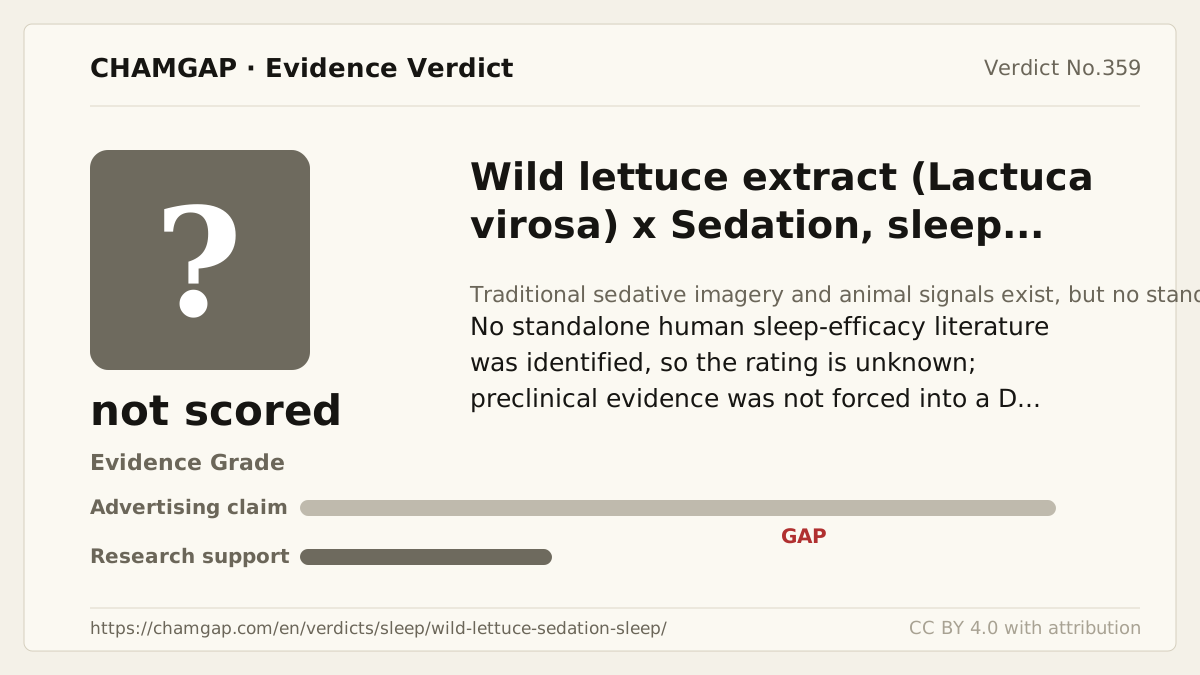
research showsNo credible human efficacy trial was found testing whether Lactuca virosa extract alone improves sedation, sleep-onset latency, or sleep quality. Mouse signals for lactucin and lactucopicrin and traditional use cannot establish human efficacy, so the rating is unknown.
ads claimMarketing invokes the idea that lettuce causes sleepiness, calls it a natural sedative, or uses the historic wild-lettuce opium image. Such analogies omit species, plant part, extraction specifications, and human efficacy trials.
Useful facts when choosing a product
- Cross-border listings accessible to Korean consumers include a 59.1 mL tincture and powder or capsule products with variable extraction ratios and lactucin standardization.
- Lactuca virosa and common lettuce, Lactuca sativa, are different species, so evidence cannot be automatically transferred.
- No standalone effective human dose has been established.
- A toxicity case series described altered consciousness, agitation, dizziness, nausea, and other symptoms after wild-lettuce exposure, requiring safety caution separate from efficacy.
Chamgap Semantic Classification Code
Candidate index · review held
S.wild-lettuce-extract.UNK.sedation-sleep-onset-and-restful-sleep.assess.UNKSupplements and nutraceuticals > Wild lettuce extract > Unknown > Sedation, sleep onset, and restful sleep > Association or change assessment > Unknown
An automated migration candidate, not an issued permanent code; exact claim scope remains under review. This machine-generated migration candidate helps retrieval but is not a permanent assignment. The original verdict ID and URL remain authoritative.
What the research actually shows
Wesolowska 2006 administered lactucin and lactucopicrin to mice and observed reduced locomotor activity and sedative or analgesic signals. This was not a human sleep trial of a Lactuca virosa product. Studies of seeds from Lactuca sativa or Korean lettuce cultivars are a different species and must not be transferred to L. virosa extract.
Why this is classified as ?
The rating is unknown and the score is null because no standalone human sleep-efficacy literature was identified. Traditional use and sedative signals in mice do not create a human efficacy grade.
Counterpoint. Preclinical activity may justify dose-finding and safety studies of a standardized extract, but it does not support current consumer efficacy claims.
Rejudgment record. Reassessment (cross-check reflected) — No human sleep-efficacy trial of Lactuca virosa alone; traditional use and animal sedation signals were not transferred to human efficacy
Cross-check — AI research and Codex final gate
Evidence Table
| Study | Design | Sample | Funding | Endpoint | Result | Weight |
|---|---|---|---|---|---|---|
| Wesolowska A et al. 2006 | Mouse pharmacology study | Unknown | Locomotor activity and sedative or analgesic behavior | Sedative and analgesic signals for lactucin and lactucopicrin; not a human trial. | Preclinical only | |
| Besharat S et al. 2009 | Toxicity case series | 8 | Unknown | Toxic symptoms after wild-lettuce exposure | Acute toxicity cases included neurologic and gastrointestinal abnormalities; not an efficacy trial. | Safety only |
Receipt — 2 References
All 2 cited sources were verified for existence at the original page (as of 2026-07-16).
Final verification and publication gate: Codex · Evidence date: 2026-07-16 · Corrections: none
Cite this verdict
[Chamgap] Wild lettuce extract (Lactuca virosa) x sedation, sleep onset, and restful sleep — Evidence Grade ?. 2 cited sources checked. Source: https://chamgap.com/en/verdicts/sleep/wild-lettuce-sedation-sleep/ · CC BY 4.0CC BY 4.0 — free to use with attribution; do not distort grades, numbers, or verdict meaning.
What this document does and does not do
Chamgap is an information source. It reports what research has and has not confirmed; it does not tell readers what to take or buy. That decision belongs to readers and, when needed, medical or legal professionals. This verdict reflects literature available up to the search date and may change as new research appears. Nothing here is medical advice.