
Weighted blanket,
does it really help with Improved insomnia symptoms?
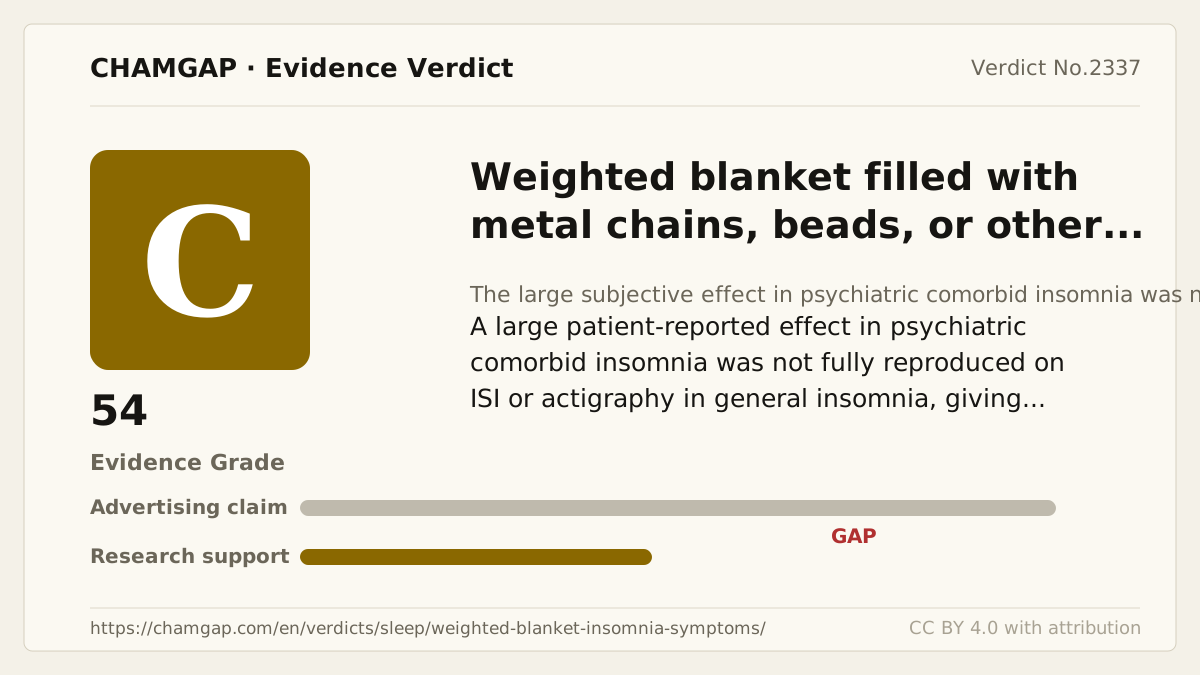
research showsThe grade is C. In a four-week randomized trial of 120 adults with psychiatric disorders and comorbid insomnia, a 6- to 8-kg metal-chain blanket produced a much larger patient-reported insomnia improvement than a 1.5-kg plastic-chain control: response was 59.4% versus 5.4% and remission 42.2% versus 3.6%. In 102 adults with general clinical insomnia, a one-month trial improved PSQI but not ISI or actigraphic awakenings. The populations and primary measures differ, so the trials were not counted as direct replication; both were small and short, giving C with 54 points.
ads claimThe large ISI effect in psychiatric comorbid insomnia cannot automatically be transferred to general insomnia or every retail blanket. Filling, weight, and thermal load may differ from the 6- to 8-kg metal-chain test blanket.
Useful facts when choosing a product
- Ekholm compared a 6- to 8-kg metal-chain blanket with a 1,535-g plastic-chain control.
- Yu compared a weighted blanket with a normal blanket; 95 of 102 completed one month, with intention-to-treat analysis.
- Patient-reported ISI and PSQI are distinct from wrist actigraphy.
Chamgap Semantic Classification Code
Candidate index · review held
UNK.weighted-blanket-filled-with-metal-chains.UNK.insomnia-symptoms.improve.UNKUnknown > Weighted blanket filled with metal chains > Unknown > insomnia symptoms > Improvement claim > Unknown
An automated migration candidate, not an issued permanent code; exact claim scope remains under review. This machine-generated migration candidate helps retrieval but is not a permanent assignment. The original verdict ID and URL remain authoritative.
What the research actually shows
Ekholm randomized 120 adults with major depression, bipolar disorder, generalized anxiety disorder, or attention-deficit/hyperactivity disorder plus insomnia. They used an 8-kg blanket, or 6 kg if needed, versus a shape-matched 1,535-g plastic-chain blanket for four weeks. ISI showed d 1.90, with response 59.4% versus 5.4% and remission 42.2% versus 3.6%. Jie Yu, Jiahui Du, Zhaojun Yang, and colleagues randomized 102 adults with general clinical insomnia, 52 versus 50, to a weighted or normal blanket for one month and analyzed intention to treat. PSQI improved, but ISI was null, beta -0.045 (95% CI -0.120 to 0.029), P=.233. Funding from Damian Health Tech (Hangzhou) CO., LTD was reported; whether that company manufactured the blanket could not be confirmed.
Why this is classified as C (54)
Randomized evidence includes a large patient-reported effect, but only PSQI succeeded among Yu's two co-primary endpoints, ISI and objective awakenings were null there, and both trials were under 200 participants and under 12 weeks, giving C with 54 points. Yu reported Damian Health Tech funding; manufacturer status could not be confirmed.
Counterpoint. People with respiratory disease, sleep apnea, impaired mobility, or inability to remove the blanket independently should seek advice before choosing the weight.
Rejudgment record. Cross-check applied — Cross-check of both original reports for sample, population, comparator, duration, patient-reported primary scales, actigraphy, funding, and feasible masking
| Endpoint | P | Symptom or function itself is the target - including patient reports and performance tests |
| Replication | R1 | Single confirmatory trial |
| Independence | I2 | Decisive evidence is publicly or non-profit funded |
| Effect size | E+ | Meets the clinically important threshold |
Stored derived and displayed grades match; this is not a current recalculation or validity check (C).
Sub-claim grades by effect
This ingredient is marketed for several effects. A single overall grade blends strong and weak claims together, so each effect is graded separately here. The overall grade reflects the strongest disconfirming or core claim.
| Effect (sub-claim) | Grade | Basis |
|---|---|---|
| Improved ISI in psychiatric comorbid insomnia | C | A four-week randomized trial found a large effect, but it was small and short. |
| Improved objective sleep in general insomnia | D | Actigraphic awakenings did not differ between groups. |
Cross-check — AI research and Codex final gate
Evidence Table
| Study | Design | Sample | Funding | Endpoint | Result | Weight |
|---|---|---|---|---|---|---|
| Ekholm B et al. 2020 | Randomized parallel controlled trial | 120 randomized 1:1; four weeks | Public Region Stockholm ALF grant; authors declared no conflicts | Primary patient-reported ISI; diaries, fatigue, anxiety, depression; wrist actigraphy | ISI d=1.90; response 59.4% versus 5.4%; remission 42.2% versus 3.6%. | Primary positive randomized trial |
| Yu J et al. 2024 | Three-center pilot randomized parallel trial | 102 randomized, 52/50; 95 completed; intention to treat; one month | Funding from Damian Health Tech (Hangzhou) CO., LTD was reported; whether it manufactured the blanket could not be confirmed. | Co-primary PSQI and ISI; wrist actigraphy | PSQI change -4.1 (SD 4.1) versus -2.0 (SD 3.2), P=.006; ISI beta -0.045 (95% CI -0.120 to 0.029); awakenings P=.280. | Partly positive and partly null evidence in general insomnia |
Receipt — 2 References
All 2 cited sources were verified for existence at the original page (as of 2026-08-06).
Final verification and publication gate: Codex · Evidence date: 2026-08-06 · Corrections: none
Cite this verdict
[Chamgap] Weighted blanket x improved insomnia symptoms — Evidence Grade C·54. 2 cited sources checked. Source: https://chamgap.com/en/verdicts/sleep/weighted-blanket-insomnia-symptoms/ · CC BY 4.0CC BY 4.0 — free to use with attribution; do not distort grades, numbers, or verdict meaning.
What this document does and does not do
Chamgap is an information source. It reports what research has and has not confirmed; it does not tell readers what to take or buy. That decision belongs to readers and, when needed, medical or legal professionals. This verdict reflects literature available up to the search date and may change as new research appears. Nothing here is medical advice.