
Somnox Sleep Robot,
does it really help with Improved sleep onset, sleep maintenance, and sleep efficiency in chronic insomnia through breathing-rhythm synchronization?
research showsSomnox is rated D. A trial randomized 44 adults with insomnia to three weeks of robot use or a waitlist and found no significant improvement in insomnia severity, sleep-onset latency, wake after sleep onset, total sleep time, or sleep efficiency by either sleep diary or actigraphy. This is one small null trial, so the grade is D with 28 points rather than F, which would require repeated refutation.
ads claimA plausible story that movements mimicking slow breathing may reduce arousal is expanded into treatment of chronic insomnia. Current clinical data do not connect the mechanism or comfort with objective sleep improvement.
Useful facts when choosing a product
- Somnox is a cushion-like device held in bed that uses sounds and movements to mimic slow breathing.
- The pivotal trial evaluated daily home use for three weeks with both sleep diaries and wrist actigraphy.
- It lacks drug adverse effects, but discomfort, sleep disruption, device reliance, and cost are possible, and evidence does not support replacing cognitive behavioral therapy.
Chamgap Semantic Classification Code
Candidate index · review held
P.somnox-sleep-robot.device.sleep-onset-sleep-maintenance-and-sleep-efficiency-in-chronic-insomnia-through-breathing-rhythm-synchronization.improve.UNKProcedures, devices and tests > Somnox Sleep Robot > Device delivered > sleep onset, sleep maintenance, and sleep efficiency in chronic insomnia through breathing-rhythm synchronization > Improvement claim > Unknown
An automated migration candidate, not an issued permanent code; exact claim scope remains under review. This machine-generated migration candidate helps retrieval but is not a permanent assignment. The original verdict ID and URL remain authoritative.
What the research actually shows
Støre 2023 randomized 44 adults with insomnia to three weeks of Somnox use or a waitlist. The primary Insomnia Severity Index outcome and sleep-diary and wrist-actigraphy measures of sleep-onset latency, wake after sleep onset, total sleep time, and sleep efficiency were all nonsignificant. An earlier repeated ABA study in four people found marginal diary and actigraphy changes, sometimes in the direction of deterioration, and mixed effects overall.
Why this is classified as D (28)
Direct randomized evidence consists of one small 44-person trial with no significant effect on any key sleep outcome. Sparse null evidence yields D with 28 points; the absence of repeated large trials precludes F.
Counterpoint. It may be a personally comforting relaxation aid, but it should not replace cognitive behavioral therapy for insomnia, the evidence-based first-line treatment.
Rejudgment record. New verdict — Applied boundary rule ② for sparse null randomized evidence because a 44-person waitlist-controlled trial found no significant benefit for insomnia severity or diary and actigraphy measures of sleep onset, maintenance, total sleep time, and efficiency; F was excluded because refutation is not repeated
Sub-claim grades by effect
This ingredient is marketed for several effects. A single overall grade blends strong and weak claims together, so each effect is graded separately here. The overall grade reflects the strongest disconfirming or core claim.
| Effect (sub-claim) | Grade | Basis |
|---|---|---|
| Improved sleep onset | D | Diary and actigraphy sleep-onset latency were nonsignificant in the randomized trial. |
| Improved sleep maintenance | D | Wake after sleep onset and total sleep time showed no significant between-group improvement. |
| Improved sleep efficiency | D | Both subjective and objective sleep efficiency were null, based on one small trial. |
Cross-check — AI research and Codex final gate
Evidence Table
| Study | Design | Sample | Funding | Endpoint | Result | Weight |
|---|---|---|---|---|---|---|
| Støre SJ et al. 2023 | Randomized waitlist-controlled trial | 44 participants; 22 device and 22 waitlist | Somnox loaned devices but reportedly had no role in design, analysis, or publication | ISI, sleep-onset latency, wake after sleep onset, total sleep time, and sleep efficiency | After three weeks, neither ISI nor any diary or actigraphy sleep variable differed significantly between groups. | Pivotal direct randomized evidence; small and null |
| Støre SJ et al. 2022 | Repeated ABA single-case study | Four adults with insomnia | Somnox loaned devices; reported as independent research | Sleep diary, actigraphy, and insomnia and arousal questionnaires | Objective and diary differences were marginal and sometimes worse, with mixed effects overall. | Very small exploratory evidence |
Receipt — 2 References
All 2 cited sources were verified for existence at the original page (as of 2026-07-23).
Final verification and publication gate: Codex · Evidence date: 2026-07-23 · Corrections: none
Cite this verdict
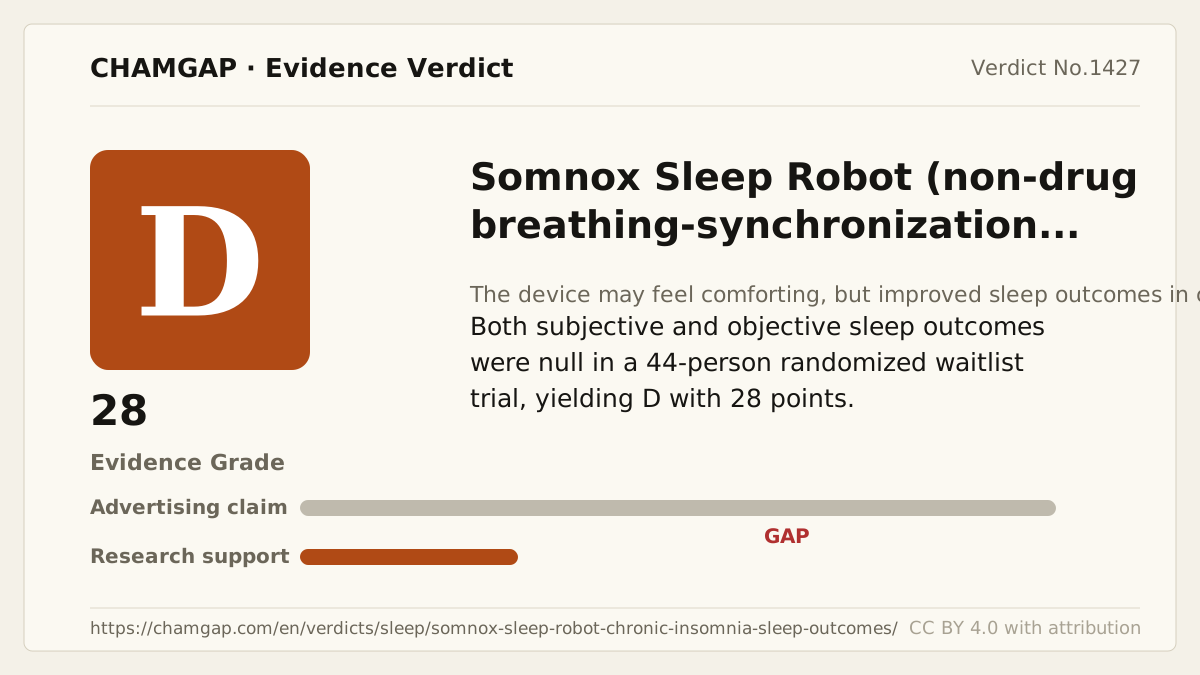
[Chamgap] Somnox Sleep Robot x improved sleep onset, maintenance, and efficiency in chronic insomnia — Evidence Grade D·28. 2 cited sources checked. Source: https://chamgap.com/en/verdicts/sleep/somnox-sleep-robot-chronic-insomnia-sleep-outcomes/ · CC BY 4.0CC BY 4.0 — free to use with attribution; do not distort grades, numbers, or verdict meaning.
What this document does and does not do
Chamgap is an information source. It reports what research has and has not confirmed; it does not tell readers what to take or buy. That decision belongs to readers and, when needed, medical or legal professionals. This verdict reflects literature available up to the search date and may change as new research appears. Nothing here is medical advice.