
Sleep mouth tape,
does it really help with Treatment of nighttime snoring and obstructive sleep apnea with improved sleep quality?
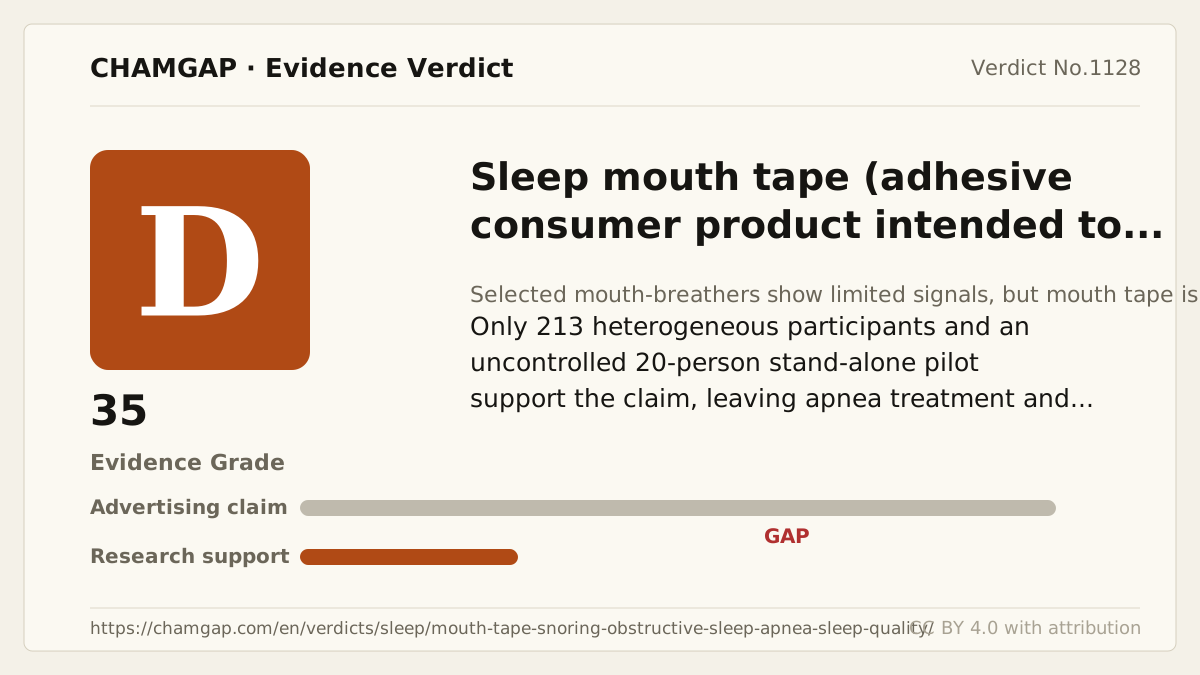
research showsThe claim that mouth tape independently treats snoring or obstructive sleep apnea and improves sleep quality is rated D. A 2025 systematic review found only 10 studies with 213 total participants; only some improved the apnea-hypopnea index or oxygen desaturation, while others found no difference. The most cited stand-alone study was an uncontrolled one-week before-and-after pilot in 20 selected mouth-breathers with mild apnea. A 2025 randomized crossover trial found better adherence and subjective symptoms when tape was added to existing CPAP in selected mouth-breathers, but it did not establish tape as stand-alone apnea treatment. Nasal obstruction can create breathing difficulty or asphyxiation risk, which is kept separate under safety.
ads claimMarketing links the simple mechanism of keeping the mouth closed to eliminated snoring, treated apnea, deeper sleep, and more energy. Research mostly selected small groups able to breathe through the nose and tolerate tape, so it does not assure the same result in nasal obstruction, severe apnea, or self-diagnosed users.
Useful facts when choosing a product
- Sleep mouth tape is an adhesive consumer product intended to encourage nasal breathing, not an approved drug treatment for obstructive sleep apnea or a replacement for CPAP.
- Snoring can be primary snoring or a sign of obstructive sleep apnea, so witnessed pauses, gasping, marked daytime sleepiness, or hypertension should prompt sleep evaluation.
- It should not be used with nasal blockage, structural nasal problems, an active allergy flare, alcohol or sedative exposure, vomiting risk, or inability to remove the tape immediately.
- Skin irritation, lip injury, anxiety, panic, and breathing difficulty can occur, and asphyxiation risk has been raised when the nose is obstructed. The tape should be removed immediately if symptoms occur.
Chamgap Semantic Classification Code
Candidate index · review held
UNK.sleep-mouth-tape.intranasal.treatment-of-nighttime-snoring-and-obstructive-sleep-apnea-with-improved-sleep-quality.improve.baselineUnknown > Sleep mouth tape > Intranasal > Treatment of nighttime snoring and obstructive sleep apnea with improved sleep quality > Improvement claim > Within-group baseline comparison
An automated migration candidate, not an issued permanent code; exact claim scope remains under review. This machine-generated migration candidate helps retrieval but is not a permanent assignment. The original verdict ID and URL remain authoritative.
What the research actually shows
Rhee and colleagues searched literature from 1999 through February 2024 and included 10 studies with 213 participants using mouth tape or oral patches. Populations, tape methods, cointerventions, and outcomes differed, and results were mixed. Lee and colleagues selected 20 mouth-breathers with mild apnea who tolerated tape; after one week, home testing showed a decrease in median apnea-hypopnea index from 8.3 to 4.7 and snoring index from 303.8 to 121.1, but no control group was used. Meksukree and colleagues randomized 62 CPAP-treated patients in a crossover design and found 51.8 more minutes of CPAP use per day plus better subjective snoring and awakenings with tape, which is adjunctive rather than stand-alone evidence.
Why this is classified as D (35)
The 2025 review contained only 213 participants with mixed results, and the leading positive stand-alone study was an uncontrolled one-week comparison in 20 selected people. A CPAP-adjunct crossover trial does not establish independent treatment of apnea, snoring, or general sleep quality. This yields D with 35 points; nasal-obstruction risk remains a separate safety issue.
Counterpoint. Use as an adjunct for oral leak during CPAP would require prior assessment of nasal patency and apnea severity plus discussion with a sleep clinician. Self-taping should never be used to discontinue CPAP or another established treatment.
Rejudgment record. New verdict — Applied D because the 2025 review contained only 10 heterogeneous studies and 213 participants with mixed results, positive stand-alone evidence relied on an uncontrolled 20-person before-and-after pilot, and the randomized CPAP-adjunct trial did not establish independent treatment
Sub-claim grades by effect
This ingredient is marketed for several effects. A single overall grade blends strong and weak claims together, so each effect is graded separately here. The overall grade reflects the strongest disconfirming or core claim.
| Effect (sub-claim) | Grade | Basis |
|---|---|---|
| Stand-alone treatment of obstructive sleep apnea | D | Positive stand-alone evidence relies heavily on an uncontrolled before-and-after comparison in 20 selected patients with mild apnea. |
| Reduction of nighttime snoring | D | Small positive signals exist, but weak controls, cointerventions, and subjective outcomes limit generalization. |
| Improvement of general sleep quality | D | Apart from subjective improvement in a selected CPAP-adjunct population, independent replicated objective evidence is lacking. |
Cross-check — AI research and Codex final gate
Evidence Table
| Study | Design | Sample | Funding | Endpoint | Result | Weight |
|---|---|---|---|---|---|---|
| Rhee J et al. 2025 | PRISMA systematic review | 10 studies and 213 total participants | No specific funding and no competing interests reported | Apnea-hypopnea index, oxygen desaturation, snoring, oral leak, and safety | Only two studies improved apnea markers, others included null findings, and asphyxiation risk with nasal obstruction was raised. | Key synthesis with low certainty |
| Lee YC et al. 2022 | Uncontrolled short-term before-and-after pilot study | 20 selected mouth-breathers with mild obstructive sleep apnea | No external funding | One-week home-test apnea-hypopnea, snoring, and oxygen-desaturation indices | Apnea-hypopnea index fell from 8.3 to 4.7 and snoring index from 303.8 to 121.1, but there was no control group. | Positive small signal with selection and no control |
| Meksukree A et al. 2025 | Randomized crossover trial in CPAP users | 62 CPAP-treated patients with apnea and mouth breathing | Academic-center study; no conflicts reported | CPAP adherence, leak, sleepiness, subjective snoring, and awakenings | Adding tape increased average CPAP use by 51.8 minutes per day and improved several subjective symptoms. | Adjunct-to-CPAP evidence indirect for stand-alone treatment |
Receipt — 3 References
All 3 cited sources were verified for existence at the original page (as of 2026-07-22).
Final verification and publication gate: Codex · Evidence date: 2026-07-22 · Corrections: none
Cite this verdict
[Chamgap] Sleep mouth tape x treatment of snoring and sleep apnea with better sleep quality — Evidence Grade D·35. 3 cited sources checked. Source: https://chamgap.com/en/verdicts/sleep/mouth-tape-snoring-obstructive-sleep-apnea-sleep-quality/ · CC BY 4.0CC BY 4.0 — free to use with attribution; do not distort grades, numbers, or verdict meaning.
What this document does and does not do
Chamgap is an information source. It reports what research has and has not confirmed; it does not tell readers what to take or buy. That decision belongs to readers and, when needed, medical or legal professionals. This verdict reflects literature available up to the search date and may change as new research appears. Nothing here is medical advice.