
Mirtazapine,
does it really help with Long-term improvement of chronic insomnia in adults without depression?
research showsMirtazapine can reduce short-term symptoms of chronic insomnia, but the claim of sustained benefit for months or longer in adults without depression is rated D. In the independent 2025 DREAMING trial of 80 participants, the mirtazapine group had an Insomnia Severity Index score 6.0 points lower than placebo at six weeks, but the difference disappeared from week 12 onward, and the investigators concluded that the results did not support prescribing it for several months. The 60-person MIRAGE trial in older adults also showed improvement after 28 days but did not assess long-term efficacy, and some participants had depressive symptoms or a history of depression, limiting directness for a strictly nondepressed population. Sedation may be an efficacy signal, but it is not the same as long-term restorative sleep or functional improvement. Daytime drowsiness, increased appetite and weight, and restless legs are recorded separately under safety.
ads claimA pharmacological tendency to cause drowsiness and four-to-six-week symptom relief can be transformed into a claim that long-term use restores normal sleep. Sedation, subjective Insomnia Severity Index improvement, long-term function, and persistence after discontinuation are different endpoints.
Useful facts when choosing a product
- Mirtazapine is a prescription antidepressant for major depressive disorder, and treatment of isolated chronic insomnia is generally off label.
- Insomnia trials commonly used 7.5 to 15 mg near bedtime, but that purpose and dose differ from antidepressant labeling, so it should not be started or adjusted without the prescriber.
- Cognitive behavioral therapy for insomnia is first-line treatment for chronic insomnia, and sleep apnea, restless legs, depression, anxiety, pain, and medication causes should be assessed.
- Common problems include daytime drowsiness, dizziness, dry mouth, increased appetite, and weight gain. Mirtazapine can trigger or worsen restless legs or periodic limb movements, and discontinuation should be planned gradually with the prescriber.
Chamgap Semantic Classification Code
Candidate index · review held
M.mirtazapine.UNK.chronic-insomnia-without-depression.improve.placeboMedicinal interventions > Mirtazapine > Unknown > chronic insomnia without depression > Improvement claim > Placebo
An automated migration candidate, not an issued permanent code; exact claim scope remains under review. This machine-generated migration candidate helps retrieval but is not a permanent assignment. The original verdict ID and URL remain authoritative.
What the research actually shows
The DREAMING study by Bakker and colleagues randomized 80 people with insomnia disorder inadequately helped by nonpharmacological care to mirtazapine, amitriptyline, or placebo. Mirtazapine produced a positive six-week Insomnia Severity Index mean difference of -6.0 points, but there was no significant difference from week 12 onward, and data from 16 weeks of treatment and 52 weeks of follow-up did not support long-term prescribing. The MIRAGE study by Nguyen and colleagues gave mirtazapine 7.5 mg or placebo to 60 adults aged 65 or older for 28 days and found Insomnia Severity Index changes of -6.5 versus -2.9, but adverse-event discontinuations occurred in six versus one participant. Only 50% of MIRAGE participants had no depressive symptoms; most others had mild symptoms, so it was not a long-term trial solely in nondepressed adults. The 2023 European guideline places cognitive behavioral therapy for insomnia first and limits sedating antidepressants to case-by-case use after weighing benefits and harms.
Why this is classified as D (30)
The independent DREAMING trial showed six-week improvement but no difference from week 12 onward, while MIRAGE was limited to 28 days and 60 older adults. No controlled trial establishes sustained long-term benefit solely in nondepressed adults, and the direct longer-term finding was negative; the claim receives D with 30 points. Sedation, weight gain, daytime drowsiness, and restless legs are independent safety issues.
Counterpoint. For selected patients with severe symptoms and inadequate access or response to cognitive behavioral therapy, a prescriber may consider a brief trial regardless of depression status. Effect, daytime function, weight, and restless legs should be reassessed rather than automatically extending treatment.
Rejudgment record. New verdict — Accepted positive four-to-six-week signals from independent 2025 placebo-controlled trials, but assigned D to long-term improvement because DREAMING found no difference from week 12 and no trial establishes sustained efficacy specifically in nondepressed adults
Sub-claim grades by effect
This ingredient is marketed for several effects. A single overall grade blends strong and weak claims together, so each effect is graded separately here. The overall grade reflects the strongest disconfirming or core claim.
| Effect (sub-claim) | Grade | Basis |
|---|---|---|
| Long-term improvement of chronic insomnia in adults without depression | D | DREAMING found no placebo difference after 12 weeks, and no long-term trial exists solely in nondepressed adults. |
| Short-term insomnia symptom improvement over about four to six weeks | C | Two small independent randomized trials improved the Insomnia Severity Index, but outcomes were subjective, duration was short, and generalizability was limited. |
| Improvement of insomnia accompanying depression | ? | This verdict concerns long-term treatment of isolated insomnia; sleep change during depression treatment is a separate indication and evidence base. |
Cross-check — AI research and Codex final gate
Evidence Table
| Study | Design | Sample | Funding | Endpoint | Result | Weight |
|---|---|---|---|---|---|---|
| Bakker MH et al. 2025 DREAMING | Pragmatic multicenter randomized double-blind placebo-controlled phase 3 trial | 80 adults with insomnia disorder across mirtazapine, amitriptyline, and placebo groups | Investigator-initiated public and academic research; no competing interests declared | Insomnia Severity Index, recovery, and functional measures at 6, 12, 20, and 52 weeks | Mirtazapine was positive at six weeks with an Insomnia Severity Index mean difference of -6.0 points, but no significant difference from placebo remained from week 12. | Key independent direct trial for the long-term claim |
| Nguyen PVQ et al. 2025 MIRAGE | Randomized double-blind placebo-controlled short-term trial | 60 adults aged 65 or older with chronic insomnia | Supported by the Quebec Research Network on Ageing; some authors disclosed consulting or research relationships with sleep-drug companies | Insomnia Severity Index, subjective and actigraphic sleep measures, and adverse events after 28 days | Insomnia Severity Index change favored mirtazapine at -6.5 versus -2.9 with placebo, but adverse-event discontinuations were six versus one and long-term efficacy was not assessed. | Short-term efficacy signal with duration limitations for the long-term claim |
Receipt — 3 References
All 3 cited sources were verified for existence at the original page (as of 2026-07-20).
Final verification and publication gate: Codex · Evidence date: 2026-07-20 · Corrections: none
Cite this verdict
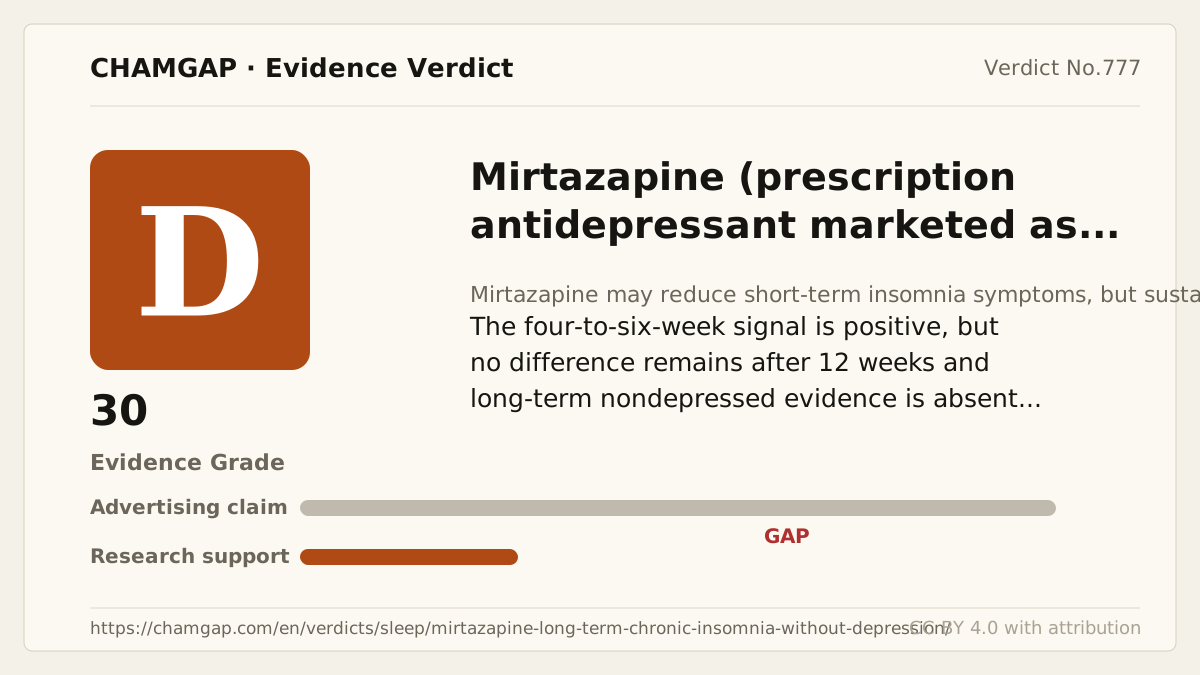
[Chamgap] Mirtazapine x long-term improvement of chronic insomnia in adults without depression — Evidence Grade D·30. 3 cited sources checked. Source: https://chamgap.com/en/verdicts/sleep/mirtazapine-long-term-chronic-insomnia-without-depression/ · CC BY 4.0CC BY 4.0 — free to use with attribution; do not distort grades, numbers, or verdict meaning.
What this document does and does not do
Chamgap is an information source. It reports what research has and has not confirmed; it does not tell readers what to take or buy. That decision belongs to readers and, when needed, medical or legal professionals. This verdict reflects literature available up to the search date and may change as new research appears. Nothing here is medical advice.