
Low-dose quetiapine,
does it really help with Improved sleep onset and maintenance in primary insomnia?
research showsThe direct primary-insomnia evidence is a single randomized trial with 13 completers. Total sleep time was MD +52.68 minutes (95% CI -27.27 to 132.6), sleep-latency reduction was MD 72.44 minutes (-2.65 to 147.5), and satisfaction was MD 6.16 (-12.32 to 24.64), leaving room for large benefit. Because clinically meaningful benefit is not excluded, the grade is D with 35 points, not F.
ads claimPrescribing custom and strong drowsiness can be packaged as a nonaddictive sleep aid, safety at low dose, and all-night maintenance. Antipsychotic sedation is not established efficacy for primary insomnia, and low doses do not remove metabolic or cardiac harm.
Useful facts when choosing a product
- Quetiapine is an atypical antipsychotic approved for conditions such as schizophrenia and bipolar disorder. Treatment of primary insomnia alone is off-label, and the 25-to-100-mg doses commonly used for sleep are not approved hypnotic doses.
- The only placebo-controlled trial in primary insomnia used 25 mg for two weeks and had 13 completers. A small null trial cannot establish individual benefit or durable long-term efficacy.
- Weight gain, increased appetite, worsening glucose and lipids, and daytime sedation can occur even at low doses. Long-term use requires monitoring of weight, waist, blood pressure, glucose, and lipids.
- Orthostatic hypotension, falls, QT prolongation, and rare movement disorders or neuroleptic malignant syndrome can occur, while alcohol and other sedatives increase impairment. It should not be started independently or stopped abruptly without discussing it with the prescriber.
Chamgap Semantic Classification Code
Candidate index · review held
UNK.quetiapine.UNK.sleep-onset-and-maintenance-in-primary-insomnia.improve.placeboUnknown > quetiapine > Unknown > sleep onset and maintenance in primary insomnia > Improvement claim > Placebo
An automated migration candidate, not an issued permanent code; exact claim scope remains under review. This machine-generated migration candidate helps retrieval but is not a permanent assignment. The original verdict ID and URL remain authoritative.
What the research actually shows
The direct trial gave 25 mg or placebo for two weeks to patients with DSM-IV-TR primary insomnia; only 13 completed it and all subjective sleep-diary outcomes were nonsignificant. The 2016 systematic review found no other eligible antipsychotic trial. The 2023 European insomnia guideline concluded that scientific evidence does not support antipsychotics including quetiapine for insomnia without comorbidity. The 2025 VA/DoD guideline likewise recommended against use because efficacy evidence is lacking and metabolic, cardiovascular, and neurologic harms can occur even at low doses.
Why this is classified as D (35)
The direct primary-insomnia evidence is a single randomized trial with 13 completers. Total sleep time was MD +52.68 minutes (95% CI -27.27 to 132.6), sleep-latency reduction was MD 72.44 minutes (-2.65 to 147.5), and satisfaction was MD 6.16 (-12.32 to 24.64), leaving room for large benefit. Because clinically meaningful benefit is not excluded, the grade is D with 35 points, not F.
Counterpoint. Persistent insomnia calls for CBT-I first and assessment of sleep apnea, depression or anxiety, pain, medicines, caffeine, restless legs, and other causes. If medication is needed, options with an insomnia indication and supporting evidence should be compared with a clinician. Grade-independent note: European and VA/DoD guidance recommends against this use. That guidance and metabolic or cardiac safety concerns are not used to determine the efficacy grade.
Rejudgment record. New verdict — The direct primary-insomnia evidence is a single randomized trial with 13 completers. Total sleep time was MD +52.68 minutes (95% CI -27.27 to 132.6), sleep-latency reduction was MD 72.44 minutes (-2.65 to 147.5), and satisfaction was MD 6.16 (-12.32 to 24.64), leaving room for large benefit. Because clinically meaningful benefit is not excluded, the grade is D with 35 points, not F.
Sub-claim grades by effect
This ingredient is marketed for several effects. A single overall grade blends strong and weak claims together, so each effect is graded separately here. The overall grade reflects the strongest disconfirming or core claim.
| Effect (sub-claim) | Grade | Basis |
|---|---|---|
| Improved sleep onset and maintenance in primary insomnia | D | The single trial with 13 completers found total-sleep-time MD +52.68 minutes (95% CI -27.27 to 132.6), which does not exclude large benefit. |
| Metabolic and cardiac safety of low-dose off-label use | ? | Grade-independent safety note: low doses do not eliminate weight, glucose, lipid, orthostatic, QT, or daytime-sedation risks. |
| Treatment identical to verdict 583, which is F with 12 points, on diphenhydramine | D | Like verdict 583, which is F with 12 points, this is an insomnia precedent, but the ingredient and mechanism differ; quetiapine is also an off-label antipsychotic distinct from zolpidem and orexin antagonists. |
Cross-check — AI research and Codex final gate
Evidence Table
| Study | Design | Sample | Funding | Endpoint | Result | Weight |
|---|---|---|---|---|---|---|
| Tassniyom K et al. 2010 | Randomized double-blind placebo-controlled trial | 13 completers with primary insomnia | Academic single-center study; detailed funding not disclosed | Two-week sleep-diary total sleep time, sleep latency, daytime function, and sleep satisfaction | Quetiapine 25 mg showed only trends toward improvement, with no statistically significant placebo comparison. | Only direct randomized trial; null result |
| Thompson W et al. 2016 | Systematic review of atypical antipsychotics for insomnia | One eligible randomized trial with 13 participants | Canadian academic investigators | Total sleep time, sleep latency, and sleep satisfaction | Confidence intervals for all effects included no effect, and no additional direct evidence was found. | Key confirmation of null evidence and evidence gap |
| Riemann D et al. 2023 European insomnia guideline | Systematic evidence review and clinical guideline | Full insomnia pharmacologic and nonpharmacologic evidence base | European Sleep Research Society | Short- and long-term insomnia efficacy and harms | Antipsychotics including quetiapine were not recommended for insomnia without comorbidity. | Key guideline recommendation against use |
| VA/DoD 2025 insomnia and sleep-apnea guideline | Evidence-based clinical practice guideline | Full chronic-insomnia evidence base | United States Departments of Veterans Affairs and Defense | Chronic-insomnia efficacy and safety | It issued a weak recommendation against antipsychotics because efficacy evidence was lacking and harms were possible. | Current guideline recommendation against use |
Receipt — 4 References
All 4 cited sources were verified for existence at the original page (as of 2026-07-19).
Final verification and publication gate: Codex · Evidence date: 2026-07-19 · Corrections: none
Cite this verdict
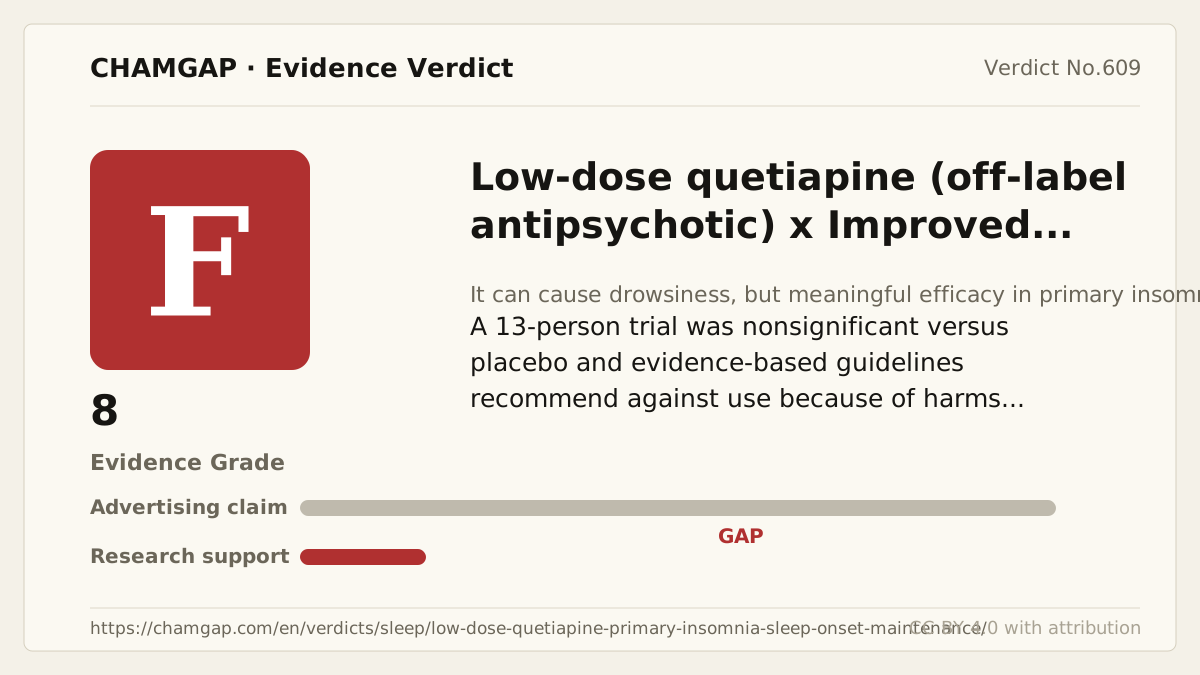
[Chamgap] Low-dose quetiapine x improved sleep onset and maintenance in primary insomnia — Evidence Grade D·35. 4 cited sources checked. Source: https://chamgap.com/en/verdicts/sleep/low-dose-quetiapine-primary-insomnia-sleep-onset-maintenance/ · CC BY 4.0CC BY 4.0 — free to use with attribution; do not distort grades, numbers, or verdict meaning.
What this document does and does not do
Chamgap is an information source. It reports what research has and has not confirmed; it does not tell readers what to take or buy. That decision belongs to readers and, when needed, medical or legal professionals. This verdict reflects literature available up to the search date and may change as new research appears. Nothing here is medical advice.