
Inhaled lavender essential oil,
does it really help with Improve sleep onset, sleep maintenance, and sleep quality through inhaled aromatherapy in adults with poor sleep?
research showsInhaled lavender essential oil is rated C. A meta-analysis of 11 randomized trials and 628 adults found a positive subjective sleep-score SMD of −0.56, and the nine-trial inhalation subgroup was also positive at −0.62, so the evidence is not limited to the preclinical level required for D. However, overall heterogeneity was high at I-squared 82%, outcomes were mostly subjective, and recognizable odor limits masking, placing the claim at the bottom of C with 41 points. This does not establish objective sleep latency, nocturnal awakenings, or durable improvement.
ads claimAromatherapy marketing can turn a pleasant odor and subjective relaxation into claims of falling asleep immediately, staying asleep all night, or deep restorative sleep. The strongest support is a short-term subjective sleep-quality signal in some people, not treatment of insomnia disorder or demonstrated improvement in sleep architecture.
Useful facts when choosing a product
- Inhaled lavender products differ in Lavandula species, linalool and linalyl-acetate composition, dilution, diffuser output, and added oils, so exposure in a trial may not match a retail product.
- Skin use of essential oil can cause irritation or allergic contact dermatitis, so label-directed dilution is important and the oil should be kept away from eyes, mucosa, and ingestion.
- Short-term inhalation is generally tolerated, but headache, nausea, respiratory irritation, or fragrance allergy should prompt discontinuation.
- Case reports of breast development in children exposed to lavender products and in-vitro endocrine activity represent a separate safety uncertainty, not evidence about adult sleep efficacy.
Chamgap Semantic Classification Code
Candidate index · review held
UNK.lavender-essential-oil.inhaled.improve-sleep-onset-sleep-maintenance-and-sleep-quality-through-inhaled-aromatherapy-with-poor-sleep.improve.UNKUnknown > Lavender essential oil > Inhaled > Improve sleep onset, sleep maintenance, and sleep quality through inhaled aromatherapy with poor sleep > Improvement claim > Unknown
An automated migration candidate, not an issued permanent code; exact claim scope remains under review. This machine-generated migration candidate helps retrieval but is not a permanent assignment. The original verdict ID and URL remain authoritative.
What the research actually shows
Shen and colleagues synthesized 11 adult lavender-essential-oil randomized trials with 628 participants published from 2014 through 2024 and reported SMD -0.56 for sleep scores, while emphasizing limited trial quantity and quality. Lin and colleagues pooled 31 aromatherapy trials across different oils and populations and found a positive estimate accompanied by I-squared of 91.2%, publication bias, and mostly unclear risk of bias. Lillehei and colleagues assigned 79 college students with self-reported sleep issues to sleep hygiene plus lavender or a blank inhalation patch for five nights. Subjective sleep quality favored lavender, but Fitbit and diary sleep quantity did not differ, and the brief student sample is not readily generalizable to sleep onset and maintenance in adults with insomnia.
Why this is classified as C (41)
The lavender-specific meta-analysis of 11 randomized trials and 628 adults found a claim-aligned positive human signal, with a subjective sleep-score SMD of −0.56 and an inhalation-subgroup SMD of −0.62, supporting C rather than D. Overall I-squared 82%, predominantly subjective endpoints, odor-masking limitations, and uncertain objective or durable improvement keep the verdict at C with 41 points. Skin, allergy, and endocrine case-report concerns are separate from efficacy. Existing lavender verdict 186 concerns oral Silexan for anxiety, a different formulation and indication.
Counterpoint. Someone who finds the odor relaxing may use it as an optional bedtime routine, but persistent insomnia, snoring, apnea, or daytime sleepiness warrants evaluation and should not delay cognitive behavioral therapy or other established care.
Rejudgment record. Cross-check revision — A positive subjective-sleep SMD of −0.56 across 11 randomized trials supports C rather than D; I-squared 82%, subjective endpoints, and odor-masking limitations keep it at the bottom of C. Existing lavender verdict 186 concerns oral Silexan for anxiety, a different formulation and indication
Sub-claim grades by effect
This ingredient is marketed for several effects. A single overall grade blends strong and weak claims together, so each effect is graded separately here. The overall grade reflects the strongest disconfirming or core claim.
| Effect (sub-claim) | Grade | Basis |
|---|---|---|
| Improved sleep onset and maintenance with inhaled lavender | C | Positive subjective sleep scores across 11 randomized trials support the onset and maintenance claim, but objective sleep latency and nocturnal awakenings are not consistently improved and masking limitations are substantial. |
| Improved sleep quality with inhaled lavender | C | The 11-trial meta-analysis found a subjective sleep-score SMD of −0.56 and an inhalation-subgroup SMD of −0.62, but I-squared 82% and masking limitations keep this at the bottom of C. |
| Objective and durable sleep improvement in adults with poor sleep | D | The meta-analysis predominantly synthesized subjective outcomes, so objective and durable sleep improvement remains unproven. |
Cross-check — AI research and Codex final gate
Evidence Table
| Study | Design | Sample | Funding | Endpoint | Result | Weight |
|---|---|---|---|---|---|---|
| Shen H et al. 2026 | Systematic review and meta-analysis of lavender-essential-oil randomized trials | Eleven adult randomized trials with 628 participants | No commercial funding stated in the indexed abstract | Adult sleep scores and sleep quality | The pooled SMD was -0.56 (95% CI -0.96 to -0.17), but limited trial quantity and quality required better confirmation. | Latest lavender-specific synthesis with quality limitations |
| Lin PC et al. 2019 | Systematic review and meta-analysis of aromatherapy randomized trials | Thirty-one trials | Academic research; commercial funding not stated in the abstract | Subjective sleep quality | The effect estimate was positive, but I-squared was 91.2%, publication bias was present, and only four trials were low risk. | Positive but highly heterogeneous and bias-prone synthesis |
| Lillehei AS et al. 2015 | Investigator-blinded randomized blank-patch controlled trial | Seventy-nine college students with self-reported sleep issues | Support from the University of Minnesota School of Nursing, Zenkovich Nursing Fellowship, Sophia Fund, Sigma Theta Tau, and Boynton Health Service; two companies supplied materials and reportedly had no study involvement | Subjective PSQI and PROMIS scales plus Fitbit and diary sleep quantity | Subjective sleep quality favored lavender after five nights, but sleep quantity did not differ between groups. | Small short-term direct inhalation trial with limited objective support |
Receipt — 4 References
All 4 cited sources were verified for existence at the original page (as of 2026-07-21).
Final verification and publication gate: Codex · Evidence date: 2026-07-21 · Corrections: none
Cite this verdict
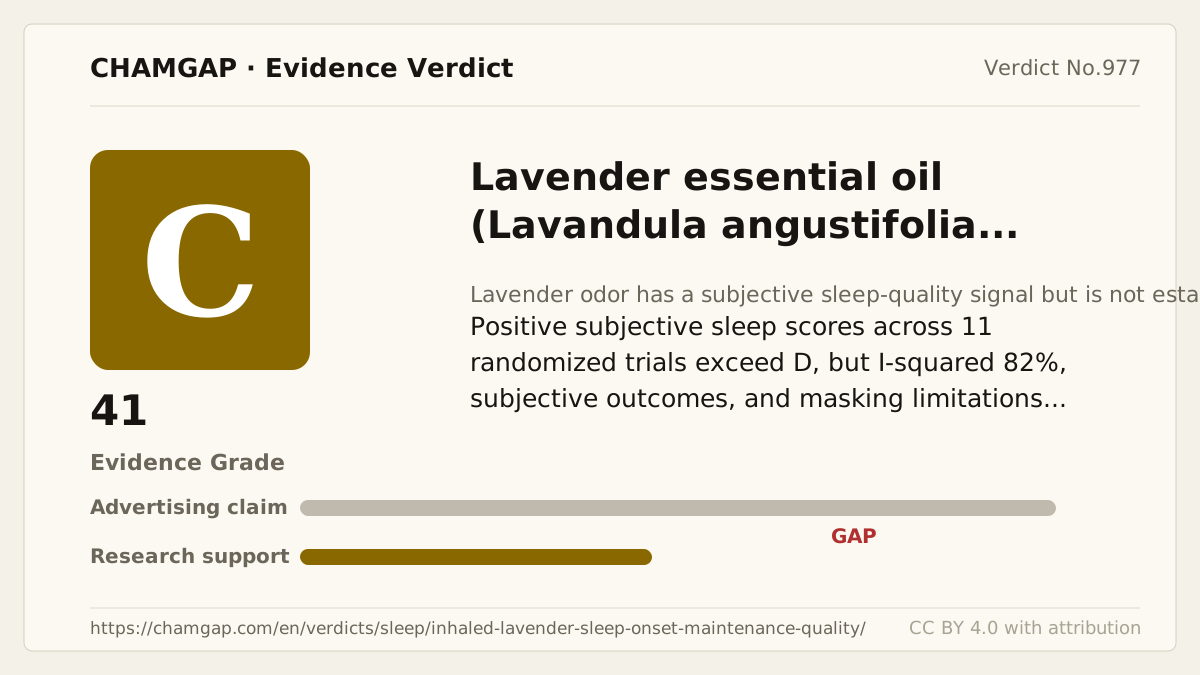
[Chamgap] Inhaled lavender essential oil x improved sleep onset, maintenance, and quality in adults with poor sleep — Evidence Grade C·41. 4 cited sources checked. Source: https://chamgap.com/en/verdicts/sleep/inhaled-lavender-sleep-onset-maintenance-quality/ · CC BY 4.0CC BY 4.0 — free to use with attribution; do not distort grades, numbers, or verdict meaning.
What this document does and does not do
Chamgap is an information source. It reports what research has and has not confirmed; it does not tell readers what to take or buy. That decision belongs to readers and, when needed, medical or legal professionals. This verdict reflects literature available up to the search date and may change as new research appears. Nothing here is medical advice.