
Flurazepam,
does it really help with Reduced sleep-onset latency and nocturnal awakenings and increased total sleep time in short-term insomnia?
research showsFlurazepam is rated B because direct clinical evidence supports fewer nocturnal awakenings and longer total sleep time in short-term insomnia. Objective sleep-onset shortening was nonsignificant in some data, and some evidence was unsuitable for AASM assessment, so onset findings are mixed. Flurazepam-specific trials are old and mostly small or brief, while tolerance, dependence, and rebound insomnia must be separated from durable benefit during long-term use. Safety concerns from its long-acting active metabolite, including next-day residual sedation and impaired cognition or performance, were assessed separately from efficacy.
ads claimMarketing or word of mouth can turn long action into claims of deeper all-night sleep or superior sleep simply because one dose lasts. The evidence instead shows improvement in short-term sleep quantity and awakening measures accompanied by a real possibility of next-day drug effects; the net benefit of repeated long-term use is a separate question.
Useful facts when choosing a product
- Flurazepam is a controlled prescription benzodiazepine hypnotic, and Dalmadorm is a relevant brand name. The prescribed dose and duration should not be increased without medical direction.
- Its major active metabolite, N1-desalkyl-flurazepam, has a reported elimination half-life of about 47 to 100 hours, allowing accumulation and residual next-day effects with repeated dosing.
- Older adults are more susceptible to oversedation, confusion, impaired coordination, and falls, and driving or machinery performance can remain impaired the following day.
- Alcohol, opioids, and other central nervous system depressants can intensify profound sedation and respiratory depression. After repeated use, discontinuation should be planned with the prescriber rather than done abruptly.
Chamgap Semantic Classification Code
Candidate index · review held
M.flurazepam.UNK.sleep-onset-latency-and-nocturnal-awakenings-and-increased-total-sleep-time-in-short-term-insomnia.reduce.MULTIMedicinal interventions > Flurazepam > Unknown > sleep-onset latency and nocturnal awakenings and increased total sleep time in short-term insomnia > Reduction claim > Multiple: primary unresolved
An automated migration candidate, not an issued permanent code; exact claim scope remains under review. This machine-generated migration candidate helps retrieval but is not a permanent assignment. The original verdict ID and URL remain authoritative.
What the research actually shows
In the 1982 polysomnographic study by Roehrs and colleagues, seven days of flurazepam 15 mg in nine people with insomnia increased total sleep time and reduced stage-one sleep latency, nocturnal awakenings, and wake after sleep onset. The 1990 multicenter double-blind trial by Scharf and colleagues randomized outpatients with insomnia to flurazepam 30 mg, estazolam 2 mg, or placebo for seven days and found both active drugs superior to placebo on overall sleep measures. The 2000 analysis by Holbrook and colleagues pooled 45 benzodiazepine randomized trials and confirmed longer sleep and improved patient-reported sleep onset, but also found more daytime drowsiness, dizziness, and reports of cognitive decline. These data support short-term symptom relief, not long-term recovery from chronic insomnia or treatment of its cause.
Why this is classified as B (62)
Flurazepam-specific placebo-controlled trials and the benzodiazepine meta-analysis support short-term effects on awakenings and total sleep time. Objective sleep-onset shortening was nonsignificant in some data, and some evidence was unsuitable for AASM assessment, leaving mixed onset findings; the evidence is also dominated by old, small, brief trials. These limitations yield B with 62 points. Dependence, falls, next-day cognitive and performance impairment, and respiratory depression remain safety issues independent of efficacy.
Counterpoint. A carefully screened patient with severe short-term insomnia can obtain genuine symptom relief from a brief physician-directed course. Chronic insomnia instead calls for cognitive behavioral therapy and evaluation of sleep apnea, depression, pain, medicines, and other causes; short trials do not justify indefinite flurazepam use.
Rejudgment record. Cross-check revision — Retained B for direct short-term improvements in awakenings and total sleep time, but adjusted to 62 because objective sleep-onset shortening was nonsignificant in some data, some evidence was unsuitable for AASM assessment, findings were mixed, and trials were old, small, and brief
Sub-claim grades by effect
This ingredient is marketed for several effects. A single overall grade blends strong and weak claims together, so each effect is graded separately here. The overall grade reflects the strongest disconfirming or core claim.
| Effect (sub-claim) | Grade | Basis |
|---|---|---|
| Reduced sleep-onset latency in short-term insomnia | B | Flurazepam-specific polysomnographic and clinical trials directly improved this endpoint, but evidence is old and short-term. |
| Reduced nocturnal awakenings and wake after sleep onset in short-term insomnia | B | Direct sleep endpoints are positive, but durable maintenance benefit and tolerance have not been adequately tested. |
| Increased total sleep time in short-term insomnia | B | Flurazepam trials and the benzodiazepine meta-analysis are positive, but drug persistence does not establish restorative sleep or long-term clinical outcomes. |
Cross-check — AI research and Codex final gate
Evidence Table
| Study | Design | Sample | Funding | Endpoint | Result | Weight |
|---|---|---|---|---|---|---|
| Roehrs T et al. 1982 | Prospective polysomnographic placebo lead-in and withdrawal clinical trial | Nine adults with insomnia complaints and polysomnographic sleep disturbance | Funding not reported in the abstract; older product-evaluation study | Sleep latency, nocturnal awakenings, wake after sleep onset, and total sleep time | Seven days of flurazepam 15 mg increased total sleep time and reduced onset and awakening measures, with some effects persisting through the three-day withdrawal phase. | Direct objective sleep endpoints but a very small sample |
| Scharf MB et al. 1990 | Multicenter randomized double-blind placebo- and active-controlled trial | Outpatients with insomnia assigned to flurazepam 30 mg, estazolam 2 mg, or placebo for seven days | Funding details not reported in the abstract; marketed-hypnotic comparison context | Subjective sleep onset, sleep duration, nocturnal awakenings, sleep quality, and safety | Flurazepam and estazolam were superior to placebo on overall sleep efficacy, with treatment limited to seven days. | Direct multicenter short-term efficacy evidence |
| Holbrook AM et al. 2000 | Systematic review and meta-analysis of benzodiazepine insomnia randomized trials | 45 randomized trials and 2,672 participants | Canadian public and academic research; manufacturers were also asked to submit unpublished trials | Sleep-record and patient-reported onset and duration, adverse effects, and cognition | Versus placebo, sleep-record duration increased by 61.8 minutes and patient-reported latency fell by 14.3 minutes, while daytime drowsiness, dizziness, and cognitive decline were reported more often. | Independent class-level synthesis with indirectness for flurazepam-specific effects |
Receipt — 3 References
All 3 cited sources were verified for existence at the original page (as of 2026-07-21).
Final verification and publication gate: Codex · Evidence date: 2026-07-21 · Corrections: none
Cite this verdict
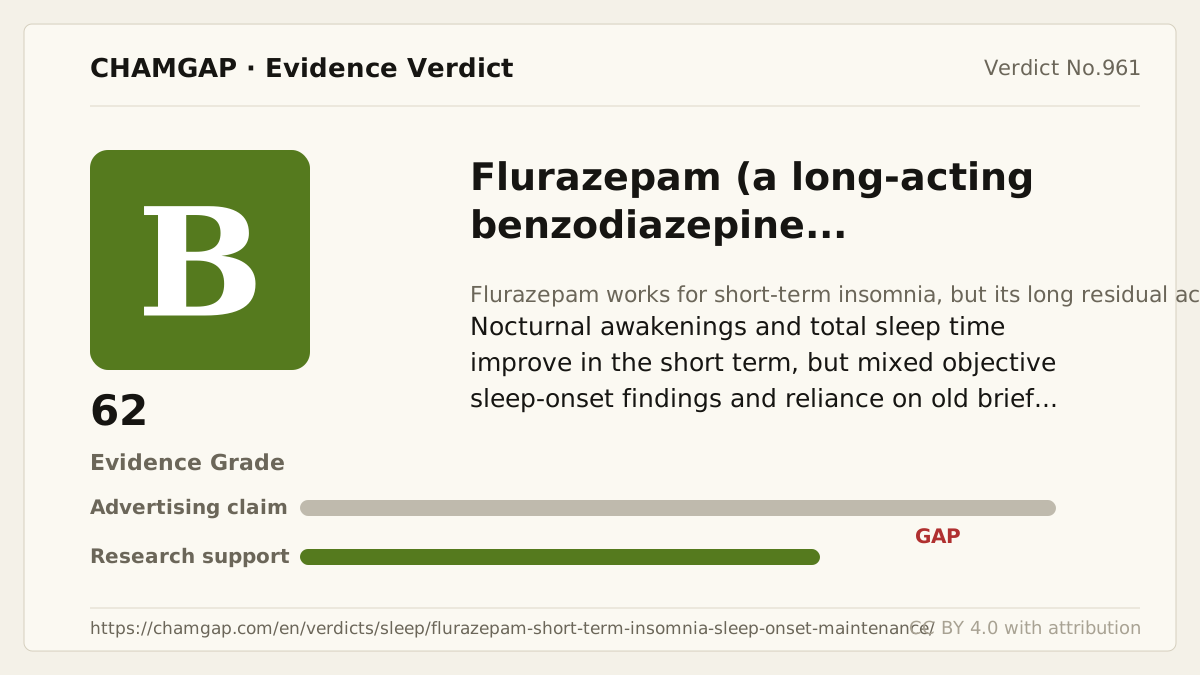
[Chamgap] Flurazepam x improved sleep onset and maintenance in short-term insomnia — Evidence Grade B·62. 3 cited sources checked. Source: https://chamgap.com/en/verdicts/sleep/flurazepam-short-term-insomnia-sleep-onset-maintenance/ · CC BY 4.0CC BY 4.0 — free to use with attribution; do not distort grades, numbers, or verdict meaning.
What this document does and does not do
Chamgap is an information source. It reports what research has and has not confirmed; it does not tell readers what to take or buy. That decision belongs to readers and, when needed, medical or legal professionals. This verdict reflects literature available up to the search date and may change as new research appears. Nothing here is medical advice.