
Earplugs,
does it really help with Improved subjective sleep quality and fewer nighttime awakenings in noisy intensive-care and hospital wards?
research showsSound-blocking earplugs are rated D despite signals of better sleep in intensive-care and hospital settings. Many trials in the meta-analyses combined earplugs with eye masks, outcomes were mainly subjective, and samples, interventions, and measurements were heterogeneous. The combined-intervention effect therefore cannot be attributed to earplugs alone, and independent effects on awakenings or objective sleep measures remain unestablished.
ads claimMarketing turns noise attenuation directly into deep sleep, prevention of awakenings, and restorative sleep. Hospital research frequently uses eye masks concurrently and subjective assessments, so it does not establish those outcomes for earplugs alone.
Useful facts when choosing a product
- Foam earplugs are compressed, inserted, and allowed to expand, whereas moldable silicone putty should cover the canal opening rather than be pushed deeply inside.
- Earplugs may reduce ward noise but do not create complete silence and may make nursing calls, monitor alarms, or fire alarms harder to hear.
- Prolonged use or reuse of contaminated products can contribute to impacted earwax, skin irritation, pain, or otitis externa. Pain, discharge, or hearing loss warrants discontinuation and medical assessment.
- This device is distinct from verdict 1408 on blackout eye masks, rated D, and verdict 1259 on white noise, rated C. Combined eye-mask trials must not be repurposed as evidence for earplugs alone.
Chamgap Semantic Classification Code
Candidate index · review held
UNK.sound-blocking-earplugs.UNK.subjective-sleep-quality-and-fewer-nighttime-awakenings-in-noisy-intensive-care-and-hospital-wards.improve.UNKUnknown > Sound-blocking earplugs > Unknown > subjective sleep quality and fewer nighttime awakenings in noisy intensive-care and hospital wards > Improvement claim > Unknown
An automated migration candidate, not an issued permanent code; exact claim scope remains under review. This machine-generated migration candidate helps retrieval but is not a permanent assignment. The original verdict ID and URL remain authoritative.
What the research actually shows
Fang and colleagues in 2021 synthesized randomized intensive-care trials and found that earplug and eye-mask interventions could improve sleep quality, but many studies evaluated both devices together and heterogeneity was present. Karimi and colleagues in 2021 reviewed 35 studies with about 2,680 participants (source reports 2,687 and 2,678 inconsistently) and meta-analyzed 21; they reported positive signals on instruments such as the PSQI and RCSQ but pooled earplugs alone, eye masks alone, and combinations and also allowed nonrandomized and quasi-experimental studies. Thus subjective sleep quality and awakening signals for earplugs alone remain limited, and a reproducible independent objective effect is not established.
Why this is classified as D (35)
Meta-analyses in intensive-care and hospital settings provide a subjective sleep signal, but frequent concurrent eye-mask use and heterogeneous scales, samples, and designs prevent attribution to earplugs alone. Nighttime awakening and objective outcomes are likewise not independently established, so boundary rule ② gives D with 35 points.
Counterpoint. Earplugs can be tried as one environmental noise measure, but alarm awareness and ear hygiene matter, and they should accompany broader ward noise and nighttime-care management.
Rejudgment record. New verdict — Accepted the sleep-improvement signal in intensive-care and hospital meta-analyses but applied boundary rule ② because many trials combined eye masks, outcomes and designs were heterogeneous and largely subjective, and the effect could not be attributed to earplugs alone
Sub-claim grades by effect
This ingredient is marketed for several effects. A single overall grade blends strong and weak claims together, so each effect is graded separately here. The overall grade reflects the strongest disconfirming or core claim.
| Effect (sub-claim) | Grade | Basis |
|---|---|---|
| Improved subjective sleep quality | D | A positive signal exists, but combined eye-mask use and heterogeneous scales and designs prevent attribution to earplugs alone. |
| Fewer nighttime awakenings | D | Awakening data are limited and mixed with combined interventions, so an independent effect is not established. |
| Improved objective sleep measures | D | Some signals exist, but small combined-intervention datasets do not establish a consistent objective effect of earplugs alone. |
Cross-check — AI research and Codex final gate
Evidence Table
| Study | Design | Sample | Funding | Endpoint | Result | Weight |
|---|---|---|---|---|---|---|
| Fang CS et al. 2021 | Systematic review and meta-analysis of randomized intensive-care trials | Randomized trials through May 5, 2020; earplug and eye-mask interventions | Academic research as reported by the article | Subjective and objective sleep quality in intensive-care patients | Sleep-quality signals favored intervention, but frequent combined earplug and eye-mask use prevented isolation of an earplug-only effect. | Key synthesis with limited component attribution |
| Karimi L et al. 2021 | Systematic review and meta-analysis of randomized, nonrandomized, and quasi-experimental studies | 35 studies and about 2,680 participants (the source reports 2,687 and 2,678 inconsistently); 21 studies meta-analyzed | Academic research as reported by the article | PSQI, RCSQ, VSHSS, and some polysomnographic measures | Positive signals appeared across several measures, but earplugs alone, eye masks alone, combinations, and different designs were included together. | Supporting synthesis with substantial heterogeneity |
Receipt — 2 References
All 2 cited sources were verified for existence at the original page (as of 2026-07-23).
Final verification and publication gate: Codex · Evidence date: 2026-07-23 · Corrections: none
Cite this verdict
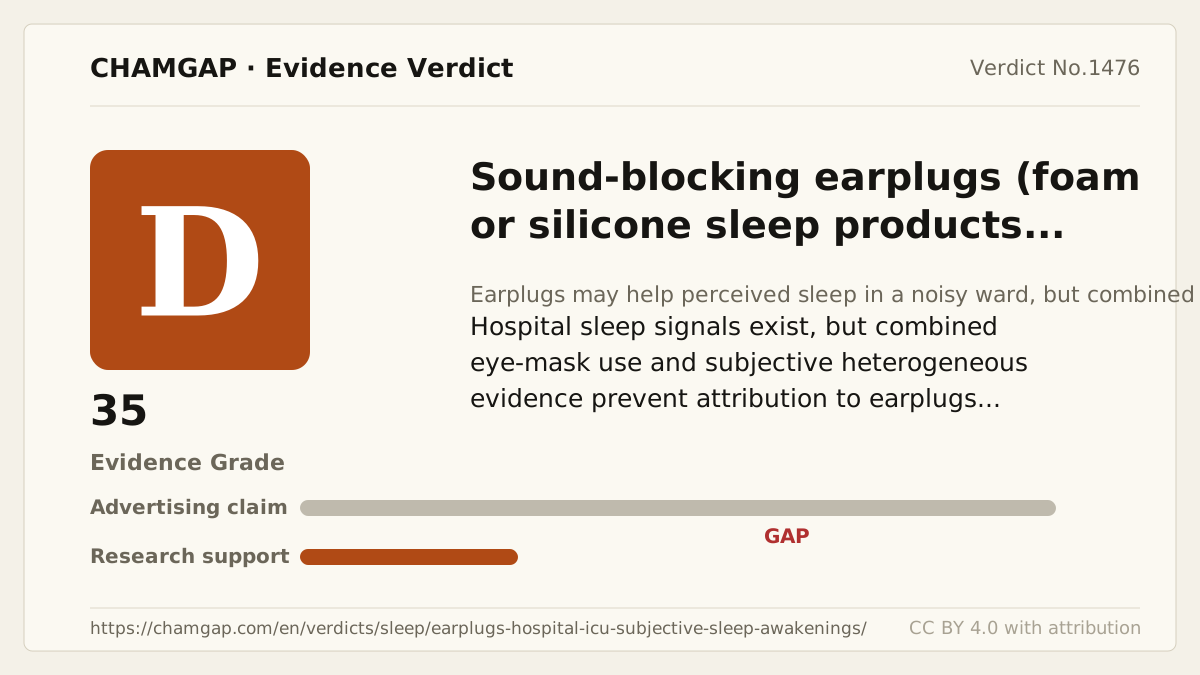
[Chamgap] Earplugs x improved subjective sleep quality and nighttime awakenings in intensive-care and hospital wards — Evidence Grade D·35. 2 cited sources checked. Source: https://chamgap.com/en/verdicts/sleep/earplugs-hospital-icu-subjective-sleep-awakenings/ · CC BY 4.0CC BY 4.0 — free to use with attribution; do not distort grades, numbers, or verdict meaning.
What this document does and does not do
Chamgap is an information source. It reports what research has and has not confirmed; it does not tell readers what to take or buy. That decision belongs to readers and, when needed, medical or legal professionals. This verdict reflects literature available up to the search date and may change as new research appears. Nothing here is medical advice.