
Doxylamine,
does it really help with Improved sleep onset and maintenance in occasional insomnia?
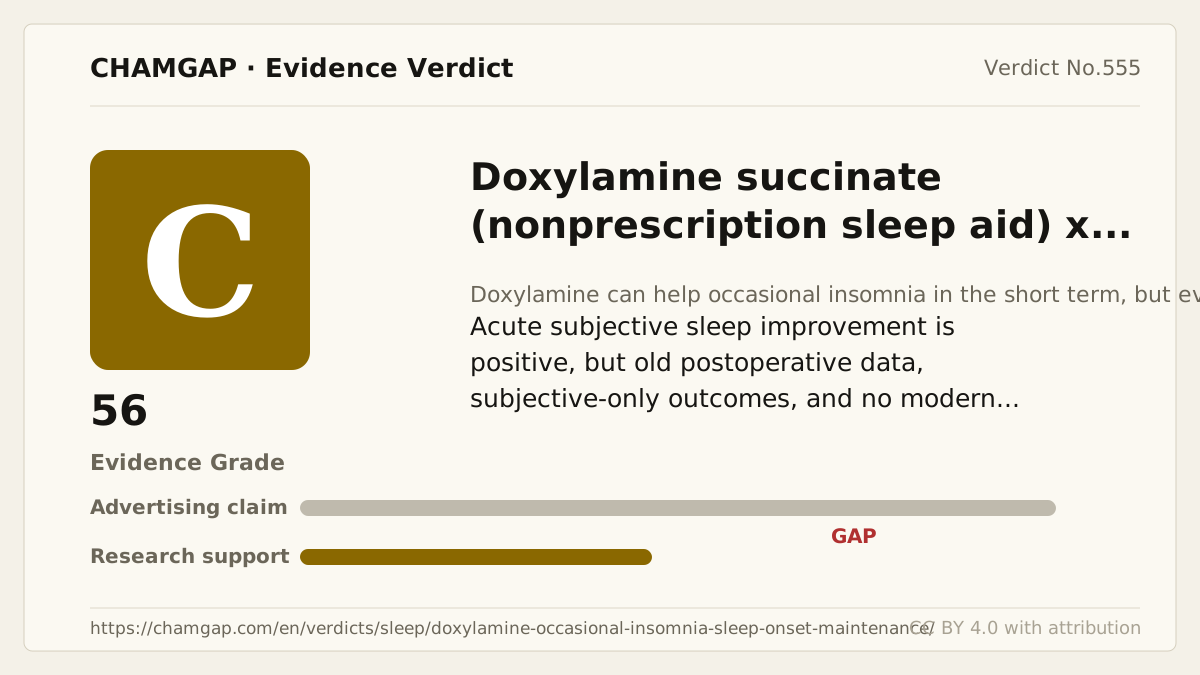
research showsDoxylamine is rated C because it has a positive acute signal for subjective sleep improvement in occasional insomnia. The 2022 network meta-analysis estimated an SMD of 0.47 versus placebo (95% CI 0.06 to 0.89) with moderate certainty, but most direct evidence comes from interview- and medical-record-based subjective sleep measures in 2,931 postoperative patients studied in 1985. There is no modern randomized trial using polysomnography or actigraphy in primary or occasional insomnia, and a 2015 systematic review of nonprescription sleep aids found no eligible contemporary doxylamine trial. The ceiling for subjective-only outcomes and indirectness therefore limits the grade to C. Next-day drowsiness, anticholinergic adverse effects, rapid tolerance, and risk in older adults remain recorded under safety.
ads claimMarketing expands strong sleep, all-night rest, and non-habit-forming daily use from a short-term sedative effect into restorative sleep and chronic therapy. The best-fitting evidence concerns occasional short-term difficulty falling asleep, not daily repeated use or treatment of the cause of chronic insomnia.
Useful facts when choosing a product
- Doxylamine succinate 25-mg nonprescription products, including Aron tablets, are distributed through Korean pharmacies. Adult labeling directs 25 mg once daily 30 minutes before bedtime; the specific product label takes priority.
- United States nonprescription labeling also directs adults and children 12 years or older to take one 25-mg tablet 30 minutes before bedtime once daily and to seek medical advice if sleeplessness persists for more than two weeks.
- Alcohol, other sedatives, cold remedies, and antihistamines can amplify sedation and next-day impairment of driving or machinery operation.
- Doxylamine is a strongly anticholinergic first-generation antihistamine. Dry mouth, constipation, blurred vision, urinary retention, confusion, falls, and next-day drowsiness can occur, and tolerance can develop rapidly. Older adults should avoid it under the Beers Criteria, and glaucoma, prostatic urinary difficulty, and respiratory disease require caution.
Chamgap Semantic Classification Code
Candidate index · review held
M.doxylamine-succinate.UNK.sleep-onset-and-maintenance-in-occasional-insomnia.improve.MULTIMedicinal interventions > Doxylamine succinate > Unknown > sleep onset and maintenance in occasional insomnia > Improvement claim > Multiple: primary unresolved
An automated migration candidate, not an issued permanent code; exact claim scope remains under review. This machine-generated migration candidate helps retrieval but is not a permanent assignment. The original verdict ID and URL remain authoritative.
What the research actually shows
Smith and Smith 1985 stratified 2,931 postoperative patients by pain and randomized them under double masking to doxylamine 25 mg, acetaminophen, the combination, or placebo. Doxylamine was superior to placebo across interview and medical-record sleep measures, but participants did not have primary insomnia and outcomes were subjective. De Crescenzo 2022 synthesized 154 double-blind randomized trials involving about 44,000 participants and found several drugs, including doxylamine, more efficacious than placebo for acute insomnia; the doxylamine estimate was SMD 0.47. A 2015 nonprescription-agent review found no recent eligible doxylamine trial in its search period, emphasizing the direct-evidence gap, and AASM chronic-insomnia guidance did not recommend nonprescription antihistamine sleep aids because of insufficient demonstrated efficacy and safety concerns. FDA and Korean nonprescription status defines conditions for occasional use but is not evidence of long-term efficacy.
Why this is classified as C (56)
The 2022 network meta-analysis provided a positive acute estimate, SMD 0.47 versus placebo (95% CI 0.06 to 0.89), with moderate certainty. Direct evidence nevertheless relies heavily on subjective interview and medical-record outcomes in postoperative patients studied in 1985, with no modern polysomnography or actigraphy trial in primary or occasional insomnia. The subjective-only endpoint and indirectness ceiling therefore gives C with 56 points. Next-day sedation, anticholinergic harm, tolerance, and older-adult precautions remain independent safety concerns.
Counterpoint. A single dose or very short course may help brief sleep-onset difficulty caused by intermittent stress or travel. Insomnia lasting more than two weeks calls for evaluation of sleep apnea, depression or anxiety, pain, medicines, caffeine, and other causes, with cognitive behavioral therapy prioritized for chronic insomnia.
Rejudgment record. Reassessment (cross-check reflected) — Accepted the positive acute estimate in the 2022 network meta-analysis, but applied the rule ① ceiling of C for subjective-only outcomes and indirectness because direct evidence is concentrated in old postoperative subjective measures and no modern polysomnography or actigraphy trial exists in primary or occasional insomnia
Sub-claim grades by effect
This ingredient is marketed for several effects. A single overall grade blends strong and weak claims together, so each effect is graded separately here. The overall grade reflects the strongest disconfirming or core claim.
| Effect (sub-claim) | Grade | Basis |
|---|---|---|
| Short-term sleep onset and maintenance in occasional insomnia | C | The network-meta-analytic subjective endpoint was positive, but no modern objective randomized trial using polysomnography or actigraphy exists and the postoperative population is indirect. |
| Long-term treatment of chronic insomnia | D | Long-term efficacy and safety evidence is inadequate, with tolerance and anticholinergic risks. |
Cross-check — AI research and Codex final gate
Evidence Table
| Study | Design | Sample | Funding | Endpoint | Result | Weight |
|---|---|---|---|---|---|---|
| Smith GM and Smith PH. 1985 | Randomized double-blind placebo- and active-controlled trial | 2,931 postoperative patients; 1,617 with pain and 1,314 without pain | Inadequately reported; older product-evaluation context | Twelve interview- and medical-record-based sleep measures | Doxylamine 25 mg outperformed placebo on sleep measures, but the population was postoperative rather than primary insomnia and outcomes were subjective. | Large direct short-term efficacy evidence with indirectness |
| De Crescenzo F et al. 2022 | Systematic review and network meta-analysis of double-blind randomized trials | 154 trials, about 44,000 participants, and 30 drugs | Public and academic support from the United Kingdom NIHR | Acute and long-term subjective sleep efficacy, discontinuation, and adverse events | Acute doxylamine was effective versus placebo with SMD 0.47 (95% CI 0.06 to 0.89); no long-term doxylamine data were available. | Key acute synthesis |
| Culpepper L and Wingertzahn MA. 2015 | Systematic review of nonprescription sleep aids | 926 records screened; zero eligible doxylamine trials in the 2003-to-2014 search window | A Pfizer Consumer Healthcare employee was a coauthor | Objective overnight sleep, next-day self-reported sleep, and tolerability | Confirmed a gap in contemporary direct doxylamine trials and limited evidence across nonprescription sleep aids. | Evidence-gap assessment |
| Sateia MJ et al. 2017 AASM guideline | Evidence review and clinical guideline for chronic-insomnia pharmacotherapy | Drug-specific randomized evidence; no long-term doxylamine recommendation evidence | American Academy of Sleep Medicine | Sleep onset, sleep maintenance, and safety in chronic insomnia | Did not recommend nonprescription antihistamine sleep aids for chronic insomnia because demonstrated efficacy was lacking and safety was a concern. | Long-term scope limitation |
Receipt — 6 References
All 6 cited sources were verified for existence at the original page (as of 2026-07-18).
Final verification and publication gate: Codex · Evidence date: 2026-07-18 · Corrections: none
Cite this verdict
[Chamgap] Doxylamine x improved sleep onset and maintenance in occasional insomnia — Evidence Grade C·56. 6 cited sources checked. Source: https://chamgap.com/en/verdicts/sleep/doxylamine-occasional-insomnia-sleep-onset-maintenance/ · CC BY 4.0CC BY 4.0 — free to use with attribution; do not distort grades, numbers, or verdict meaning.
What this document does and does not do
Chamgap is an information source. It reports what research has and has not confirmed; it does not tell readers what to take or buy. That decision belongs to readers and, when needed, medical or legal professionals. This verdict reflects literature available up to the search date and may change as new research appears. Nothing here is medical advice.