
Diphenhydramine,
does it really help with Improvement of sleep onset, maintenance, and restorative sleep in chronic insomnia?
research showsDiphenhydramine is rated F for treatment of chronic insomnia. AASM reviewed two 50-mg trials and concluded that improvements in patient-reported sleep latency and total sleep time did not reach clinically meaningful thresholds; objective polysomnographic outcomes also failed to reach those thresholds. It therefore recommended that clinicians not use diphenhydramine for adult sleep-onset or sleep-maintenance insomnia. In a 184-person trial, improvements were modest and few comparisons with placebo were significant. This differs from verdict 555 on doxylamine for occasional insomnia: it is a different ingredient and a chronic-treatment claim.
ads claimMarketing turns becoming drowsy into restorative sleep, all-night maintenance, and safe daily treatment of chronic insomnia. Sedation from diphenhydramine is not recovery of sleep quality or treatment of the cause, and an occasional-use nonprescription label is not authorization for chronic use.
Useful facts when choosing a product
- Diphenhydramine is a brain-penetrating first-generation H1 antihistamine found in allergy medicines as well as some nonprescription sleep aids and nighttime cold products.
- Strengths and combination ingredients differ, so taking an allergy medicine, cold remedy, analgesic-sleep combination, and sleep aid with the same ingredient can cause duplication and excessive dosing.
- Alcohol, cannabis, opioids, benzodiazepines, and other sedatives can increase next-day driving impairment, falls, and respiratory depression.
- Anticholinergic effects include dry mouth, constipation, blurred vision, urinary retention, and confusion; older adults should avoid it under the Beers Criteria, with particular caution in glaucoma, prostatic enlargement, and cognitive impairment.
Chamgap Semantic Classification Code
Candidate index · review held
M.diphenhydramine.UNK.sleep-onset-maintenance-and-restorative-sleep-in-chronic-insomnia.improve.placeboMedicinal interventions > Diphenhydramine > Unknown > sleep onset, maintenance, and restorative sleep in chronic insomnia > Improvement claim > Placebo
An automated migration candidate, not an issued permanent code; exact claim scope remains under review. This machine-generated migration candidate helps retrieval but is not a permanent assignment. The original verdict ID and URL remain authoritative.
What the research actually shows
The AASM guideline by Sateia and colleagues evaluated two trials of diphenhydramine 50 mg in chronic or primary insomnia. Subjective sleep latency and total sleep time were below clinical-significance thresholds, as was the single study with polysomnography, leading to a recommendation against use. Morin and colleagues in 2005 randomized 184 adults with mild insomnia to diphenhydramine, valerian-hops, or placebo; subjective improvements with diphenhydramine were modest and few placebo comparisons were significant. In a 2002 randomized crossover trial in healthy men, Richardson and colleagues found objective tolerance to twice-daily 50-mg sedation was complete by the end of day three, weakening the rationale for repeated hypnotic use.
Why this is classified as F (12)
Trials in chronic insomnia failed to achieve clinically meaningful sleep-onset, total-sleep-time, and objective-sleep thresholds, and AASM recommends against use. Separating occasional nonprescription assistance from chronic treatment gives F with 12 points. Anticholinergic harm, next-day impairment, tolerance, and older-adult risk remain a separate safety warning.
Counterpoint. Even when an occasional-use product is considered for sudden short-term sleeplessness, it should not be repeated beyond the label period. Persistent insomnia calls for assessment of sleep apnea, depression, anxiety, pain, and medicines, with CBT-I prioritized.
Rejudgment record. New verdict — Applied the guideline-rejection rule because AASM found no clinically meaningful sleep-onset or total-sleep improvement in 50-mg trials and recommended against diphenhydramine for chronic insomnia
Sub-claim grades by effect
This ingredient is marketed for several effects. A single overall grade blends strong and weak claims together, so each effect is graded separately here. The overall grade reflects the strongest disconfirming or core claim.
| Effect (sub-claim) | Grade | Basis |
|---|---|---|
| Treatment of sleep onset and maintenance in chronic insomnia | F | AASM recommended against use because 50-mg trials did not show clinically meaningful benefit. |
| Short-term sleep-onset assistance for occasional insomnia | C | Sedation and modest subjective improvement are possible, but this is separate from chronic treatment and repeated-use evidence is weak. |
| Sustained restorative sleep without tolerance | F | Objective tolerance to sedation develops rapidly, and restorative sleep has not been established. |
Cross-check — AI research and Codex final gate
Evidence Table
| Study | Design | Sample | Funding | Endpoint | Result | Weight |
|---|---|---|---|---|---|---|
| Sateia MJ et al. 2017 AASM guideline | Systematic evidence review and clinical guideline for chronic-insomnia pharmacotherapy | Meta-analyzable data from two trials of diphenhydramine 50 mg | American Academy of Sleep Medicine | Subjective and polysomnographic sleep latency, total sleep time, and sleep maintenance | All principal improvements fell below clinical-significance thresholds, leading to a recommendation against use. | Key guideline rejection of efficacy |
| Morin CM et al. 2005 | Multicenter randomized placebo-controlled trial | 184 adults with mild insomnia | Product-evaluation context; full-text disclosure requires confirmation | Sleep-diary and polysomnographic latency, efficiency, and total sleep time | Subjective improvements were modest, and few comparisons with placebo were significant. | Key direct randomized trial |
| Richardson GS et al. 2002 | Randomized double-blind placebo-controlled crossover trial | 15 healthy men | Inadequately reported | Daytime sleepiness, psychomotor performance, and tolerance | With 50 mg twice daily, tolerance to sedation was complete by the end of day three. | Tolerance safety evidence and durability limitation |
Receipt — 4 References
All 4 cited sources were verified for existence at the original page (as of 2026-07-19).
Final verification and publication gate: Codex · Evidence date: 2026-07-19 · Corrections: none
Cite this verdict
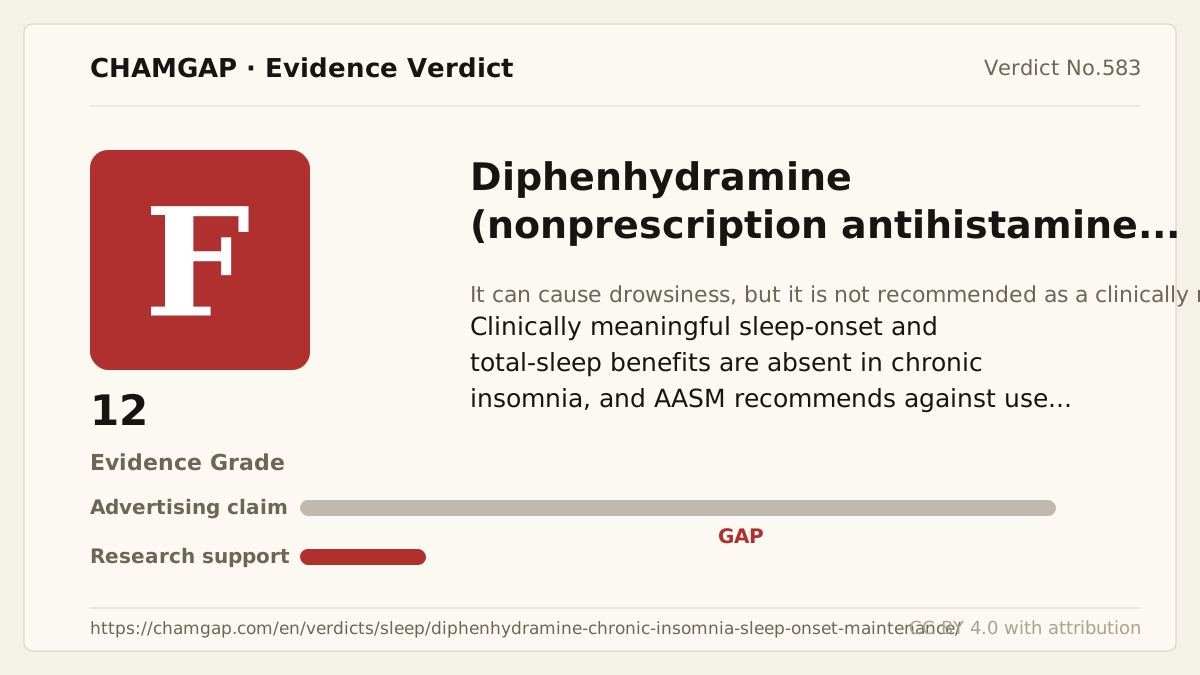
[Chamgap] Diphenhydramine x improved sleep onset, maintenance, and restorative sleep in chronic insomnia — Evidence Grade F·12. 4 cited sources checked. Source: https://chamgap.com/en/verdicts/sleep/diphenhydramine-chronic-insomnia-sleep-onset-maintenance/ · CC BY 4.0CC BY 4.0 — free to use with attribution; do not distort grades, numbers, or verdict meaning.
What this document does and does not do
Chamgap is an information source. It reports what research has and has not confirmed; it does not tell readers what to take or buy. That decision belongs to readers and, when needed, medical or legal professionals. This verdict reflects literature available up to the search date and may change as new research appears. Nothing here is medical advice.