
CPAP,
does it really help with Prevention of recurrent cardiovascular death, myocardial infarction, stroke, and heart-failure hospitalization in moderate-to-severe obstructive sleep apnea with cardiovascular disease?
research showsCPAP for preventing recurrent cardiovascular death, myocardial infarction, stroke, and heart-failure hospitalization in people with cardiovascular disease and moderate-to-severe obstructive sleep apnea is rated F. SAVE followed 2,717 participants for a mean 3.7 years, but the primary composite occurred in 17.0% with CPAP and 15.4% with usual care, HR 1.10. RICCADSA in 244 participants and ISAACC in 1,264 participants with OSA also failed to reduce cardiovascular composites in randomized intention-to-treat analyses. Post hoc and adherence analyses show signals among high-use patients, but these are not randomized treatment effects and do not overturn repeated null results in three cardiovascular-prevention trials. The F grade with 9 points is limited to cardiovascular recurrence prevention. SAVE-confirmed improvements in snoring, daytime sleepiness, and quality of life, and treatment of airway obstruction, are separate efficacy axes. Nasal irritation, mask discomfort, and limited adherence remain separate safety and usability issues.
ads claimMarketing or counseling can imply that eliminating apnea necessarily prevents heart attacks and strokes. Improvement in apnea-hypopnea index, nocturnal oxygen, snoring, or sleepiness and reduction of cardiovascular death or hospitalization are different clinical outcomes.
Useful facts when choosing a product
- CPAP sends continuous positive pressure through a mask during sleep to prevent upper-airway collapse and requires sleep testing, a prescription and pressure setting, mask fitting, and follow-up.
- Algorithms, fixed or automatic pressure modes, humidifiers, mask designs, and leak management differ, producing product-specific comfort and adherence.
- Common problems include dry nose or mouth, congestion, skin irritation, pressure marks, air leaks, bloating, and claustrophobic sensation; humidification, mask adjustment, and gradual adaptation can help.
- This verdict is not a reason to stop prescribed CPAP without advice. Benefits for severe sleepiness, driving risk, nocturnal hypoxemia, and individual OSA symptoms are separate from cardiovascular recurrence prevention and should be reviewed with the prescriber.
Chamgap Semantic Classification Code
Candidate index · review held
P.continuous-positive-airway-pressure.device.recurrent-cardiovascular-death-myocardial-infarction-stroke-and-heart-failure-hospitalization-in-moderate-to-severe-obstructive-sleep-apnea-with-cardiovascular-disease.prevent.usual-careProcedures, devices and tests > Continuous positive airway pressure > Device delivered > recurrent cardiovascular death, myocardial infarction, stroke, and heart-failure hospitalization in moderate-to-severe obstructive sleep apnea with cardiovascular disease > Occurrence-prevention claim > Usual care
An automated migration candidate, not an issued permanent code; exact claim scope remains under review. This machine-generated migration candidate helps retrieval but is not a permanent assignment. The original verdict ID and URL remain authoritative.
What the research actually shows
SAVE randomized 2,717 people with coronary or cerebrovascular disease and moderate-to-severe OSA but little severe sleepiness to CPAP plus usual care or usual care. Average CPAP use was 3.3 hours nightly and the apnea-hypopnea index fell substantially, but the cardiovascular composite and individual cardiovascular outcomes did not improve over a mean 3.7 years. RICCADSA followed 244 people with revascularized coronary disease and nonsleepy OSA for 57 months and was null by intention to treat; only an adjusted analysis selecting users with at least four hours per night was positive. ISAACC found events in 16% with CPAP and 17% with usual care among 1,264 participants with OSA after acute coronary syndrome, a nonsignificant difference. These trials show that treating airway obstruction and symptoms does not ensure cardiovascular secondary prevention.
Why this is classified as F (9)
SAVE's direct cardiovascular composite was null in 2,717 participants, and RICCADSA and ISAACC also failed to reduce cardiovascular events by intention to treat. Adherence-based post hoc signals lose randomization and receive less weight than repeated null primary clinical outcomes. Repeated refutation of a widely assumed cardiovascular secondary-prevention claim gives F with 9 points. Apnea-hypopnea index, snoring, sleepiness, quality of life, and device discomfort remain separate efficacy and safety axes.
Counterpoint. CPAP can remain important for sleepiness, snoring, driving safety, severe nocturnal hypoxemia, and individualized OSA treatment goals. It does not replace proven cardiovascular secondary prevention through blood-pressure, lipid, and diabetes management, smoking cessation, exercise, weight management, and indicated antithrombotic and cardiovascular medicines.
Rejudgment record. New verdict — Applied F because the null direct cardiovascular composite in 2,717 SAVE participants and null intention-to-treat cardiovascular results in RICCADSA and ISAACC repeatedly refuted the widely assumed cardiovascular secondary-prevention claim across major randomized trials; gave less weight to nonrandomized signals among users adherent for at least four hours nightly and separated snoring, sleepiness, and quality-of-life improvement as a different efficacy axis
Sub-claim grades by effect
This ingredient is marketed for several effects. A single overall grade blends strong and weak claims together, so each effect is graded separately here. The overall grade reflects the strongest disconfirming or core claim.
| Effect (sub-claim) | Grade | Basis |
|---|---|---|
| Prevention of recurrent cardiovascular events in OSA with cardiovascular disease | F | Randomized intention-to-treat analyses in SAVE, RICCADSA, and ISAACC repeatedly failed to reduce composite cardiovascular events. |
| Reduction of cardiovascular death, myocardial infarction, stroke, and heart-failure hospitalization | F | SAVE found no significant benefit for the composite or any individual cardiovascular endpoint. |
| Improvement in snoring, daytime sleepiness, and health-related quality of life | C | SAVE's large randomized trial improved subjective symptoms and quality of life, but this is a different efficacy axis from cardiovascular prevention. |
Cross-check — AI research and Codex final gate
Evidence Table
| Study | Design | Sample | Funding | Endpoint | Result | Weight |
|---|---|---|---|---|---|---|
| McEvoy RD et al. 2016 SAVE | Multinational multicenter randomized open-label blinded-endpoint trial | 2,717 adults with cardiovascular disease and moderate-to-severe OSA | Main support from the Australian NHMRC and Philips Respironics, with device support from Respironics and ResMed, among others | Composite cardiovascular death, myocardial infarction, stroke, and hospitalization for unstable angina, heart failure, or transient ischemic attack | The primary outcome was 17.0% versus 15.4%, HR 1.10 (95% CI 0.91 to 1.32), p=0.34, while snoring, sleepiness, and quality of life improved. | Largest direct refutation of cardiovascular prevention |
| Peker Y et al. 2016 RICCADSA | Single-center randomized open-label blinded-endpoint trial | 244 participants with revascularized coronary disease and nonsleepy OSA | Swedish Research Council, Swedish Heart-Lung Foundation, ResMed Foundation, ResMed, and others | First repeat revascularization, myocardial infarction, stroke, or cardiovascular death | The intention-to-treat HR was 0.80 (95% CI 0.46 to 1.41), p=0.449; only an adjusted analysis of users adherent for at least four hours was positive. | Repeated null randomized result with a post hoc adherence signal |
| Sánchez-de-la-Torre M et al. 2020 ISAACC | Multicenter randomized open-label controlled trial | 1,264 participants with OSA after acute coronary syndrome | Public and academic support including Instituto de Salud Carlos III and the Spanish Respiratory Society | Composite cardiovascular death or nonfatal cardiovascular events | Events occurred in 16% with CPAP and 17% with usual care, HR 0.89 (95% CI 0.68 to 1.17), p=0.40. | Third major direct null trial |
Receipt — 3 References
All 3 cited sources were verified for existence at the original page (as of 2026-07-22).
Final verification and publication gate: Codex · Evidence date: 2026-07-22 · Corrections: none
Cite this verdict
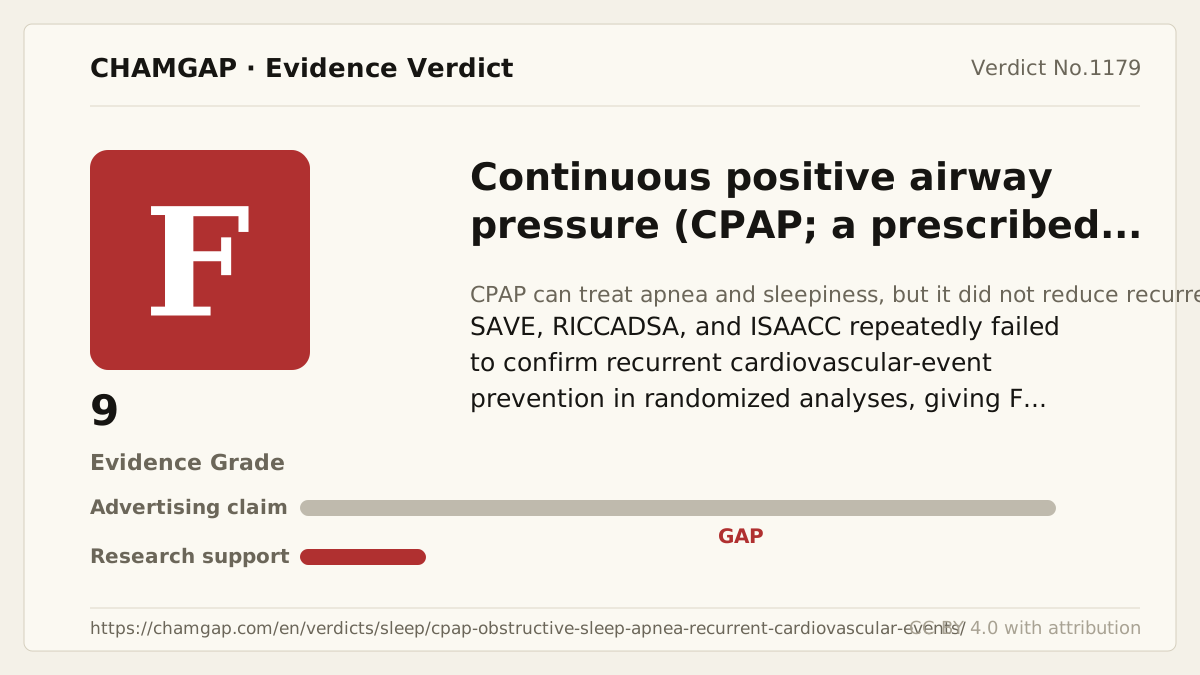
[Chamgap] CPAP x prevention of recurrent cardiovascular events in obstructive sleep apnea with cardiovascular disease — Evidence Grade F·9. 3 cited sources checked. Source: https://chamgap.com/en/verdicts/sleep/cpap-obstructive-sleep-apnea-recurrent-cardiovascular-events/ · CC BY 4.0CC BY 4.0 — free to use with attribution; do not distort grades, numbers, or verdict meaning.
What this document does and does not do
Chamgap is an information source. It reports what research has and has not confirmed; it does not tell readers what to take or buy. That decision belongs to readers and, when needed, medical or legal professionals. This verdict reflects literature available up to the search date and may change as new research appears. Nothing here is medical advice.