
Clonazepam,
does it really help with Reduced frequency and intensity of dream enactment in isolated REM sleep behavior disorder?
research showsClonazepam is rated C because it has a consistent clinical signal for reducing dream enactment in idiopathic or isolated REM sleep behavior disorder, but the evidence remains weak. The 2023 AASM systematic review identified 50 observational studies involving 993 adults with isolated RBD; one prospective cohort reported a 37.1% improvement in a dream-enactment behavioral score, but certainty was low. A Mayo retrospective survey found that the frequency-severity visual analog score fell from 6.53 to 4.15 among 18 clonazepam users, but treatment was not randomized. In an open-label randomized comparison of 34 patients, clonazepam improved polysomnographic REM-without-atonia measures, while the four-week CGI-I symptom advantage remained a nonsignificant trend. Clinical custom and a conditional guideline recommendation do not raise observational, small, and subjective-outcome evidence to A or B.
ads claimDescriptions such as established first-line therapy or highly effective treatment can expand into claims of complete behavioral suppression, injury prevention, or prevention of neurodegeneration. Symptom relief does not show that clonazepam prevents Parkinson disease or dementia, and bedroom safety measures remain necessary.
Useful facts when choosing a product
- Clonazepam is a long-acting benzodiazepine and controlled prescription medicine. Treatment of RBD is off label and requires diagnosis and follow-up by a sleep or neurology specialist.
- RBD should be distinguished from sleep apnea, nocturnal seizures, and non-REM events, with video polysomnography used for confirmation when feasible. Removing dangerous objects and reducing fall and bed-partner injury risk are core treatment measures.
- Drowsiness, dizziness, memory or cognitive impairment, gait instability, and falls can occur, and clonazepam may worsen obstructive sleep apnea or respiratory suppression. Older adults and people with neurodegenerative disease require particular caution.
- Daily use can produce tolerance and physical dependence, and abrupt withdrawal can cause rebound insomnia, anxiety, or seizures. Alcohol, opioids, and other sedatives increase risk.
Chamgap Semantic Classification Code
Candidate index · review held
M.clonazepam.UNK.frequency-and-intensity-of-dream-enactment-in-isolated-rem-sleep-behavior-disorder.reduce.MULTIMedicinal interventions > Clonazepam > Unknown > frequency and intensity of dream enactment in isolated REM sleep behavior disorder > Reduction claim > Multiple: primary unresolved
An automated migration candidate, not an issued permanent code; exact claim scope remains under review. This machine-generated migration candidate helps retrieval but is not a permanent assignment. The original verdict ID and URL remain authoritative.
What the research actually shows
The 2023 Howell AASM systematic review identified 50 clonazepam observational studies involving 993 adults with isolated RBD. A prospective cohort of 39 patients directly assessing dream-enactment frequency and intensity reported a 37.1% improvement in its behavioral factor score, with low certainty because of observational bias. McCarter and colleagues conducted a nonrandomized retrospective survey and record review; among 18 clonazepam users, the dream-enactment frequency-severity visual analog score fell from 6.53 to 4.15 and reported dream enactment fell from 94% to 44%. Byun and colleagues randomized 34 polysomnography-confirmed patients in an open-label comparison of clonazepam 0.5 mg and prolonged-release melatonin 2 mg. Clonazepam reduced REM-without-atonia measures, but the clinical CGI-I difference was not statistically significant. The symptom signal is real, while a large placebo-controlled clinical-endpoint trial remains absent.
Why this is classified as C (48)
Observational literature involving 993 adults with isolated RBD and small clinical studies show a consistent dream-enactment signal, but key outcomes rely on nonrandomized before-after comparisons and subjective ratings. A 34-person open-label randomized active-comparator trial improved polysomnographic measures without a significant clinical CGI-I difference, and no large blinded placebo-controlled clinical-endpoint trial exists. Clinical custom and a conditional recommendation cannot substitute for trial quality, giving C with 48 points. Sedation, falls, dependence, and worsening of sleep apnea are separate safety concerns.
Counterpoint. For violent dream enactment or substantial injury risk, a specialist may consider a low starting dose after weighing benefits and harms. Bedroom safety, evaluation for sleep apnea, and periodic review of whether the dose can be reduced remain necessary.
Rejudgment record. New verdict — Accepted the direct clinical signal for reduced dream-enactment frequency and intensity in isolated RBD, but applied the rule ① ceiling of C because the AASM evidence base is primarily low-certainty observational research, the small open randomized active-comparator trial did not show a significant clinical symptom difference, and no large blinded placebo-controlled clinical-endpoint trial exists
Sub-claim grades by effect
This ingredient is marketed for several effects. A single overall grade blends strong and weak claims together, so each effect is graded separately here. The overall grade reflects the strongest disconfirming or core claim.
| Effect (sub-claim) | Grade | Basis |
|---|---|---|
| Reduced dream-enactment frequency in isolated RBD | C | Multiple observational studies report reductions, but no large blinded placebo-controlled clinical trial exists. |
| Reduced dream-enactment intensity in isolated RBD | C | The prospective-cohort signal has low certainty, and the small open trial did not show a significant clinical symptom difference. |
| Reduced RBD-related falls and injuries | C | Retrospective data showed favorable trends, but clonazepam differences for injuries and falls were not significant and complete suppression was uncommon. |
Cross-check — AI research and Codex final gate
Evidence Table
| Study | Design | Sample | Funding | Endpoint | Result | Weight |
|---|---|---|---|---|---|---|
| Howell M et al. 2023 AASM systematic review | Systematic review and GRADE assessment | Fifty clonazepam observational studies involving 993 adults with isolated RBD | Supported by the American Academy of Sleep Medicine | Dream-enactment frequency and intensity, symptom improvement, sedation, cognition, and gait | One prospective cohort reported a 37.1% improvement in a behavioral score, but overall certainty was low because of observational bias. | Key synthesis with low certainty |
| McCarter SJ et al. 2013 | Retrospective survey and medical-record observational study | Forty-five analyzed; 18 initially treated with clonazepam monotherapy | Academic institutional study; no product sponsorship stated in the indexed abstract | Dream-enactment frequency-severity VAS and reported dream enactment, falls, and injuries | The clonazepam VAS fell from 6.53 to 4.15 and reported dream enactment fell from 94% to 44%, without randomized control. | Direct symptom signal with substantial observational bias |
| Byun JI et al. 2023 | Prospective open-label randomized active-comparator trial | Thirty-four patients with video-polysomnography-confirmed isolated RBD | Academic study; no commercial sponsorship stated in the indexed abstract | Four-week REM without atonia, CGI-I, and sleep questionnaires | Clonazepam improved REM-without-atonia measures, but superiority on CGI-I remained a nonsignificant trend at p=0.068. | Randomized but small, open label, and active controlled |
Receipt — 3 References
All 3 cited sources were verified for existence at the original page (as of 2026-07-21).
Final verification and publication gate: Codex · Evidence date: 2026-07-21 · Corrections: none
Cite this verdict
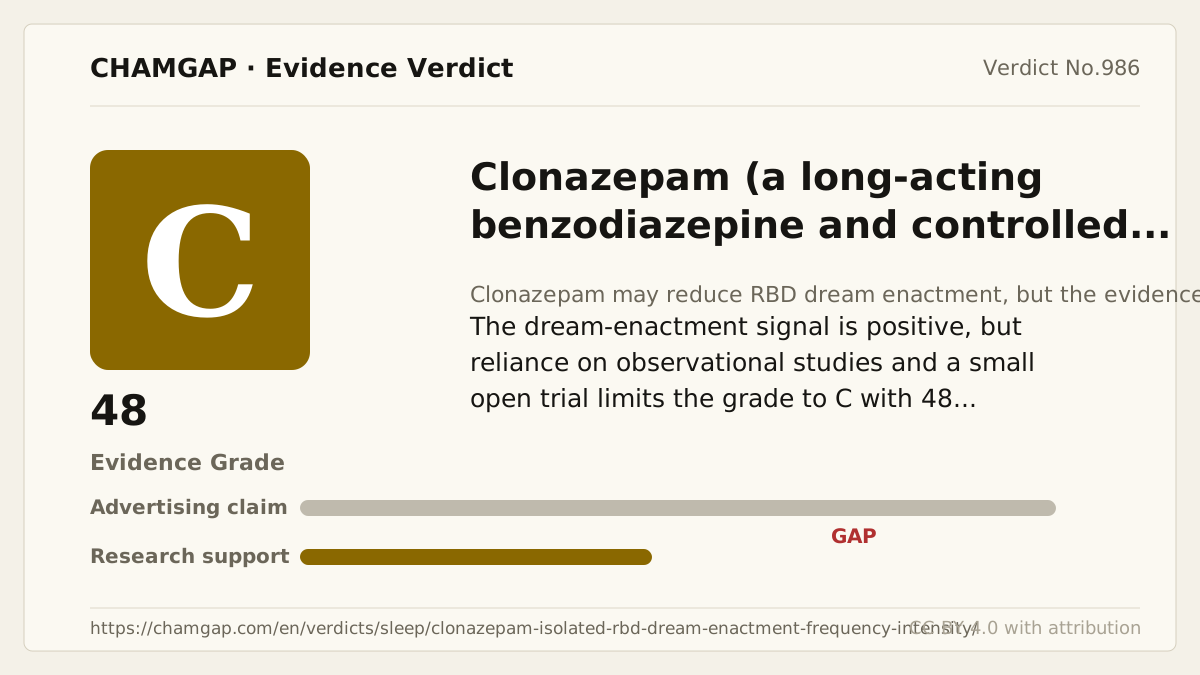
[Chamgap] Clonazepam x reduced frequency and intensity of dream enactment in isolated REM sleep behavior disorder — Evidence Grade C·48. 3 cited sources checked. Source: https://chamgap.com/en/verdicts/sleep/clonazepam-isolated-rbd-dream-enactment-frequency-intensity/ · CC BY 4.0CC BY 4.0 — free to use with attribution; do not distort grades, numbers, or verdict meaning.
What this document does and does not do
Chamgap is an information source. It reports what research has and has not confirmed; it does not tell readers what to take or buy. That decision belongs to readers and, when needed, medical or legal professionals. This verdict reflects literature available up to the search date and may change as new research appears. Nothing here is medical advice.