
Cannabidiol 150 mg,
does it really help with Improved insomnia severity and subjective sleep onset and maintenance in primary insomnia?
research showsSublingual cannabidiol 150 mg is rated D because it did not improve the core subjective symptoms of primary insomnia over placebo. A 2024 randomized double-blind pilot trial assigned 30 adults with moderate to severe primary insomnia to CBD or placebo, 15 per group, for two weeks. Insomnia severity, self-reported sleep-onset latency, sleep efficiency, and wake after sleep onset did not differ between groups. Actigraphic sleep efficiency was 6.85 percentage points higher with CBD at week two, but this was one small signal among multiple secondary objective outcomes and did not reverse the failure of the claimed subjective sleep-onset and maintenance benefits. The grade is D because the direct small human trial failed its core and primary outcomes.
ads claimMarketing turns nonintoxicating status, relaxation, or well-being into claims that users will fall asleep naturally and remain asleep all night. In the direct trial of this exact 150-mg CBD-isolate sublingual formulation, perceived insomnia severity, sleep onset, and sleep maintenance were no better than placebo.
Useful facts when choosing a product
- This verdict concerns a 150-mg CBD-isolate sublingual oil, not a THC, CBN, or terpene mixture, so results from mixed-cannabinoid trials cannot be assigned to it.
- The direct trial used 150 mg daily 60 minutes before bedtime for two weeks and does not establish efficacy for lower retail doses or longer courses.
- CBD can cause drowsiness, sedation, diarrhea, appetite change, and dizziness; driving, machinery operation, alcohol, and other central nervous system depressants require caution.
- CBD can elevate liver enzymes and interact with drugs metabolized through CYP pathways. People with liver disease or those taking valproate, clobazam, anticoagulants, or other interacting medicines should obtain clinical advice.
Chamgap Semantic Classification Code
Candidate index · review held
UNK.cannabidiol.sublingual.insomnia-severity-and-subjective-sleep-onset-and-maintenance-in-primary-insomnia.improve.placeboUnknown > Cannabidiol > Sublingual > insomnia severity and subjective sleep onset and maintenance in primary insomnia > Improvement claim > Placebo
An automated migration candidate, not an issued permanent code; exact claim scope remains under review. This machine-generated migration candidate helps retrieval but is not a permanent assignment. The original verdict ID and URL remain authoritative.
What the research actually shows
Narayan 2024 used a one-week single-blind placebo run-in followed by a two-week double-blind randomized parallel phase. Thirty adults aged 18 to 45 years with ISI scores of at least 15 used sublingual CBD 150 mg or placebo 60 minutes before bedtime. The primary ISI outcome and sleep-diary measures of sleep-onset latency, sleep efficiency, and wake after sleep onset did not differ between groups. Actigraphic sleep efficiency favored CBD by 6.85 percentage points only at week two, while most other sleep and mood outcomes were null. The Ranum 2023 systematic review found that the CBD-insomnia literature rarely focused on insomnia patients or used validated and objective measures, and the Lavender 2024 update concluded that the evidence base does not match the scale of cannabinoid use for sleep.
Why this is classified as D (30)
The randomized trial of the exact 150-mg sublingual CBD regimen was null for insomnia severity and subjective sleep onset, sleep efficiency, and wake after sleep onset. The 6.85-percentage-point actigraphic sleep-efficiency result was a single secondary signal in 30 participants and cannot offset failure of the primary and core subjective outcomes, giving D with 30 points.
Counterpoint. Some users may feel calmer or report better well-being, but those outcomes are not equivalent to treatment of sleep onset and maintenance in insomnia. Persistent insomnia calls for cognitive behavioral therapy and evaluation of sleep apnea, depression or anxiety, medicines, caffeine, and other causes.
Rejudgment record. New verdict — Applied D for failure of the primary and core outcomes because the randomized trial of the exact 150-mg sublingual CBD-isolate regimen was null for insomnia severity and subjective sleep-onset latency, sleep efficiency, and wake after sleep onset, leaving only a small secondary actigraphic signal
Sub-claim grades by effect
This ingredient is marketed for several effects. A single overall grade blends strong and weak claims together, so each effect is graded separately here. The overall grade reflects the strongest disconfirming or core claim.
| Effect (sub-claim) | Grade | Basis |
|---|---|---|
| Reduced insomnia severity in primary insomnia | D | The direct two-week 150-mg trial found no between-group difference in ISI. |
| Improved subjective sleep onset | D | Sleep-diary sleep-onset latency did not improve significantly over placebo. |
| Improved subjective sleep maintenance | D | Self-reported sleep efficiency and wake after sleep onset did not differ from placebo. |
Cross-check — AI research and Codex final gate
Evidence Table
| Study | Design | Sample | Funding | Endpoint | Result | Weight |
|---|---|---|---|---|---|---|
| Narayan AJ et al. 2024 | Double-blind randomized placebo-controlled parallel pilot trial after a single-blind placebo run-in | 30 participants with primary insomnia; 15 CBD and 15 placebo | Supported by Cannvalate and the Barbara Dicker Brain Sciences Foundation; study treatments supplied by Brains Bioceuticals | ISI, sleep-diary sleep-onset latency, sleep efficiency and wake after sleep onset, actigraphy, and psychological secondary measures | All core subjective sleep outcomes were null. Only week-two actigraphic sleep efficiency favored CBD by 6.85 percentage points. | Key direct trial of the exact product and claim |
| Ranum RM et al. 2023 | Systematic review of CBD for insomnia management | 34 studies; only two focused on insomnia patients, including one case report | Academic review with mixed funding across source studies | Insomnia symptoms, validity of assessment tools, and objective sleep measures | Judged the supporting literature inadequate because it rarely directly studied insomnia or used validated subjective and objective measures. | Assessment of the direct-evidence gap |
| Lavender I et al. 2024 | Updated review of cannabis and CBD for sleep | Narrative synthesis including new clinical literature from 2021 to 2024 | Academic review | Subjective and objective outcomes across insomnia and other sleep disorders | Concluded that the evidence base does not match the widespread use of cannabinoids for sleep disorders. | Current contextual evidence |
Receipt — 4 References
All 4 cited sources were verified for existence at the original page (as of 2026-07-24).
Final verification and publication gate: Codex · Evidence date: 2026-07-24 · Corrections: none
Cite this verdict
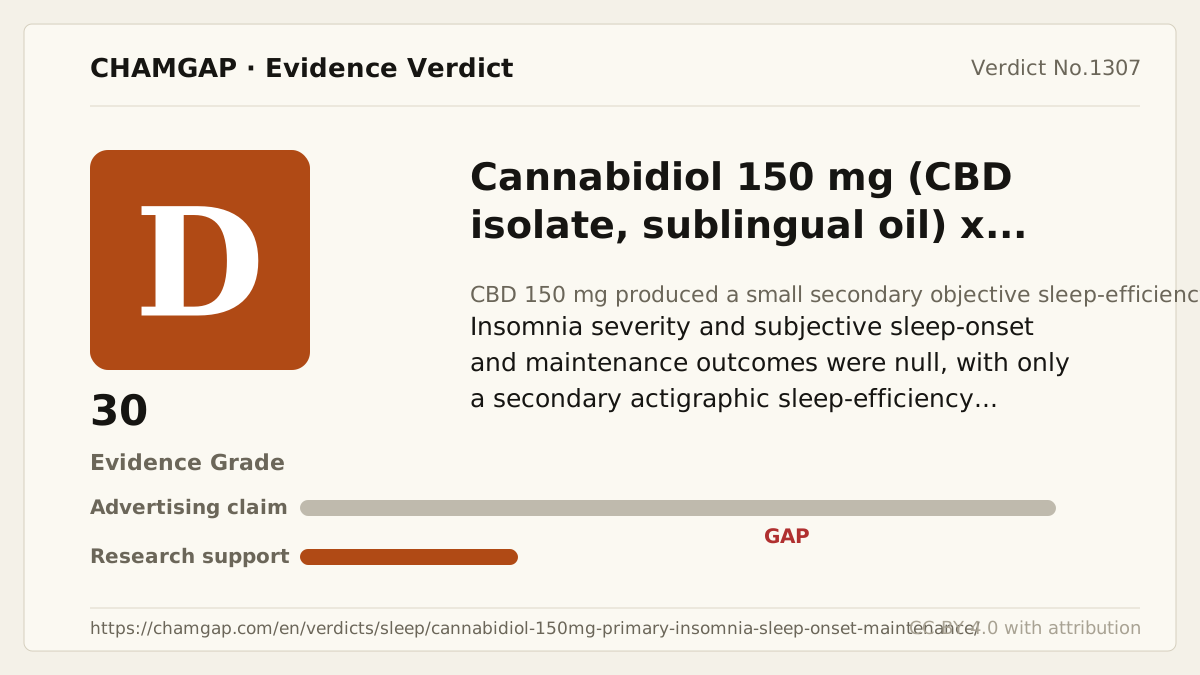
[Chamgap] Cannabidiol 150 mg x improvement of primary insomnia — Evidence Grade D·30. 4 cited sources checked. Source: https://chamgap.com/en/verdicts/sleep/cannabidiol-150mg-primary-insomnia-sleep-onset-maintenance/ · CC BY 4.0CC BY 4.0 — free to use with attribution; do not distort grades, numbers, or verdict meaning.
What this document does and does not do
Chamgap is an information source. It reports what research has and has not confirmed; it does not tell readers what to take or buy. That decision belongs to readers and, when needed, medical or legal professionals. This verdict reflects literature available up to the search date and may change as new research appears. Nothing here is medical advice.