
Alcohol before inflight sleep,
does it really help with Worsened nocturnal hypoxemia, increased heart rate, and impaired sleep architecture?
research showsThe grade is C. In a 17-person crossover experiment simulating a cabin altitude of about 2,438 m, alcohol before sleep lowered median nocturnal SpO2 from 88.07% to 85.32% and raised heart rate from 72.90 to 87.73 beats/min. The direction is clear, but the decisive comparison was reported only as medians and IQRs, so an effect size and confidence interval cannot be recovered. Axis 4 EX(a) gives C with 50 points.
ads claimIt is accurate that alcohol before sleep worsened oxygen saturation and heart rate under cabin-like pressure. It is not accurate to claim that the experiment proved cardiac events on real flights or that identical numbers apply to every age and condition.
Useful facts when choosing a product
- Alcohol was titrated to a mean blood concentration of 0.043%, roughly two cans of beer or two glasses of wine.
- The chamber used 753 hPa, about 2,438 m cabin altitude, with recorded aircraft noise at 70 dB(A).
- The result came from four hours of supine sleep in a simulation rather than an actual flight.
Chamgap Semantic Classification Code
Candidate index · review held
UNK.alcohol-consumed-before-sleep-under-hypobaric-conditions-resembling-a-long-haul-aircraft-cabin.UNK.worsened-nocturnal-hypoxemia-increased-heart-rate-and-impaired-sleep-architecture.increase.UNKUnknown > Alcohol consumed before sleep under hypobaric conditions resembling a long-haul aircraft cabin > Unknown > Worsened nocturnal hypoxemia, increased heart rate, and impaired sleep architecture > Increase claim > Unknown
An automated migration candidate, not an issued permanent code; exact claim scope remains under review. This machine-generated migration candidate helps retrieval but is not a permanent assignment. The original verdict ID and URL remain authoritative.
What the research actually shows
Trammer assigned 48 people to a sea-level sleep laboratory or altitude chamber, with alcohol and no-alcohol nights crossed over within each environment; 23 and 17 were analyzed, respectively. Hypobaric alcohol versus no alcohol produced median SpO2 of 85.32% (IQR 82.86-85.93) versus 88.07% (86.50-88.49) and heart rate of 87.73 (85.89-93.86) versus 72.90 (70.90-78.17) beats/min. The decisive comparison was reported only as medians and IQRs, and the paired Wilcoxon P value plus N cannot uniquely recover a mean difference, SMD, or CI. The direction is clear, but the effect size cannot be recovered. Funding came from the institutional DLR Aeronautics Program, and no competing interests were reported.
Why this is classified as C (50)
A publicly funded crossover experiment established the direction of worsening hypoxemia and heart rate, but medians and IQRs alone do not permit recovery of a mean difference or SMD with CI. Axis 4 EX(a) gives C with 50 points.
Counterpoint. Risk may be greater in older adults or people with sleep apnea or cardiopulmonary disease, but this study did not directly measure their clinical events.
Rejudgment record. Cross-check applied — We confirmed that the decisive Thorax comparison reported medians and IQRs only, with no events and a paired Wilcoxon P value that cannot recover a mean difference, SMD, or CI, so axis 4 EX(a) was applied.
| Endpoint | S | Surrogate marker - laboratory or imaging measures |
| Replication | R1 | Single confirmatory trial |
| Independence | I2 | Decisive evidence is publicly or non-profit funded |
| Effect size | EX | The clinical size of the effect could not be judged |
Stored derived and displayed grades match; this is not a current recalculation or validity check (C).
Sub-claim grades by effect
This ingredient is marketed for several effects. A single overall grade blends strong and weak claims together, so each effect is graded separately here. The overall grade reflects the strongest disconfirming or core claim.
| Effect (sub-claim) | Grade | Basis |
|---|---|---|
| Alcohol before sleep under cabin-like pressure worsens nocturnal hypoxemia. | C | Median SpO2 fell from 88.07% to 85.32%. |
| The combination increases cardiac events during actual flights. | ? | The experiment measured physiologic markers, not actual clinical events. |
Cross-check — AI research and Codex final gate
Evidence Table
| Study | Design | Sample | Funding | Endpoint | Result | Weight |
|---|---|---|---|---|---|---|
| Trammer et al., Thorax 2024 | Counterbalanced crossover physiology experiment | 48 assigned and 40 analyzed; 23 sea-level and 17 hypobaric | Institutional funding from the DLR Aeronautics Program; no competing interests reported | SpO2, time below 90% SpO2, heart rate, and polysomnography during four-hour sleep | Hypobaric alcohol versus no alcohol: SpO2 85.32% versus 88.07%, heart rate 87.73 versus 72.90 beats/min, and time below 90% SpO2 201.18 versus 173.28 minutes | Only direct hypobaric alcohol crossover experiment |
Receipt — 1 References
All 1 cited sources were verified for existence at the original page (as of 2026-08-14).
Final verification and publication gate: Codex · Evidence date: 2026-08-14 · Corrections: none
Cite this verdict
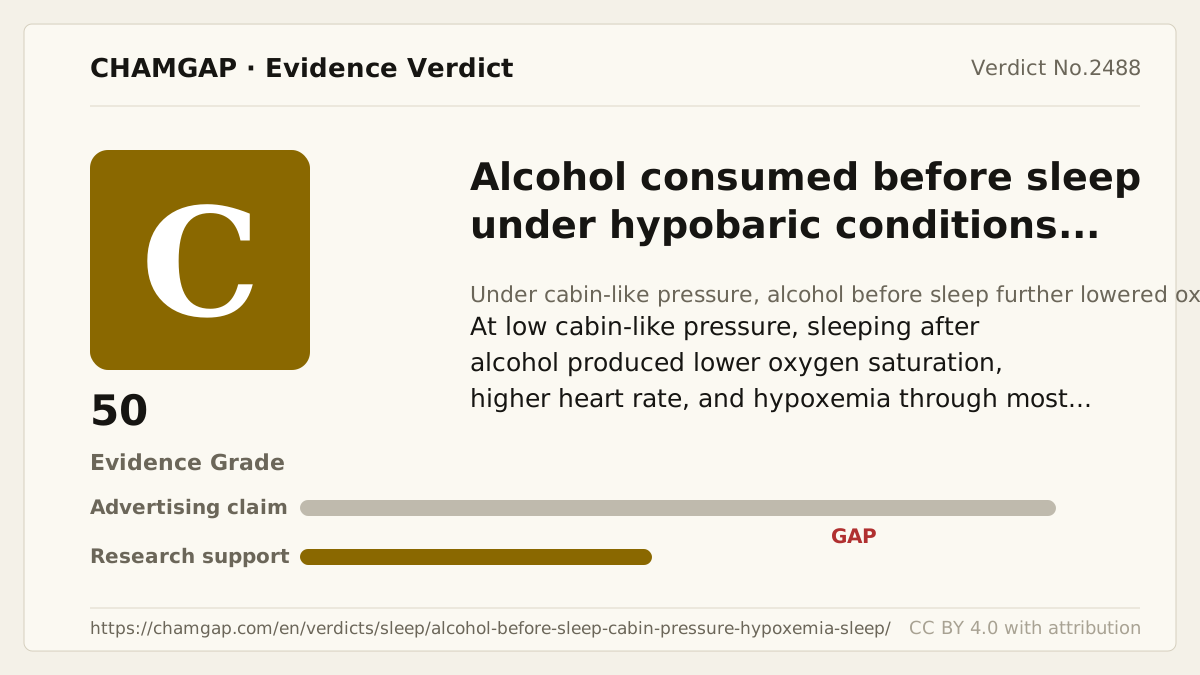
[Chamgap] Alcohol before inflight sleep x worsened hypoxemia and sleep — Evidence Grade C·50. 1 cited sources checked. Source: https://chamgap.com/en/verdicts/sleep/alcohol-before-sleep-cabin-pressure-hypoxemia-sleep/ · CC BY 4.0CC BY 4.0 — free to use with attribution; do not distort grades, numbers, or verdict meaning.
What this document does and does not do
Chamgap is an information source. It reports what research has and has not confirmed; it does not tell readers what to take or buy. That decision belongs to readers and, when needed, medical or legal professionals. This verdict reflects literature available up to the search date and may change as new research appears. Nothing here is medical advice.