
Polygonum multiflorum,
does it really help with Improvement of hair loss and restoration of gray hair to black?
research showsNo credible human efficacy trial was found testing oral Polygonum multiflorum alone for hair loss improvement or restoration of gray hair to black. The identified hair evidence consists of cultured human dermal papilla cells, ex vivo follicles, and mouse studies. Traditional use for darkening hair is not a clinical trial, so the verdict is unknown. Separately from efficacy, oral Polygonum multiflorum has been linked to numerous cases of liver injury and warrants strong safety caution.
ads claimMarketing connects the name and traditional black-hair story to proven human hair regrowth or melanin restoration. Traditional use and preclinical mechanisms are not clinical evidence for treating alopecia or reversing gray hair.
Useful facts when choosing a product
- The Korean pharmacopoeial herb is the tuberous root of Polygonum multiflorum Thunberg and is botanically distinct from Cynanchum wilfordii, commonly called baek-su-o.
- It may be sold in South Korea as crude herb, pills, powder, concentrates, or tea, but no validated oral human dose exists for hair loss or repigmentation.
- Raw and processed roots, extraction solvents, and marker-compound concentrations differ, so products cannot be assumed equivalent.
- Oral Polygonum multiflorum has been associated with many liver-injury cases, including jaundice and marked enzyme elevation, and injury has also occurred with processed products. People with liver disease or hepatotoxic medicines require particular caution.
Chamgap Semantic Classification Code
Candidate index · review held
UNK.polygonum-multiflorum.UNK.hair-loss-and-restoration-of-gray-hair-to-black.improve.UNKUnknown > Polygonum multiflorum > Unknown > hair loss and restoration of gray hair to black > Improvement claim > Unknown
An automated migration candidate, not an issued permanent code; exact claim scope remains under review. This machine-generated migration candidate helps retrieval but is not a permanent assignment. The original verdict ID and URL remain authoritative.
What the research actually shows
Li 2015 gave raw or processed Polygonum multiflorum orally or topically to C57BL/6J mice and assessed coat coverage, length, follicle number, and color. Shin 2020 studied anagen-related pathways in cultured human dermal papilla cells and ex vivo follicles. A 2026 study likewise remained at cell and ex vivo human-follicle level. Reviews of human Polygonum multiflorum literature primarily identify pharmacokinetic work, other indications, and hepatotoxicity reports; no controlled oral trial directly testing hair loss or gray-hair reversal was identified.
Why this is classified as ?
Hair-related cell and animal work and traditional use exist, but no oral human efficacy trial for hair loss or gray hair was identified. Preclinical-only evidence does not justify forcing a D grade when the human literature is absent, so the verdict is unknown with a null score.
Counterpoint. Preclinical signals justify a hypothesis for a standardized, safety-monitored human trial, not a current recommendation to take the herb.
Rejudgment record. New verdict — No oral human efficacy trial for hair loss or gray-hair reversal; cell, animal, and traditional-use evidence cannot establish human efficacy
Sub-claim grades by effect
This ingredient is marketed for several effects. A single overall grade blends strong and weak claims together, so each effect is graded separately here. The overall grade reflects the strongest disconfirming or core claim.
| Effect (sub-claim) | Grade | Basis |
|---|---|---|
| Hair-loss improvement or hair growth with oral Polygonum multiflorum | ? | Only cell, ex vivo follicle, and mouse evidence was identified, without a direct human efficacy trial. |
| Restoration of gray hair to black | ? | Beyond traditional use and animal coat-color observations, no human hair-repigmentation trial was identified. |
Cross-check — AI research and Codex final gate
Evidence Table
| Study | Design | Sample | Funding | Endpoint | Result | Weight |
|---|---|---|---|---|---|---|
| Li Y et al. 2015 | Preclinical mouse study | 6 | Chinese research funding | Hair coverage, length, follicle number, and coat color | Reported hair-growth and color-related signals with raw or processed root, but the study did not involve humans. | Preclinical |
| Shin JY et al. 2020 | Cultured-cell and ex vivo follicle study | Investigators affiliated with LG Household and Health Care | Anagen-related signaling and follicle length | Reported signals consistent with anagen prolongation, but this was not a clinical trial administering the product to people. | Preclinical | |
| Bounda GA, Feng YU. 2015 | Review of clinical literature | Academic review | Scope of human research | Human pharmacokinetic, other-indication, and safety literature existed, but no direct oral hair-loss or repigmentation trial was presented. | Confirms gap | |
| Lei X et al. 2015 | Systematic review of liver-injury case reports and series | 450 | Academic research funding | Liver injury associated with Polygonum multiflorum | Synthesized 450 cases, including two liver transplants and seven deaths. | Safety |
Receipt — 4 References
All 4 cited sources were verified for existence at the original page (as of 2026-07-18).
Final verification and publication gate: Codex · Evidence date: 2026-07-18 · Corrections: none
Cite this verdict
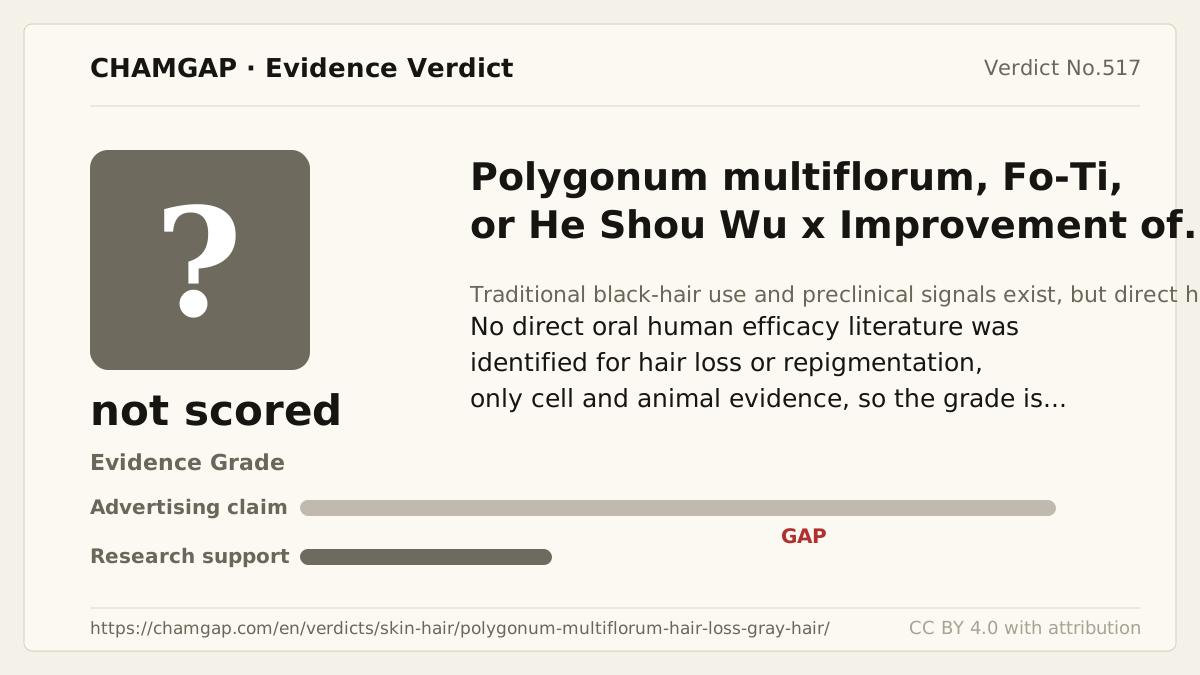
[Chamgap] Polygonum multiflorum x hair loss and reversal of gray hair — Evidence Grade ?. 4 cited sources checked. Source: https://chamgap.com/en/verdicts/skin-hair/polygonum-multiflorum-hair-loss-gray-hair/ · CC BY 4.0CC BY 4.0 — free to use with attribution; do not distort grades, numbers, or verdict meaning.
What this document does and does not do
Chamgap is an information source. It reports what research has and has not confirmed; it does not tell readers what to take or buy. That decision belongs to readers and, when needed, medical or legal professionals. This verdict reflects literature available up to the search date and may change as new research appears. Nothing here is medical advice.