
Tomato nutrient complex,
does it really help with Oral photoprotection and reduction of skin erythema?
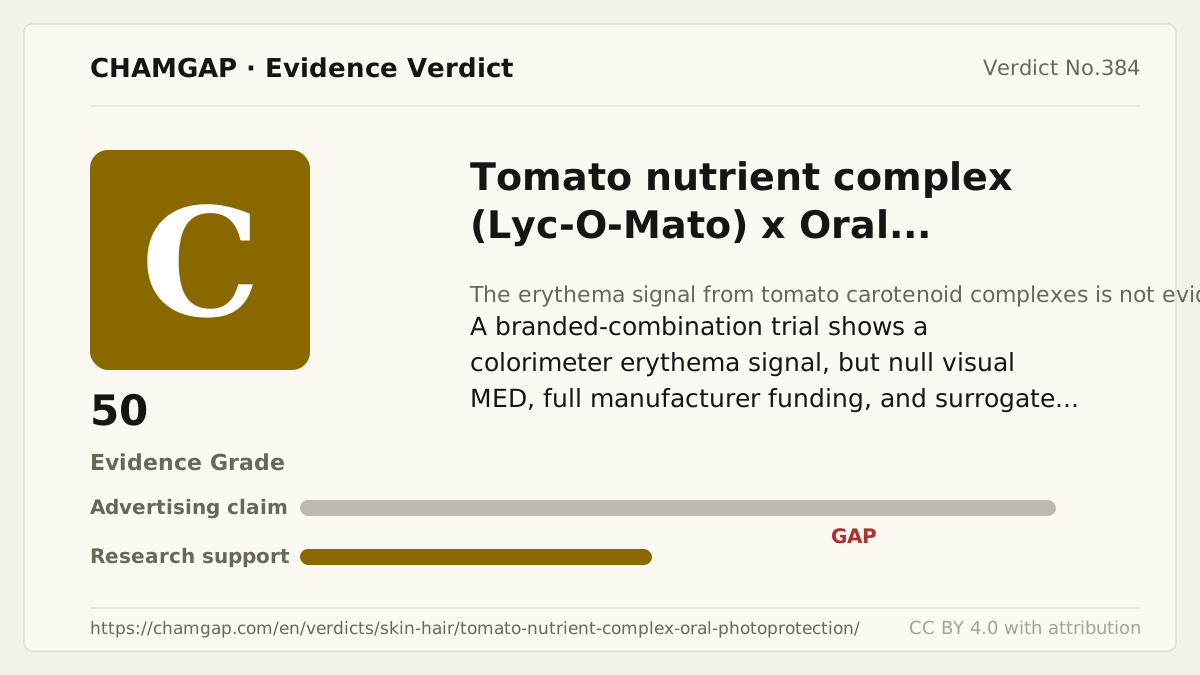
research showsHuman trials using Lyc-O-Mato or related tomato carotenoid complexes providing 10-15 mg/day of lycopene for 10-12 weeks found reductions in erythema intensity or molecular markers after artificial ultraviolet exposure. However, the core evidence is concentrated in Lycored branded ingredients and manufacturer-supported studies, and visually assessed minimal erythema dose (MED) was not significantly different from placebo in the 149-person trial. Erythema is a surrogate rather than evidence of skin-cancer or photoaging prevention, and the supplement cannot replace sunscreen, so the grade is C.
ads claimClaims such as 'edible sunscreen,' 'raises SPF,' or 'prevents skin cancer' exceed the evidence. Trials measured erythema and molecular markers after controlled artificial ultraviolet exposure and did not test replacement of sunscreen, clothing, or shade.
Useful facts when choosing a product
- In Korea, imported supplements may be marketed as tomato extract, lycopene, or Lyc-O-Mato, so the ingredient name and full formulation should be checked.
- The Lyc-O-Mato trial used about 10 mg lycopene/day for 12 weeks.
- The 2019 TNC supplied 15 mg lycopene, 5.8 mg phytoene and phytofluene, 0.8 mg beta-carotene, 5.6 mg tocopherols, and 4 mg rosemary-derived carnosic acid per day.
- Isolated lycopene and tomato carotenoid complexes are not interchangeable ingredients.
- Oral carotenoids are not a clinically validated substitute for the SPF protection of sunscreen.
Chamgap Semantic Classification Code
Candidate index · review held
UNK.tomato-nutrient-complex.oral.oral-photoprotection-and-reduction-of-skin-erythema.reduce.placeboUnknown > Tomato nutrient complex > Oral > Oral photoprotection and reduction of skin erythema > Reduction claim > Placebo
An automated migration candidate, not an issued permanent code; exact claim scope remains under review. This machine-generated migration candidate helps retrieval but is not a permanent assignment. The original verdict ID and URL remain authoritative.
What the research actually shows
The 2005 Aust trial compared synthetic lycopene, Lyc-O-Mato, and a Lyc-O-Guard drink, each providing about 10 mg lycopene/day for 12 weeks, and reported reduced ultraviolet-induced erythema in all three groups. The 2017 Grether-Beck crossover trial in 65 volunteers found that TNC reduced UVA/UVB-induced expression of HO1, ICAM1, and MMP1. The 2019 Groten multicenter RCT randomized 149 volunteers to TNC or placebo for 12 weeks; colorimeter-measured erythema and IL-6 and TNF-alpha responses improved, but visually assessed MED did not differ significantly. Tomato-paste trials also show erythema signals but are not replications of Lyc-O-Mato capsules.
Why this is classified as C (50)
The colorimeter erythema and IL-6 and TNF-alpha signals in the 149-person trial are recognized, but visually assessed MED was null between groups, the outcomes were surrogates rather than clinical events, the product combined several tomato constituents with rosemary-derived carnosic acid, and the manufacturer fully funded the study. These limits yield C with 50 points.
Counterpoint. The exact TNC formulation may reduce artificial ultraviolet-induced erythema intensity after 10-12 weeks. This judgment does not include replacement of sunscreen or prevention of skin cancer.
Rejudgment record. Reassessment (cross-check reflected) — Accepted human RCT erythema signals but applied the C ceiling for a null visual MED result, surrogate endpoints, and concentration in Lycored branded and manufacturer-supported evidence
Sub-claim grades by effect
This ingredient is marketed for several effects. A single overall grade blends strong and weak claims together, so each effect is graded separately here. The overall grade reflects the strongest disconfirming or core claim.
| Effect (sub-claim) | Grade | Basis |
|---|---|---|
| Reduction of ultraviolet-erythema surrogate markers | C | Colorimeter-only signal from a branded combination |
| Prevention of sunburn or skin cancer or replacement of sunscreen | ? | No clinical outcome evidence |
Cross-check — AI research and Codex final gate
Evidence Table
| Study | Design | Sample | Funding | Endpoint | Result | Weight |
|---|---|---|---|---|---|---|
| Aust O et al. 2005 | Comparative clinical trial, 12 weeks | 36 | Used the Lyc-O-Mato branded ingredient; funding details unclear | Blood and skin carotenoids and erythema after irradiation at 1.25 MED | Synthetic lycopene, Lyc-O-Mato, and Lyc-O-Guard all showed signals of reduced erythema. | Supportive |
| Groten K et al. 2019 | Multicenter randomized double-blind placebo-controlled trial, 12 weeks | 145 | Fully funded by Lycored | MED, colorimeter erythema, IL-6, and TNF-alpha | Visual MED did not differ between groups, while colorimeter erythema, IL-6, and TNF-alpha improved; the product combined phytoene, phytofluene, beta-carotene, tocopherols, and carnosic acid. | Key, branded combination |
| Grether-Beck S et al. 2017 | Randomized double-blind placebo-controlled crossover trial | 65 | Supported by Lycored | UVA1- and UVA/B-induced HO1, ICAM1, and MMP1 expression | TNC reduced expression of selected ultraviolet-inducible molecular markers. | Supportive |
Receipt — 4 References
All 4 cited sources were verified for existence at the original page (as of 2026-07-16).
Final verification and publication gate: Codex · Evidence date: 2026-07-16 · Corrections: none
Cite this verdict
[Chamgap] Tomato nutrient complex (Lyc-O-Mato) × Oral photoprotection and reduction of skin erythema — Evidence Grade C·50. 4 cited sources checked. Source: https://chamgap.com/en/verdicts/skin-hair/tomato-nutrient-complex-oral-photoprotection/ · CC BY 4.0CC BY 4.0 — free to use with attribution; do not distort grades, numbers, or verdict meaning.
What this document does and does not do
Chamgap is an information source. It reports what research has and has not confirmed; it does not tell readers what to take or buy. That decision belongs to readers and, when needed, medical or legal professionals. This verdict reflects literature available up to the search date and may change as new research appears. Nothing here is medical advice.