
Suicide-focused cognitive behavioral therapy,
does it really help with Prevention of repeat suicide attempts and recurrent self-harm in adults with a recent suicide attempt?
research showsSuicide-focused cognitive behavioral therapy is rated B for preventing repeat suicide attempts and recurrent self-harm in adults after a recent attempt. In the 120-participant Brown 2005 randomized trial, 24.1% of cognitive-therapy participants versus 41.6% receiving usual care made another attempt over 18 months, with a hazard ratio of 0.51. A meta-analysis of CBT-based psychotherapy after adult self-harm also supported fewer repeated episodes at six and 12 months. The pivotal Brown trial was moderate in size, participants and therapists could not be masked, and delivery depends on trained therapists and a structured protocol, yielding B with 71 points.
ads claimGeneric supportive counseling or unstructured CBT can be portrayed as producing the same reattempt reduction as the Brown protocol. The tested intervention specifically targeted suicidal behavior and its results include trained-therapist delivery, treatment engagement, and concurrent usual care.
Useful facts when choosing a product
- The Brown protocol is not generic depression CBT; it directly addresses the recent attempt, triggering situations, automatic thoughts, core beliefs, and coping plans.
- The pivotal trial added about ten outpatient cognitive-therapy sessions to existing mental-health and medical services.
- Participants and therapists cannot be masked in psychotherapy, and therapist training, fidelity, and dropout affect reproducibility.
- Temporary emotional distress and dropout can occur during treatment, while continuing risk assessment and crisis-response capacity are safety elements separate from efficacy.
Chamgap Semantic Classification Code
Candidate index · review held
X.suicide-focused-cognitive-behavioral-therapy.behavioral.repeat-suicide-attempts-and-recurrent-self-harm-with-a-recent-suicide-attempt.prevent.usual-careBehaviors, exposures and policies > Suicide-focused cognitive behavioral therapy > Behavioral delivery > repeat suicide attempts and recurrent self-harm with a recent suicide attempt > Occurrence-prevention claim > Usual care
An automated migration candidate, not an issued permanent code; exact claim scope remains under review. This machine-generated migration candidate helps retrieval but is not a permanent assignment. The original verdict ID and URL remain authoritative.
What the research actually shows
Brown 2005 enrolled 120 adults who had attempted suicide within the preceding 48 hours and randomized them to suicide-focused cognitive therapy plus usual care or usual care alone. About ten outpatient sessions used chain analysis, work on core beliefs, coping strategies, and relapse-prevention tasks. Over 18 months there were 13 versus 23 reattempters, corresponding to a hazard ratio of 0.51. Hawton 2016 synthesized randomized trials after recent adult self-harm and found fewer participants repeating self-harm with CBT-based psychotherapy at six months across 12 trials and 1,317 participants, odds ratio 0.54, and at 12 months across ten trials and 2,232 participants, odds ratio 0.80. NICE incorporated structured CBT-informed intervention tailored to adult self-harm in its 2022 evidence-based guidance.
Why this is classified as B (71)
The Brown trial directly reduced the hard behavioral endpoint of repeat suicide attempt, 24.1% versus 41.6% with a hazard ratio of 0.51, and broader CBT-based meta-analysis and NICE evidence review support the direction. Dependence on one moderate pivotal trial for the specific protocol, unavoidable masking limitations, and therapist dependence yield B with 71 points.
Counterpoint. This verdict is limited to Brown-style suicide-focused CBT for adults after a recent attempt. It does not combine evidence from DBT in borderline personality disorder, clozapine in schizophrenia, adolescent CBT-SP, or a stand-alone safety plan.
Rejudgment record. New verdict — Accepted the direct randomized reduction in repeat suicide attempts with suicide-focused CBT after a recent adult attempt and supportive broader CBT-based self-harm meta-analysis, but applied grade B for one moderate pivotal trial, impossible participant and therapist masking, and dependence on trained delivery
Sub-claim grades by effect
This ingredient is marketed for several effects. A single overall grade blends strong and weak claims together, so each effect is graded separately here. The overall grade reflects the strongest disconfirming or core claim.
| Effect (sub-claim) | Grade | Basis |
|---|---|---|
| Prevention of repeat suicide attempts over 18 months in adults with a recent attempt | B | The Brown trial found 24.1% versus 41.6% with a hazard ratio of 0.51, but it was one moderate-sized trial. |
| Prevention of recurrent self-harm in adults after recent self-harm | B | Broader CBT-based meta-analysis found fewer repeated self-harm episodes at six and 12 months. |
| Prevention of suicide death in adults with a recent suicide attempt | C | The pivotal trial was not statistically powered to establish a reduction in suicide mortality. |
Cross-check — AI research and Codex final gate
Evidence Table
| Study | Design | Sample | Funding | Endpoint | Result | Weight |
|---|---|---|---|---|---|---|
| Brown GK et al. 2005 | Randomized usual-care-controlled trial | 120 adults with a recent suicide attempt | United States National Institute of Mental Health | At least one repeat suicide attempt over 18 months | Reattempt occurred in 24.1% versus 41.6%, with a hazard ratio of 0.51. | Pivotal direct hard-behavioral-endpoint trial |
| Hawton K et al. 2016 | Systematic review and meta-analysis of psychosocial interventions after adult self-harm | 29 non-overlapping randomized trials; CBT-based analyses included 12 trials and 1,317 participants at six months and ten trials and 2,232 participants at 12 months | United Kingdom National Institute for Health Research | Repeated self-harm at six and 12 months | CBT-based psychotherapy reduced repeated self-harm with odds ratios of 0.54 at six months and 0.80 at 12 months. | Broader synthesis supporting the direction |
Receipt — 2 References
All 2 cited sources were verified for existence at the original page (as of 2026-07-23).
Final verification and publication gate: Codex · Evidence date: 2026-07-23 · Corrections: none
Cite this verdict
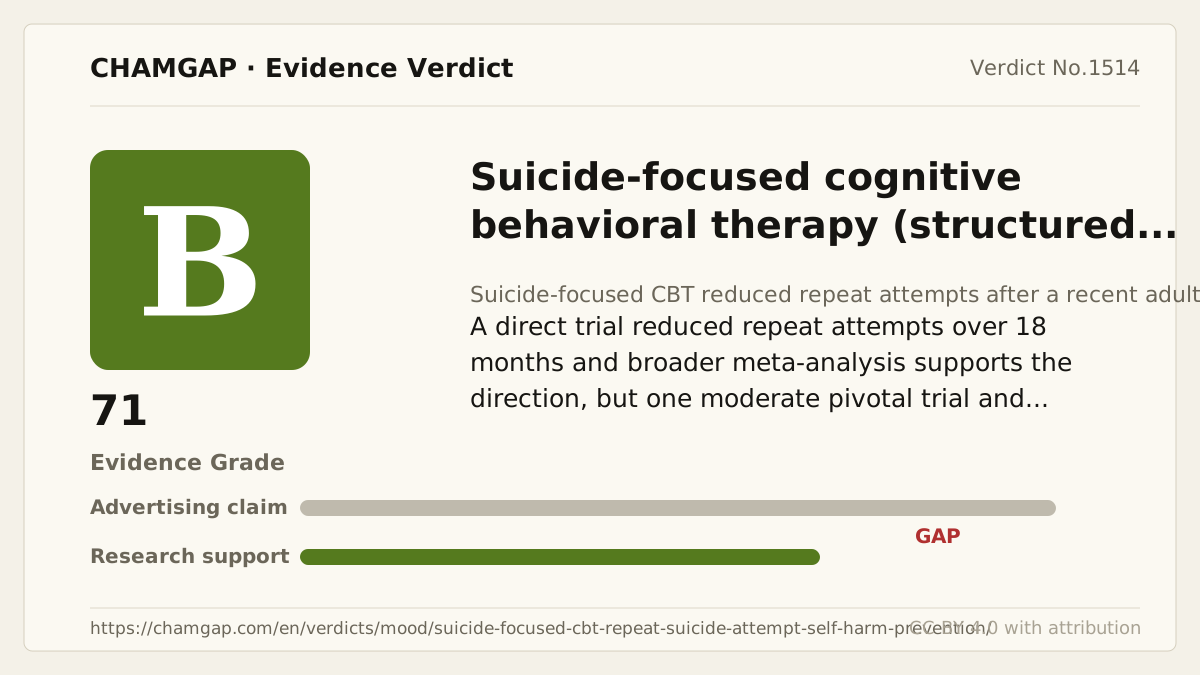
[Chamgap] Suicide-focused cognitive behavioral therapy x prevention of repeat suicide attempts and self-harm — Evidence Grade B·71. 2 cited sources checked. Source: https://chamgap.com/en/verdicts/mood/suicide-focused-cbt-repeat-suicide-attempt-self-harm-prevention/ · CC BY 4.0CC BY 4.0 — free to use with attribution; do not distort grades, numbers, or verdict meaning.
What this document does and does not do
Chamgap is an information source. It reports what research has and has not confirmed; it does not tell readers what to take or buy. That decision belongs to readers and, when needed, medical or legal professionals. This verdict reflects literature available up to the search date and may change as new research appears. Nothing here is medical advice.