
Quetiapine,
does it really help with Prevention of recurrent manic, depressive, or mixed mood episodes in stabilized bipolar I disorder?
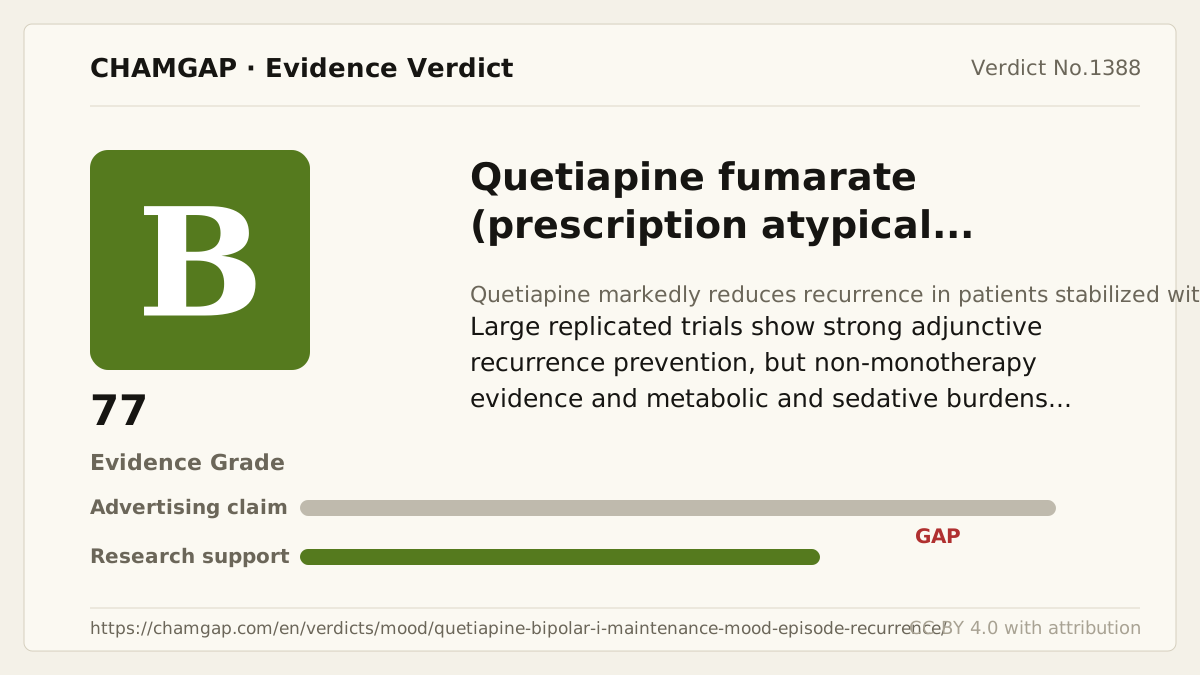
research showsQuetiapine is rated B because large randomized withdrawal trials replicated prevention of recurrence in bipolar I disorder stabilized with lithium or divalproex. Among 628 participants in North American Trial 127, mood events occurred in 20.3% continuing quetiapine and 52.1% switched to placebo, with a hazard ratio of 0.32. This is adjunctive maintenance evidence, not quetiapine monotherapy evidence, and sedation, weight gain, glycemic, and lipid burdens impose the ceiling.
ads claimMarketing may imply that quetiapine alone prevents bipolar recurrence. The pivotal evidence is the added benefit of continuing quetiapine in patients already stabilized with quetiapine plus lithium or divalproex.
Useful facts when choosing a product
- Quetiapine is a prescription atypical antipsychotic, and maintenance dose, concomitant medicine, and tapering require individualized psychiatric care.
- Somnolence, dizziness, and orthostatic hypotension are common and can impair driving or increase falls; abrupt discontinuation can provoke withdrawal symptoms or recurrence.
- Weight, waist circumference, blood pressure, fasting glucose or HbA1c, and lipids require monitoring, as do QT prolongation, extrapyramidal symptoms, and tardive dyskinesia.
- It carries a mortality warning in older adults with dementia-related psychosis and is not approved for that condition.
Chamgap Semantic Classification Code
Candidate index · review held
M.quetiapine-fumarate.UNK.recurrent-manic-depressive-or-mixed-mood-episodes-in-stabilized-bipolar-i-disorder.prevent.MULTIMedicinal interventions > Quetiapine fumarate > Unknown > recurrent manic, depressive, or mixed mood episodes in stabilized bipolar I disorder > Occurrence-prevention claim > Multiple: primary unresolved
An automated migration candidate, not an issued permanent code; exact claim scope remains under review. This machine-generated migration candidate helps retrieval but is not a permanent assignment. The original verdict ID and URL remain authoritative.
What the research actually shows
Suppes 2009 Trial 127 randomized 628 participants stabilized during open combination treatment to continued quetiapine or placebo for up to 104 weeks. Any mood event and manic and depressive episodes were all significantly delayed. Vieta 2008 Trial 126 used a similar combination stabilization and randomized withdrawal design and reduced risks of any, manic, and depressive recurrence by about 72%, 70%, and 74%.
Why this is classified as B (77)
Large randomized withdrawal Trials 126 and 127 consistently delayed any mood event and manic and depressive recurrence. The evidence is enriched and adjunctive in combination responders, with meaningful sedation and metabolic burdens, giving B with 77 points.
Counterpoint. For a patient already stable and tolerant on the combination, the absolute reduction in recurrence is large. Substantial metabolic risk or sedation calls for comparison with other maintenance strategies.
Rejudgment record. New verdict — Applied B because two large randomized withdrawal trials replicated prevention of any, manic, and depressive recurrence after stabilization on quetiapine plus lithium or divalproex, while enriched adjunctive design and metabolic and sedative burdens impose a ceiling
Sub-claim grades by effect
This ingredient is marketed for several effects. A single overall grade blends strong and weak claims together, so each effect is graded separately here. The overall grade reflects the strongest disconfirming or core claim.
| Effect (sub-claim) | Grade | Basis |
|---|---|---|
| Prevention of any recurrent mood episode in stabilized bipolar I disorder | B | Strongly replicated in two large randomized withdrawal trials after combination stabilization. |
| Delayed recurrent manic episodes in stabilized bipolar I disorder | B | The manic-event hazard ratio was 0.30 in Trial 127, consistent with Trial 126. |
| Delayed recurrent depressive episodes in stabilized bipolar I disorder | B | The depressive-event hazard ratio was 0.33 in Trial 127, within an adjunctive lithium-or-divalproex setting. |
Cross-check — AI research and Codex final gate
Evidence Table
| Study | Design | Sample | Funding | Endpoint | Result | Weight |
|---|---|---|---|---|---|---|
| Suppes T et al. 2009 Trial 127 | Double-blind randomized withdrawal trial after open stabilization | 1,953 in open treatment; 628 randomized | AstraZeneca-supported with author conflicts reported | Time to manic, depressive, or mixed mood episode | Mood events were 20.3% versus 52.1%; HR was 0.32 overall, 0.30 for mania, and 0.33 for depression. | Key large adjunctive recurrence-prevention trial |
| Vieta E et al. 2008 Trial 126 | International double-blind randomized withdrawal trial after open stabilization | 703 randomized participants | AstraZeneca-supported with company-employed coauthors | Any, manic, and depressive mood-event recurrence | Hazard ratios were 0.28 for any recurrence, 0.30 for mania, and 0.26 for depression, consistent with Trial 127. | Replicating randomized evidence |
Receipt — 2 References
All 2 cited sources were verified for existence at the original page (as of 2026-07-23).
Final verification and publication gate: Codex · Evidence date: 2026-07-23 · Corrections: none
Cite this verdict
[Chamgap] Quetiapine x prevention of recurrent mood episodes in stabilized bipolar I disorder — Evidence Grade B·77. 2 cited sources checked. Source: https://chamgap.com/en/verdicts/mood/quetiapine-bipolar-i-maintenance-mood-episode-recurrence/ · CC BY 4.0CC BY 4.0 — free to use with attribution; do not distort grades, numbers, or verdict meaning.
What this document does and does not do
Chamgap is an information source. It reports what research has and has not confirmed; it does not tell readers what to take or buy. That decision belongs to readers and, when needed, medical or legal professionals. This verdict reflects literature available up to the search date and may change as new research appears. Nothing here is medical advice.