
rTMS,
does it really help with Acute symptomatic remission of treatment-resistant major depressive disorder?
research showsThe grade is B. Publicly funded OPT-TMS randomized 199 participants and analyzed 190 by intention to treat; three-week remission was 14.1% versus 5.1%, adjusted OR 4.2 (95% CI 1.32 to 13.24; P=0.02). Sham-controlled evidence also supported remission, but short acute treatment and follow-up limit the conclusion, giving B with 70 points.
ads claimA roughly fivefold remission relative risk does not mean that half of patients remit. The evidence concerns repeated, standardized treatment delivered in clinical settings.
Useful facts when choosing a product
- OPT-TMS randomized 199 and analyzed 190 by intention to treat; O'Reardon randomized 325 and used a prespecified evaluable analysis of 301.
- The 2014 review included 18 trials overall, but pooled 14 trials/564 participants for mean difference, 14/605 for response, and 7/332 for remission.
- Verdict 1486 is C with 54 points for the shorter iTBS protocol; this verdict concerns standard high-frequency rTMS.
Chamgap Semantic Classification Code
Candidate index · review held
P.repetitive-transcranial-magnetic-stimulation-using-standard-high-frequency-left-prefrontal-protocols.device.acute-symptomatic-remission-of-treatment-resistant-major-depressive-disorder.treat.shamProcedures, devices and tests > Repetitive transcranial magnetic stimulation using standard high-frequency left-prefrontal protocols > Device delivered > Acute symptomatic remission of treatment-resistant major depressive disorder > Treatment or remission claim > Sham procedure or device
An automated migration candidate, not an issued permanent code; exact claim scope remains under review. This machine-generated migration candidate helps retrieval but is not a permanent assignment. The original verdict ID and URL remain authoritative.
What the research actually shows
OPT-TMS randomized 199 participants and analyzed 190 by intention to treat. It was funded by NIMH and used electrical scalp stimulation for sham; patient and evaluator guesses did not significantly exceed chance, while treaters guessed above chance but with low confidence. O'Reardon randomized 325 and used a prespecified evaluable analysis of 301: the MADRS primary analysis was not significant at P=0.057. P=0.038 came from a post hoc 295-person analysis excluding six participants. George, Avery, McDonald, Lisanby, and others overlapped across the two trials. The Gaynes review included 18 trials overall, but the actual pooled denominators were 14 trials/564 participants for mean difference, 14/605 for response, and 7/332 for remission.
Why this is classified as B (70)
The wider sham-controlled evidence from multiple teams replicated acute remission and response, with clinical importance anchored to binary remission; overlapping investigators and short acute treatment and follow-up limit the grade to B with 70 points.
Counterpoint. This acute verdict does not determine the optimal targeting, intensity, or maintenance schedule.
Rejudgment record. Cross-check applied — Accepted repeated acute remission benefit across the broader sham-controlled evidence while accounting for overlapping investigators and short acute treatment and follow-up
| Endpoint | P | Symptom or function itself is the target - including patient reports and performance tests |
| Replication | R2 | Independently replicated across trials |
| Independence | I1 | Mixed funding sources |
| Effect size | E+ | Meets the clinically important threshold |
Stored derived and displayed grades match; this is not a current recalculation or validity check (B).
Sub-claim grades by effect
This ingredient is marketed for several effects. A single overall grade blends strong and weak claims together, so each effect is graded separately here. The overall grade reflects the strongest disconfirming or core claim.
| Effect (sub-claim) | Grade | Basis |
|---|---|---|
| Increased remission at the end of acute treatment | B | The broader sham-trial evidence across multiple teams and the meta-analysis point in the same direction. |
| Long-term maintenance of remission | ? | The confirmed acute trials do not establish durability. |
Cross-check — AI research and Codex final gate
Evidence Table
| Study | Design | Sample | Funding | Endpoint | Result | Weight |
|---|---|---|---|---|---|---|
| George et al. 2010 OPT-TMS | Multisite randomized double-blind sham-controlled trial | 199 randomized; 190 analyzed by intention to treat | Public support from the US National Institute of Mental Health | Remission after three weeks | 14.1% versus 5.1%; adjusted OR 4.2 (95% CI 1.32 to 13.24), P=0.02. | Pivotal publicly funded trial |
| Gaynes et al. 2014 systematic review and meta-analysis | Synthesis of 18 sham-controlled TRD studies | 18 trials overall; mean difference 14 trials/564 participants, response 14/605, remission 7/332 | Mixture of public and manufacturer-funded trials | HDRS change, response, and remission | HDRS -4.53 points (95% CI -6.11 to -2.96), response RR 3.38, remission RR 5.07. | Synthesis supporting replication across multiple teams |
Receipt — 3 References
All 3 cited sources were verified for existence at the original page (as of 2026-08-01).
Final verification and publication gate: Codex · Evidence date: 2026-08-01 · Corrections: none
Cite this verdict
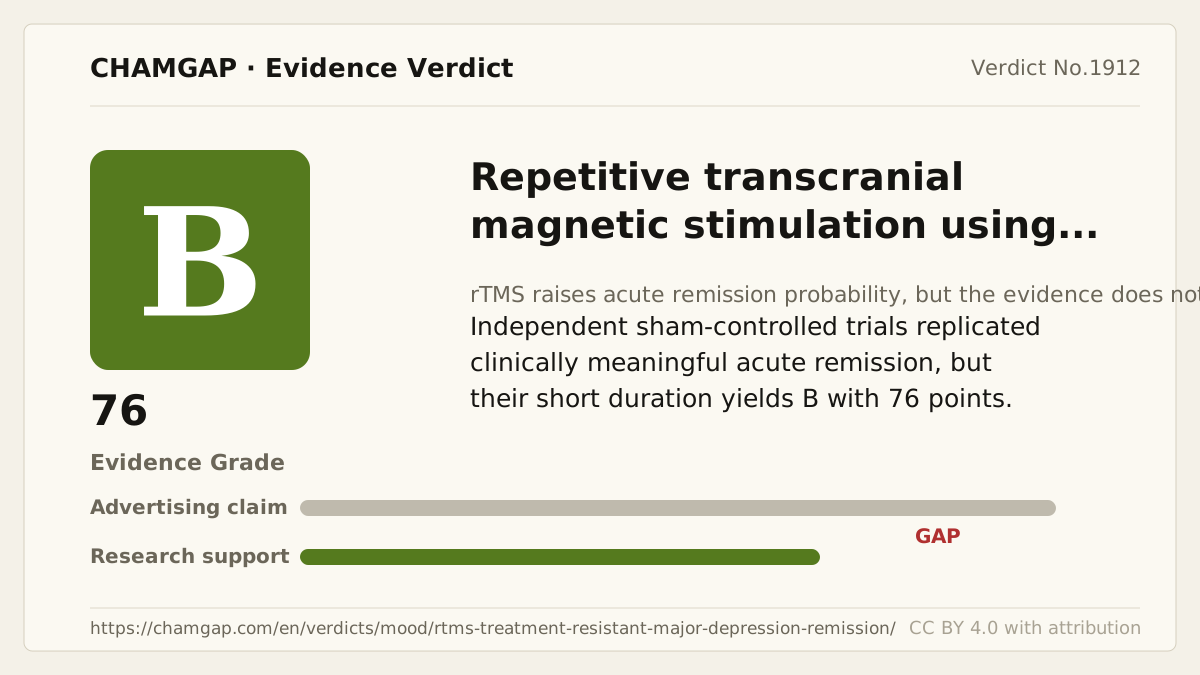
[Chamgap] rTMS x remission of treatment-resistant major depression — Evidence Grade B·70. 3 cited sources checked. Source: https://chamgap.com/en/verdicts/mood/rtms-treatment-resistant-major-depression-remission/ · CC BY 4.0CC BY 4.0 — free to use with attribution; do not distort grades, numbers, or verdict meaning.
What this document does and does not do
Chamgap is an information source. It reports what research has and has not confirmed; it does not tell readers what to take or buy. That decision belongs to readers and, when needed, medical or legal professionals. This verdict reflects literature available up to the search date and may change as new research appears. Nothing here is medical advice.