
Long-acting injectable risperidone,
does it really help with Prevention of psychotic relapse and rehospitalization in stabilized schizophrenia?
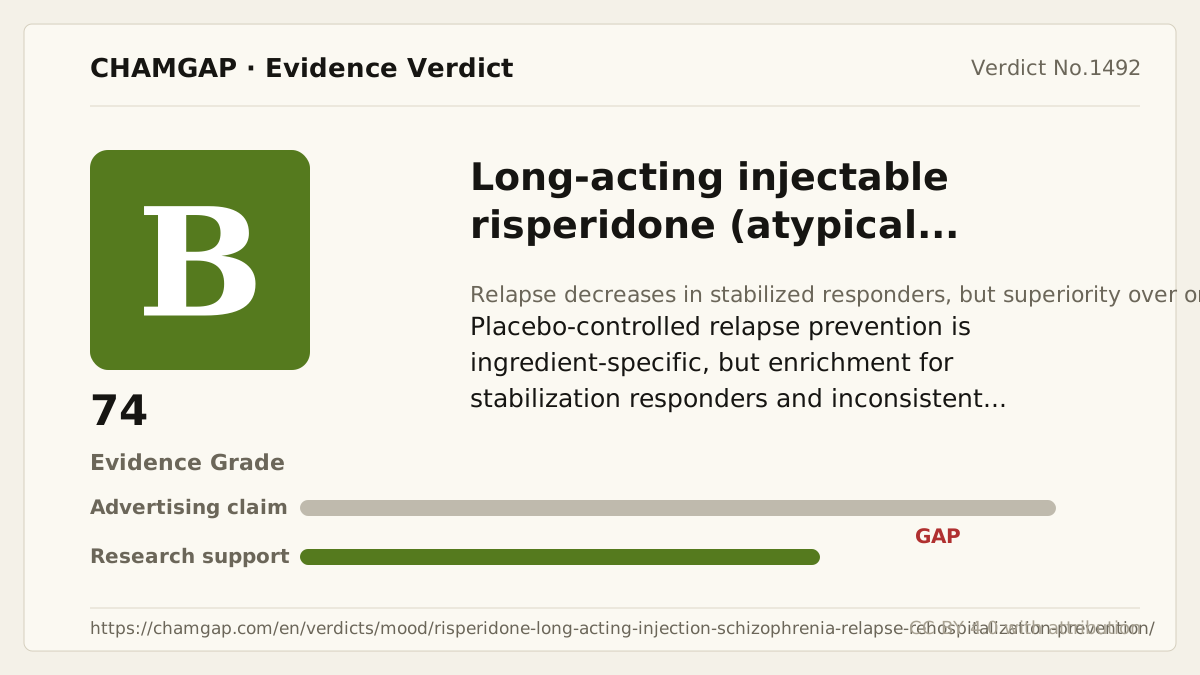
research showsLong-acting injectable risperidone is rated B because it delays psychotic relapse after patients with schizophrenia have been stabilized on oral risperidone. In the placebo-controlled RISE withdrawal trial, monthly and every-two-month subcutaneous TV-46000 prolonged time to impending relapse with hazard ratios of 0.200 and 0.375. The trial randomized only stabilization responders, and superiority for hospitalization alone over established oral therapy has not been consistent in large pragmatic trials.
ads claimMarketing can turn long-acting delivery into a promise that every patient will avoid rehospitalization. Benefit depends on missed-dose risk, prior response, formulation-specific initiation, and the stabilization context.
Useful facts when choosing a product
- Risperidone LAIs include every-two-week intramuscular and monthly or every-two-month subcutaneous formulations; initiation and oral-supplementation requirements are not interchangeable.
- RISE randomized only patients who responded to and were stabilized on oral risperidone, so its result does not establish efficacy in acute nonresponders.
- Extrapyramidal symptoms, elevated prolactin, weight and metabolic changes, sedation, and injection-site nodules or pain require monitoring.
- Trials of paliperidone or aripiprazole LAIs cannot be substituted as ingredient-specific evidence for risperidone LAI.
Chamgap Semantic Classification Code
Candidate index · review held
M.long-acting-injectable-risperidone.UNK.psychotic-relapse-and-rehospitalization-in-stabilized-schizophrenia.prevent.MULTIMedicinal interventions > Long-acting injectable risperidone > Unknown > psychotic relapse and rehospitalization in stabilized schizophrenia > Occurrence-prevention claim > Multiple: primary unresolved
An automated migration candidate, not an issued permanent code; exact claim scope remains under review. This machine-generated migration candidate helps retrieval but is not a permanent assignment. The original verdict ID and URL remain authoritative.
What the research actually shows
RISE stabilized patients with schizophrenia and recent relapse on oral risperidone, then randomized 544 at 69 sites to monthly TV-46000, every-two-month TV-46000, or placebo. Hazard ratios for time to impending relapse were 0.200 and 0.375. Subotnik and colleagues randomized 86 people after a recent first episode and reported relapse or exacerbation rates of 5% versus 33% and psychiatric hospitalization of 5.0% versus 18.6% for intramuscular RLAI versus oral risperidone, but the study was small. A 369-participant Veterans Affairs trial found no hospitalization superiority over oral antipsychotics.
Why this is classified as B (74)
Placebo-controlled and active-controlled trials of risperidone LAI support relapse prevention, but responder enrichment and inconsistent superiority for hospitalization give B with 74 points.
Counterpoint. For patients who respond to risperidone but frequently miss oral doses, observable administration can provide a practical relapse-prevention advantage.
Rejudgment record. New verdict — Accepted ingredient-specific placebo-controlled relapse prevention in RISE and active-controlled RLAI evidence while accounting for enrichment of oral-risperidone stabilization responders, formulation differences, and the negative hospitalization result in a large pragmatic trial
Sub-claim grades by effect
This ingredient is marketed for several effects. A single overall grade blends strong and weak claims together, so each effect is graded separately here. The overall grade reflects the strongest disconfirming or core claim.
| Effect (sub-claim) | Grade | Basis |
|---|---|---|
| Prevention of psychotic relapse in stabilized schizophrenia | B | Supported by the placebo-controlled RISE withdrawal trial and an active-controlled RLAI trial. |
| Reduction in psychiatric rehospitalization | B | A small randomized trial was positive, but a large Veterans Affairs pragmatic trial found no superiority over oral therapy, so the effect is inconsistent. |
| Reduction in breakthrough exacerbation related to missed oral doses | B | Observable dosing and reduced relapse support the claim, but do not establish superiority to oral therapy in every patient. |
Cross-check — AI research and Codex final gate
Evidence Table
| Study | Design | Sample | Funding | Endpoint | Result | Weight |
|---|---|---|---|---|---|---|
| Kane JM et al. RISE, 2023 | Randomized double-blind placebo-controlled withdrawal trial after oral stabilization | 544 randomized participants | Teva Branded Pharmaceutical Products R&D | Time to impending relapse | Monthly HR was 0.200 and every-two-month HR was 0.375, prolonging time to relapse versus placebo. | Key ingredient-specific placebo-controlled relapse-prevention evidence |
| Subotnik KL et al. 2015 | Randomized clinical trial of RLAI versus oral risperidone after a recent first episode | 86 participants | Support from NIMH and Janssen | Psychotic exacerbation or relapse and psychiatric hospitalization | Exacerbation or relapse was 5% versus 33%, and psychiatric hospitalization was 5.0% versus 18.6%, in a small sample. | Positive active-controlled supporting evidence |
| Rosenheck RA et al. 2011 | Multicenter randomized pragmatic active-controlled trial | 369 unstable high-risk participants with schizophrenia or schizoaffective disorder | United States Department of Veterans Affairs and Ortho-McNeil Janssen | Time to psychiatric hospitalization | Risperidone LAI was not superior to clinician-selected oral antipsychotics for preventing hospitalization. | Limiting evidence for the rehospitalization claim |
Receipt — 3 References
All 3 cited sources were verified for existence at the original page (as of 2026-07-23).
Final verification and publication gate: Codex · Evidence date: 2026-07-23 · Corrections: none
Cite this verdict
[Chamgap] Long-acting injectable risperidone x prevention of relapse and rehospitalization in stabilized schizophrenia — Evidence Grade B·74. 3 cited sources checked. Source: https://chamgap.com/en/verdicts/mood/risperidone-long-acting-injection-schizophrenia-relapse-rehospitalization-prevention/ · CC BY 4.0CC BY 4.0 — free to use with attribution; do not distort grades, numbers, or verdict meaning.
What this document does and does not do
Chamgap is an information source. It reports what research has and has not confirmed; it does not tell readers what to take or buy. That decision belongs to readers and, when needed, medical or legal professionals. This verdict reflects literature available up to the search date and may change as new research appears. Nothing here is medical advice.