
Psilocybin 25 mg,
does it really help with Rapid reduction in depression symptom scores in moderate-to-severe major depressive disorder?
research showsA single 25-mg dose of psilocybin administered with psychological support in a clinical-trial setting is rated C because it produced a rapid signal of symptom reduction in major depressive disorder of at least moderate severity. In the 104-patient randomized trial by Raison in 2023, the mean difference in change in MADRS score versus niacin at day 43 was -12.3 points (95% CI -17.5 to -7.2), with separation by day 8. Depression ratings are symptom endpoints, however, and the conspicuous psychedelic effect makes functional unmasking of participants and therapists highly likely; follow-up in the single exact 25-mg trial lasted only six weeks. The positive signal is therefore accepted but capped at C for a subjective symptom outcome.
ads claimPromotion can transform supervised treatment into one dose cures depression or home use of mushrooms. The studies instead used standardized synthetic psilocybin after excluding several high-risk conditions and provided preparation, monitoring, integration support, and emergency capacity.
Useful facts when choosing a product
- The evaluated intervention was one standardized 25-mg dose of synthetic psilocybin combined with psychological preparation, several hours of direct supervision, and subsequent integration support.
- The Raison trial excluded a history of psychosis or mania, active substance use disorder, and active suicidal ideation with intent, so its findings do not establish safety or efficacy in those high-risk populations.
- Headache, nausea, anxiety or panic, paranoia, perceptual changes, and transient blood-pressure elevation can occur, while judgment and reality testing may be impaired acutely.
- Mushrooms and nonmedical products have unpredictable potency and contaminants and do not reproduce clinical screening, supervision, or psychological support, so they are outside this verdict.
Chamgap Semantic Classification Code
Candidate index · review held
UNK.psilocybin.oral.rapid-reduction-in-depression-symptom-scores-in-moderate-to-severe-major-depressive-disorder.reduce.MULTIUnknown > Psilocybin > Oral > Rapid reduction in depression symptom scores in moderate-to-severe major depressive disorder > Reduction claim > Multiple: primary unresolved
An automated migration candidate, not an issued permanent code; exact claim scope remains under review. This machine-generated migration candidate helps retrieval but is not a permanent assignment. The original verdict ID and URL remain authoritative.
What the research actually shows
Raison in 2023 randomized 104 adults with major depressive disorder to psilocybin 25 mg or niacin 100 mg, with psychological support in both groups. Change in the primary day-43 MADRS endpoint was -19.1 versus -6.8 points, a between-group difference of -12.3, and the day-8 difference was -12.0; the day-2 assessment showed no difference. Sustained response was 42% versus 11%, while sustained remission of 25% versus 9.1% was not statistically clear. The 52-patient trial by von Rotz also found a positive short-term signal after one dose, but a systematic risk-of-bias review identified unmasking and outcome-measurement bias as central problems across classic psychedelic trials.
Why this is classified as C (58)
The 104-patient niacin-controlled trial showed a positive day-43 MADRS difference of -12.3 points, and a meta-analysis of six randomized trials and 427 participants was favorable. The symptom endpoint, functional unmasking from conspicuous psychedelic effects, six-week follow-up, and unestablished durability invoke the subjective-symptom ceiling, giving C with 58 points.
Counterpoint. A research program may be an option for patients with inadequate response or intolerance to standard care, but approval and access differ by jurisdiction and unsupervised use is not equivalent to the trial. Existing antidepressants should not be stopped without medical direction.
Rejudgment record. Cross-check applied — Accepted the large and rapid MADRS improvement in the exact single-dose 25-mg randomized trial, but applied the maximum grade C for subjective symptom-only outcomes because of likely functional unmasking, short follow-up, and absent long-term hard outcomes
Sub-claim grades by effect
This ingredient is marketed for several effects. A single overall grade blends strong and weak claims together, so each effect is graded separately here. The overall grade reflects the strongest disconfirming or core claim.
| Effect (sub-claim) | Grade | Basis |
|---|---|---|
| Reduced depression symptoms at 43 days in moderate-to-severe major depressive disorder | C | The 25-mg single-dose trial showed a -12.3-point MADRS difference, but the symptom scale and fragile masking limit certainty. |
| Rapid depression symptom reduction by day 8 after one dose | C | The day-8 MADRS difference was -12.0 points, but no difference was present at day 2. |
| Sustained depression symptom response through six weeks after one dose | C | Sustained response was 42% versus 11%, but sustained remission was not statistically clear and longer follow-up is absent. |
Cross-check — AI research and Codex final gate
Evidence Table
| Study | Design | Sample | Funding | Endpoint | Result | Weight |
|---|---|---|---|---|---|---|
| Raison CL et al. 2023 | Eleven-site United States multiblinded randomized phase 2 trial with active niacin control | 104 adults with major depressive disorder of at least moderate severity | Sponsored and supplied by the Usona Institute | Primary endpoint of centrally rated change in MADRS at day 43 | The between-group difference in MADRS change was -12.3 points (95% CI -17.5 to -7.2) at day 43 and -12.0 at day 8. | Key exact 25-mg single-dose trial, but symptom-based and vulnerable to unmasking |
| von Rotz R et al. 2022/2023 | Placebo-controlled double-blind randomized clinical trial | 52 adults with major depressive disorder | Swiss National Science Foundation, academic foundations, and crowdfunding | Depression symptoms on MADRS and BDI through day 14 | A single 0.215-mg/kg dose produced greater reduction in depression symptoms than placebo over two weeks. | Independent supportive positive single-dose evidence, but small and at a different dose |
| Hovmand OR et al. 2023 | Systematic review of bias in randomized classic-psychedelic trials | Systematic review of classic-psychedelic clinical trials in patient populations | Danish public and academic research institutions | Masking, expectancy, attrition, and outcome-measurement bias | Considerable bias was found across published psychedelic trials, particularly involving masking and outcome measurement. | Methodological evidence limiting confidence in effect size |
Receipt — 3 References
All 3 cited sources were verified for existence at the original page (as of 2026-07-24).
Final verification and publication gate: Codex · Evidence date: 2026-07-24 · Corrections: none
Cite this verdict
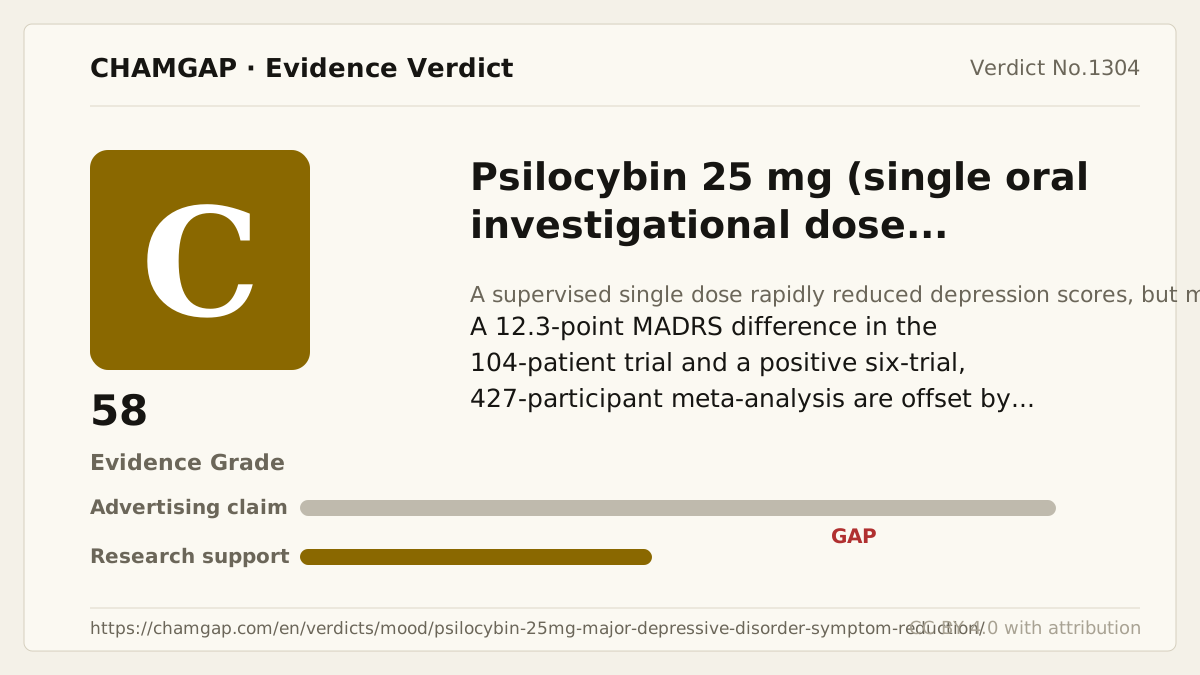
[Chamgap] Psilocybin 25 mg x rapid reduction in symptoms of major depressive disorder — Evidence Grade C·58. 3 cited sources checked. Source: https://chamgap.com/en/verdicts/mood/psilocybin-25mg-major-depressive-disorder-symptom-reduction/ · CC BY 4.0CC BY 4.0 — free to use with attribution; do not distort grades, numbers, or verdict meaning.
What this document does and does not do
Chamgap is an information source. It reports what research has and has not confirmed; it does not tell readers what to take or buy. That decision belongs to readers and, when needed, medical or legal professionals. This verdict reflects literature available up to the search date and may change as new research appears. Nothing here is medical advice.