
Prolonged Exposure therapy,
does it really help with Reduced PTSD symptoms and increased loss of diagnosis and remission?
research showsThe grade is B. The trial randomized 284 female veterans and active-duty personnel, 141 to Prolonged Exposure and 143 to present-centered therapy, and analyzed all participants with multiple imputation. Blinded clinical assessors found loss of diagnosis in 41.0% versus 27.8%, OR 1.80 (95% CI 1.10 to 2.96), and full remission in 15.2% versus 6.9%, OR 2.43 (1.10 to 5.37). It beat an equal-session active control, but substantial dropout gives B with 72 points.
ads claimProlonged Exposure is a structured PTSD treatment delivered by a trained clinician. Merely repeatedly recalling trauma or enduring distress alone is not the tested intervention.
Useful facts when choosing a product
- PTSD symptoms, diagnostic loss, and remission in people are graded.
- The pivotal trial used present-centered therapy rather than a waiting list and employed assessors masked to treatment assignment.
- Temporary distress or symptom worsening can occur early, so treatment should include clinical assessment and safety planning.
Chamgap Semantic Classification Code
Candidate index · review held
X.prolonged-exposure-therapy.environmental.ptsd-symptoms-and-increased-loss-of-diagnosis-and-remission.reduce.activeBehaviors, exposures and policies > Prolonged Exposure therapy > Environmental exposure > PTSD symptoms and increased loss of diagnosis and remission > Reduction claim > Active comparator
An automated migration candidate, not an issued permanent code; exact claim scope remains under review. This machine-generated migration candidate helps retrieval but is not a permanent assignment. The original verdict ID and URL remain authoritative.
What the research actually shows
Across 12 sites, 284 women were randomized to Prolonged Exposure, 141, or present-centered therapy, 143, and all were analyzed using multiple imputation. Estimated CAPS means immediately after treatment were 52.9 versus 60.1, a difference of -7.2 points; differences were -6.3 at three months and -4.1 at six months, with an overall longitudinal effect of d=0.27 and P=0.03. The paper did not report 95% confidence intervals for these between-group differences. This scale has no widely validated between-group threshold, so interpretation relies on binary direct outcomes: 41.0% versus 27.8% loss of diagnosis and 15.2% versus 6.9% full remission.
Why this is classified as B (72)
Direct treatment targets were replicated in a publicly funded active-control trial and multiple independent studies, but attrition above 15% in both groups gives B with 72 points.
Counterpoint. Benefit does not mean universal cure. Full remission immediately after treatment was 15.2% in the pivotal trial, and dropout and residual symptoms remained.
Rejudgment record. Cross-check applied — A publicly funded active-control trial used blinded assessors and had independent replication, but treatment dropout exceeded 15% in both groups
| Endpoint | P | Symptom or function itself is the target - including patient reports and performance tests |
| Replication | R2 | Independently replicated across trials |
| Independence | I2 | Decisive evidence is publicly or non-profit funded |
| Effect size | E+ | Meets the clinically important threshold |
Stored derived and displayed grades match; this is not a current recalculation or validity check (B).
Sub-claim grades by effect
This ingredient is marketed for several effects. A single overall grade blends strong and weak claims together, so each effect is graded separately here. The overall grade reflects the strongest disconfirming or core claim.
| Effect (sub-claim) | Grade | Basis |
|---|---|---|
| Reduced CAPS PTSD severity | B | The primary endpoint succeeded in all 284 randomized participants. |
| Increased loss of PTSD diagnosis | B | The rates were 41.0% versus 27.8%, a significant difference. |
| Increased full remission of PTSD | B | Rates were 15.2% versus 6.9%, although absolute remission remained limited. |
Cross-check — AI research and Codex final gate
Evidence Table
| Study | Design | Sample | Funding | Endpoint | Result | Weight |
|---|---|---|---|---|---|---|
| Schnurr PP et al. 2007 | Assessor-masked randomized active-psychotherapy-controlled trial | 284 randomized (141/143); multiple-imputation ITT included all 284 | Public funding from the United States Department of Veterans Affairs Cooperative Studies Program and Department of Defense | Primary endpoint: CAPS PTSD severity | Estimated CAPS means were 52.9 versus 60.1 (difference -7.2), with differences of -6.3 at three months and -4.1 at six months; confidence intervals for the differences were not reported. Diagnostic loss was 41.0% versus 27.8%, OR 1.80 (1.10 to 2.96), and full remission 15.2% versus 6.9%, OR 2.43 (1.10 to 5.37). | Pivotal publicly funded active-control randomized trial |
| Powers MB et al. 2010 | Meta-analysis of controlled Prolonged Exposure studies | 13 studies and 675 participants | Funding not stated; no manufacturer involvement reported | Primary PTSD symptom outcomes | Hedges g 1.08 versus controls (95% CI 0.69 to 1.46), P<0.001. | Independent synthesis supporting replication |
Receipt — 2 References
All 2 cited sources were verified for existence at the original page (as of 2026-07-24).
Final verification and publication gate: Codex · Evidence date: 2026-07-24 · Corrections: none
Cite this verdict
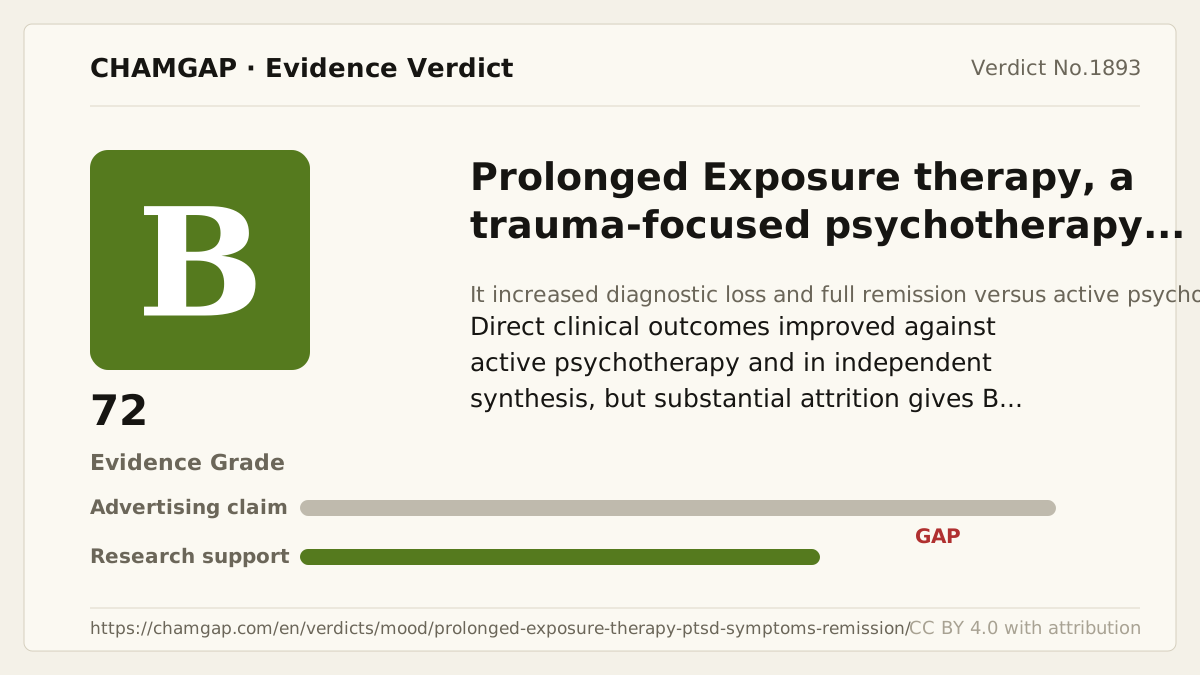
[Chamgap] Prolonged Exposure therapy x improved PTSD symptoms and remission — Evidence Grade B·72. 2 cited sources checked. Source: https://chamgap.com/en/verdicts/mood/prolonged-exposure-therapy-ptsd-symptoms-remission/ · CC BY 4.0CC BY 4.0 — free to use with attribution; do not distort grades, numbers, or verdict meaning.
What this document does and does not do
Chamgap is an information source. It reports what research has and has not confirmed; it does not tell readers what to take or buy. That decision belongs to readers and, when needed, medical or legal professionals. This verdict reflects literature available up to the search date and may change as new research appears. Nothing here is medical advice.