
Olanzapine,
does it really help with Prevention of mood-episode relapse in bipolar I disorder that responded to olanzapine?
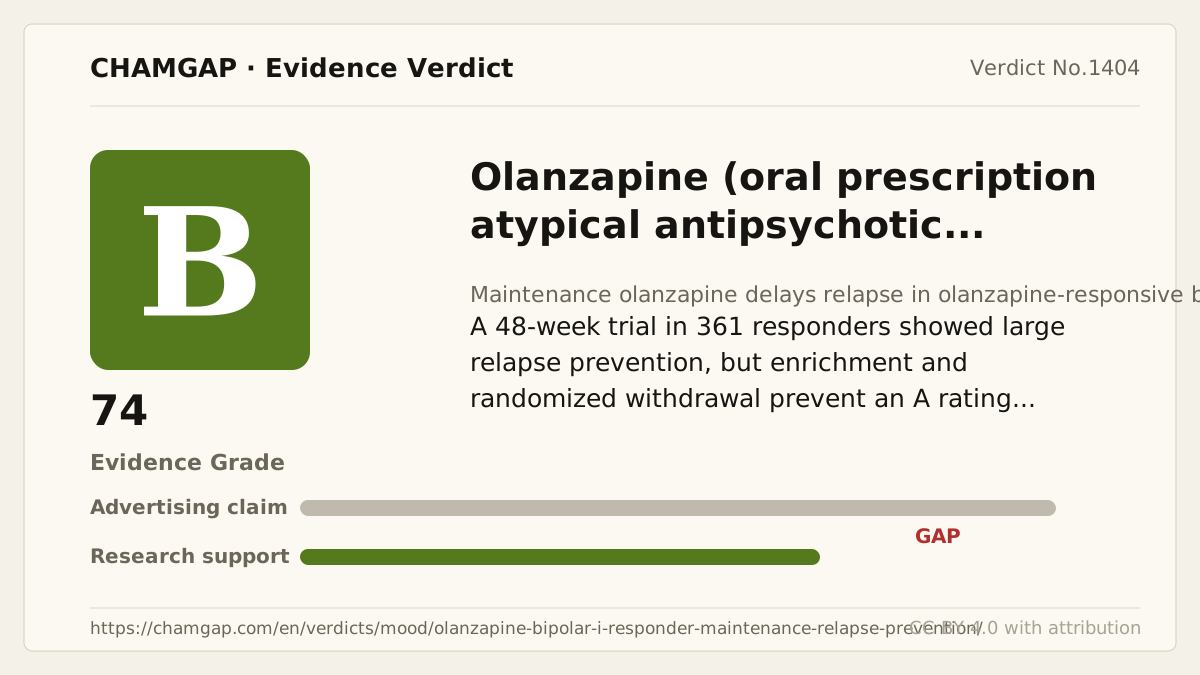
research showsOlanzapine is rated B because it reduced relapse in bipolar I disorder after response to olanzapine for an acute manic or mixed episode. Among 361 participants who remitted after six to twelve weeks of open-label olanzapine and were randomized to continuation or placebo for 48 weeks, relapse occurred in 46.7% versus 80.1%, and median time to relapse was 174 versus 22 days. The effect is large, but responder enrichment and randomized withdrawal can exaggerate general-population benefit, and most relapses were scale-defined. The B ceiling therefore applies, with 74 points.
ads claimPromotion may expand maintenance efficacy in responders into the best long-term drug for every person with bipolar disorder or stability without tradeoffs. The direct evidence best fits bipolar I patients who responded and remitted during acute olanzapine treatment.
Useful facts when choosing a product
- Olanzapine is a prescription atypical antipsychotic acting at dopamine, serotonin, and other receptors and is marketed under names including Zyprexa.
- The pivotal maintenance trial used 5 to 20 mg daily, but clinical dosing should follow previous response, sedation, weight, metabolic status, and the local label.
- Weight gain, increased appetite, hyperglycemia or diabetes, dyslipidemia, and sedation are important; weight, waist circumference, blood pressure, fasting glucose or HbA1c, and lipids require periodic monitoring.
- Orthostatic hypotension, anticholinergic effects, akathisia, parkinsonism, and tardive dyskinesia can occur, and abrupt discontinuation should be discussed with the prescriber because of relapse risk.
Chamgap Semantic Classification Code
Candidate index · review held
M.olanzapine.oral.mood-episode-relapse-in-bipolar-i-disorder-that-responded-to-olanzapine.prevent.placeboMedicinal interventions > Olanzapine > Oral > mood-episode relapse in bipolar I disorder that responded to olanzapine > Occurrence-prevention claim > Placebo
An automated migration candidate, not an issued permanent code; exact claim scope remains under review. This machine-generated migration candidate helps retrieval but is not a permanent assignment. The original verdict ID and URL remain authoritative.
What the research actually shows
Tohen and colleagues treated patients openly with olanzapine 5 to 20 mg daily for six to twelve weeks after a manic or mixed episode, then randomized the 361 who sustained symptomatic remission for two consecutive weeks to olanzapine or placebo for 48 weeks. The primary outcome was time to any mood-episode relapse defined by a Young Mania Rating Scale score of at least 15, a Hamilton Depression Rating Scale score of at least 15, or hospitalization. Olanzapine prolonged time and lowered relapse, but only nine relapses involved hospitalization. A 2022 synthesis of 22 double-blind maintenance trials with 7,773 participants also found a lower risk of new episodes with olanzapine, while noting responder enrichment and outcome heterogeneity.
Why this is classified as B (74)
A 48-week double-blind trial in 361 responders showed relapse of 46.7% versus 80.1% and median time of 174 versus 22 days, with supporting synthesis. Responder enrichment and randomized withdrawal can inflate efficacy, limiting the verdict to B with 74 points.
Counterpoint. Olanzapine can be effective maintenance for patients who respond and can accept its metabolic burden, but individual relapse pattern and weight and glucose risks should be compared with other maintenance options.
Rejudgment record. New verdict — Applied the B ceiling despite a large 48-week randomized relapse-prevention effect and supportive meta-analysis because participants were selected after open-label response and randomized withdrawal can overestimate benefit in an unselected population
Sub-claim grades by effect
This ingredient is marketed for several effects. A single overall grade blends strong and weak claims together, so each effect is graded separately here. The overall grade reflects the strongest disconfirming or core claim.
| Effect (sub-claim) | Grade | Basis |
|---|---|---|
| Prevention of any mood-episode relapse in olanzapine-responsive bipolar I disorder | B | Relapse was 46.7% versus 80.1% over 48 weeks, but the design was responder-enriched randomized withdrawal. |
| Longer time to relapse in olanzapine-responsive bipolar I disorder | B | Median time increased from 22 to 174 days, directly applying to selected responders. |
| Delayed manic, depressive, and mixed relapse in olanzapine-responsive bipolar I disorder | B | Time to relapse favored olanzapine across polarities, but most relapses were defined by symptom scales. |
Cross-check — AI research and Codex final gate
Evidence Table
| Study | Design | Sample | Funding | Endpoint | Result | Weight |
|---|---|---|---|---|---|---|
| Tohen M et al. 2006 | Responder-enriched randomized double-blind placebo-controlled withdrawal trial after open acute treatment | 361 patients with bipolar I disorder who remitted on olanzapine | Sponsored by Eli Lilly with company-employed authors | Time to symptomatic relapse into any mood episode over 48 weeks | Relapse 46.7% versus 80.1%; median 174 versus 22 days. | Pivotal enriched maintenance trial |
| Nestsiarovich A et al. 2022 | Systematic review and meta-analysis of double-blind bipolar maintenance trials | 22 trials and 7,773 participants | Academic research with author-level industry relationships disclosed | New mood episodes over 24 to 104 weeks | Several monotherapies including olanzapine lowered episode risk versus placebo, but most trials used responder enrichment. | Synthesis of effect direction and design limitations |
Receipt — 2 References
All 2 cited sources were verified for existence at the original page (as of 2026-07-23).
Final verification and publication gate: Codex · Evidence date: 2026-07-23 · Corrections: none
Cite this verdict
[Chamgap] Olanzapine x prevention of mood-episode relapse in olanzapine-responsive bipolar I disorder — Evidence Grade B·74. 2 cited sources checked. Source: https://chamgap.com/en/verdicts/mood/olanzapine-bipolar-i-responder-maintenance-relapse-prevention/ · CC BY 4.0CC BY 4.0 — free to use with attribution; do not distort grades, numbers, or verdict meaning.
What this document does and does not do
Chamgap is an information source. It reports what research has and has not confirmed; it does not tell readers what to take or buy. That decision belongs to readers and, when needed, medical or legal professionals. This verdict reflects literature available up to the search date and may change as new research appears. Nothing here is medical advice.