
Mindfulness-based cognitive therapy,
does it really help with Prevention of depressive-episode relapse in recurrent major depressive disorder in remission?
research showsStructured eight-week MBCT is graded B because it reduced depressive-episode relapse in recurrent major depressive disorder in full or partial remission. An individual-patient-data meta-analysis of nine randomized trials and 1,258 patients reported HR 0.69 for relapse within 60 weeks versus non-MBCT controls and HR 0.79 versus active treatments. Outcomes were broadly similar to maintenance antidepressants rather than superior, and psychotherapy cannot mask participants or therapists and depends on therapist competence and engagement.
ads claimDescriptions can equate a general mindfulness app or brief meditation with trial-tested eight-week MBCT or expand relapse prevention into superior acute-depression treatment. The studied intervention was a manualized group program delivered by trained therapists.
Useful facts when choosing a product
- Standard MBCT usually combines weekly group sessions for eight weeks, formal meditation, cognitive-therapy elements, and home practice.
- The pivotal evidence concerns adults with recurrent major depressive episodes who are currently in full or partial remission.
- Relapse in the trials meant a new depressive episode confirmed by diagnostic assessment rather than transient low mood alone.
- Physical adverse effects are uncommon, but transient distress, anxiety, activation of difficult memories, and dropout can occur; acute suicidality or severe deterioration requires separate assessment and treatment.
Chamgap Semantic Classification Code
Candidate index · review held
X.mindfulness-based-cognitive-therapy.behavioral.depressive-episode-relapse-in-recurrent-major-depressive-disorder-in-remission.prevent.MULTIBehaviors, exposures and policies > Mindfulness-based cognitive therapy > Behavioral delivery > depressive-episode relapse in recurrent major depressive disorder in remission > Occurrence-prevention claim > Multiple: primary unresolved
An automated migration candidate, not an issued permanent code; exact claim scope remains under review. This machine-generated migration candidate helps retrieval but is not a permanent assignment. The original verdict ID and URL remain authoritative.
What the research actually shows
The Kuyken individual-patient-data meta-analysis included nine trials of manualized MBCT versus usual care, active treatment, or antidepressants in recurrent depression in full or partial remission. Relapse within 60 weeks had HR 0.69 versus all controls and HR 0.79 versus active treatments, with a possible larger effect among patients with more residual symptoms. PREVENT randomized 424 patients to MBCT with support to taper medication or maintenance antidepressants and found no significant difference in time to relapse, supporting comparable effectiveness rather than superiority. This evidence concerns MBCT relapse prevention and is distinct from dialectical behavior therapy for suicidal behavior.
Why this is classified as B (74)
A nine-trial individual-patient-data meta-analysis reduced relapse and retained benefit versus active treatments, but no superiority over maintenance antidepressants plus lack of masking and therapist dependence gives B with 74 points.
Counterpoint. Residual symptom severity may modify benefit better than a fixed cutoff of three prior episodes, so the subgroup finding should remain a hypothesis rather than a rigid indication.
Rejudgment record. New verdict — Accepted reduced depressive-episode relapse in a nine-trial individual-patient-data meta-analysis and benefit versus active controls, while grading B for a relapse-prevention endpoint, unavoidable lack of psychotherapy masking, therapist and engagement dependence, and no superiority over maintenance antidepressants
Sub-claim grades by effect
This ingredient is marketed for several effects. A single overall grade blends strong and weak claims together, so each effect is graded separately here. The overall grade reflects the strongest disconfirming or core claim.
| Effect (sub-claim) | Grade | Basis |
|---|---|---|
| Prevention of depressive-episode relapse | B | A nine-trial individual-patient-data analysis reported HR 0.69 versus all controls, with unavoidable lack of masking and therapist dependence. |
| Relapse-prevention effectiveness similar to maintenance antidepressants | B | Direct active comparisons found no significant superiority and broadly similar outcomes. |
Cross-check — AI research and Codex final gate
Evidence Table
| Study | Design | Sample | Funding | Endpoint | Result | Weight |
|---|---|---|---|---|---|---|
| Kuyken W et al. individual-patient-data meta-analysis 2016 | Individual-patient-data meta-analysis of randomized trials | Nine randomized trials and 1,258 analyzed patients | Wellcome Trust and United Kingdom NIHR public and nonprofit support | Time to depressive relapse within 60 weeks | The hazard ratio was 0.69 versus all non-MBCT controls and 0.79 versus active treatments. | Key multi-trial patient-level synthesis |
| Kuyken W et al. PREVENT 2015 | Multicenter single-blind randomized active-control trial | 424 patients with recurrent major depressive disorder | United Kingdom NIHR Health Technology Assessment | Time to depressive relapse over 24 months | MBCT with support to taper medication was not significantly superior to maintenance antidepressants for relapse prevention and outcomes were similar. | Active comparison with maintenance antidepressants |
Receipt — 2 References
All 2 cited sources were verified for existence at the original page (as of 2026-07-23).
Final verification and publication gate: Codex · Evidence date: 2026-07-23 · Corrections: none
Cite this verdict
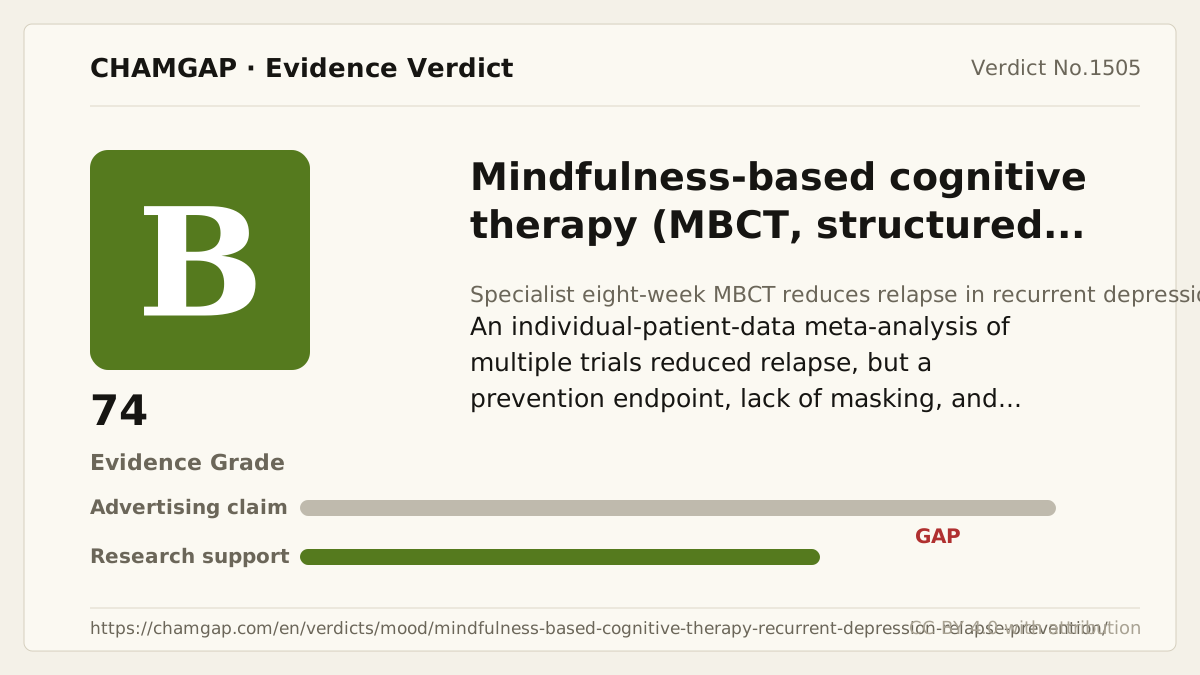
[Chamgap] Mindfulness-based cognitive therapy x prevention of relapse in recurrent major depressive disorder — Evidence Grade B·74. 2 cited sources checked. Source: https://chamgap.com/en/verdicts/mood/mindfulness-based-cognitive-therapy-recurrent-depression-relapse-prevention/ · CC BY 4.0CC BY 4.0 — free to use with attribution; do not distort grades, numbers, or verdict meaning.
What this document does and does not do
Chamgap is an information source. It reports what research has and has not confirmed; it does not tell readers what to take or buy. That decision belongs to readers and, when needed, medical or legal professionals. This verdict reflects literature available up to the search date and may change as new research appears. Nothing here is medical advice.