
Horticultural therapy activities,
does it really help with Reduction of depressive symptoms in adults?
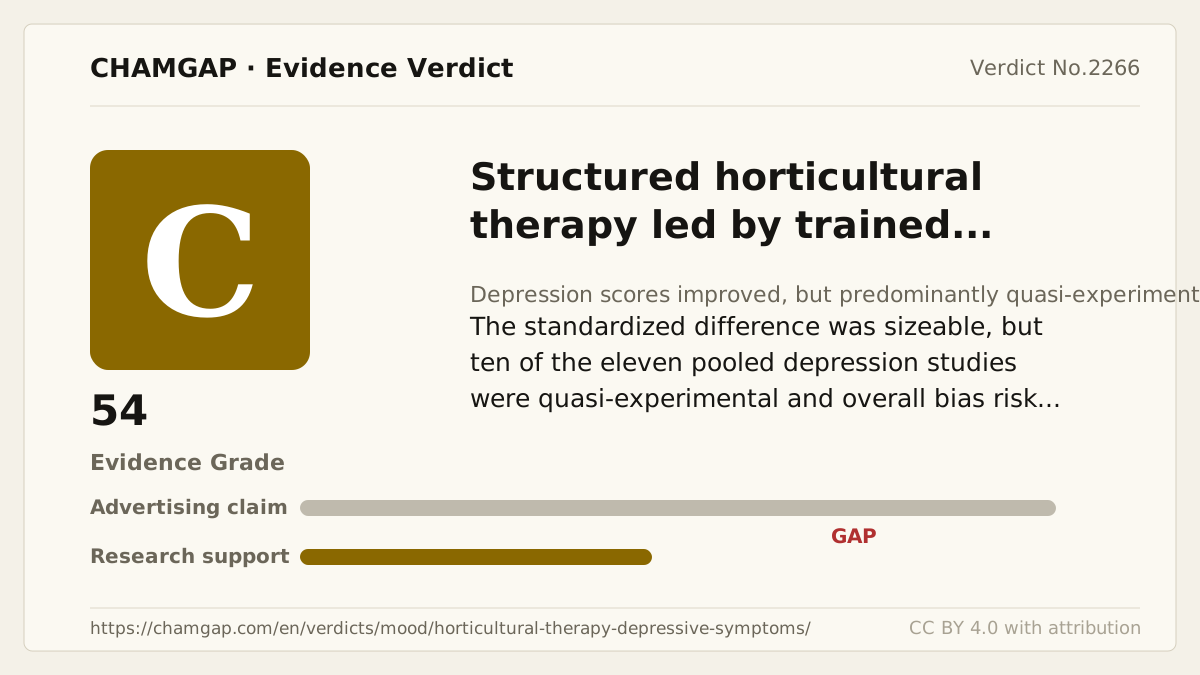
research showsThe grade is C with 50 points. Wood et al. reviewed four randomized trials and thirteen quasi-experimental studies; ten of the quasi-experiments had comparator groups. The depression meta-analysis pooled one randomized trial and ten comparator quasi-experiments, reporting SMD -1.01, which fell to -0.55 after excluding one unusually large stroke-study effect. The 95% confidence intervals for these two effect sizes could not be verified in the accessible article text.
ads claimThis is an administered horticultural intervention, unlike observational exposure to vegetation around a residence. Verdict 2217 is C with 56 points, but residential greenness cannot substitute for evidence that horticultural therapy treats depression.
Useful facts when choosing a product
- The intervention was structured plant-related activity led by trained practitioners, not passive exposure to neighborhood greenness.
- Of seventeen studies and 879 participants, fourteen reported eligible depression outcomes and eleven comparator studies with 662 participants entered the depression meta-analysis.
- The eleven-study depression pool contained one randomized trial and ten quasi-experimental studies.
Chamgap Semantic Classification Code
Candidate index · review held
UNK.structured-horticultural-therapy-led-by-trained-practitioners-using-planting.UNK.depressive-symptoms.reduce.MULTIUnknown > Structured horticultural therapy led by trained practitioners using planting > Unknown > depressive symptoms > Reduction claim > Multiple: primary unresolved
An automated migration candidate, not an issued permanent code; exact claim scope remains under review. This machine-generated migration candidate helps retrieval but is not a permanent assignment. The original verdict ID and URL remain authoritative.
What the research actually shows
The seventeen studies with 879 participants comprised four randomized trials and thirteen quasi-experimental studies. Of the thirteen quasi-experiments, ten had comparator groups and three were single-group pre-post studies. The depression meta-analysis included eleven studies and 662 participants: one randomized trial and ten comparator quasi-experiments. Three uncontrolled depression studies totaling 37 participants were not used as between-group evidence. The 95% confidence intervals for SMD -1.01 and the outlier-excluded SMD -0.55 could not be verified in the accessible article text. Comparators included usual care, occupational therapy, normal or usual activities, and waiting or no-intervention controls.
Why this is classified as C (50)
A moderate depression-scale difference remained in sensitivity analysis, but ten pivotal studies were quasi-experimental and bias risk was high, giving C with 50 points.
Counterpoint. No trial directly established horticultural therapy as a replacement for standard antidepressant or psychological treatment.
Rejudgment record. Cross-check applied — Cross-checked design counts, pooled sample, SMD, outlier sensitivity analysis, heterogeneity, and funding disclosures in the original review
| Endpoint | P | Symptom or function itself is the target - including patient reports and performance tests |
| Replication | R1 | Single confirmatory trial |
| Independence | I1 | Mixed funding sources |
| Effect size | E+ | Meets the clinically important threshold |
Stored derived and displayed grades match; this is not a current recalculation or validity check (C).
Sub-claim grades by effect
This ingredient is marketed for several effects. A single overall grade blends strong and weak claims together, so each effect is graded separately here. The overall grade reflects the strongest disconfirming or core claim.
| Effect (sub-claim) | Grade | Basis |
|---|---|---|
| Reduced depressive symptoms immediately after treatment | C | The outlier-excluded SMD was -0.55, but most studies were quasi-experimental. |
| Replacement of standard depression treatment | ? | No trial directly tested replacement of medication or psychotherapy. |
| Long-term relapse prevention | ? | The main synthesis used the first post-intervention assessment. |
Cross-check — AI research and Codex final gate
Evidence Table
| Study | Design | Sample | Funding | Endpoint | Result | Weight |
|---|---|---|---|---|---|---|
| Wood et al. horticultural therapy systematic review and meta-analysis 2025 | Systematic review and random-effects meta-analysis of randomized, quasi-experimental, and uncontrolled studies | Seventeen studies with 879 participants; eleven comparator depression studies with 662 participants | Review funded by MQ: Transforming Mental Health; funding across all underlying studies was not consistently verifiable | Post-intervention depressive symptoms measured with validated scales | SMD -1.01, P<.001, I-squared 87%; after excluding an unusual stroke study, SMD -0.55, P<.001, I-squared 48%; the two 95% confidence intervals could not be verified. | Pivotal synthesis, but composed of one randomized and ten quasi-experimental studies |
Receipt — 1 References
All 1 cited sources were verified for existence at the original page (as of 2026-08-05).
Final verification and publication gate: Codex · Evidence date: 2026-08-05 · Corrections: none
Cite this verdict
[Chamgap] Horticultural therapy activities x depressive symptoms — Evidence Grade C·50. 1 cited sources checked. Source: https://chamgap.com/en/verdicts/mood/horticultural-therapy-depressive-symptoms/ · CC BY 4.0CC BY 4.0 — free to use with attribution; do not distort grades, numbers, or verdict meaning.
What this document does and does not do
Chamgap is an information source. It reports what research has and has not confirmed; it does not tell readers what to take or buy. That decision belongs to readers and, when needed, medical or legal professionals. This verdict reflects literature available up to the search date and may change as new research appears. Nothing here is medical advice.