
Exposure and response prevention,
does it really help with Reduced obsessive-compulsive symptoms and improved treatment response?
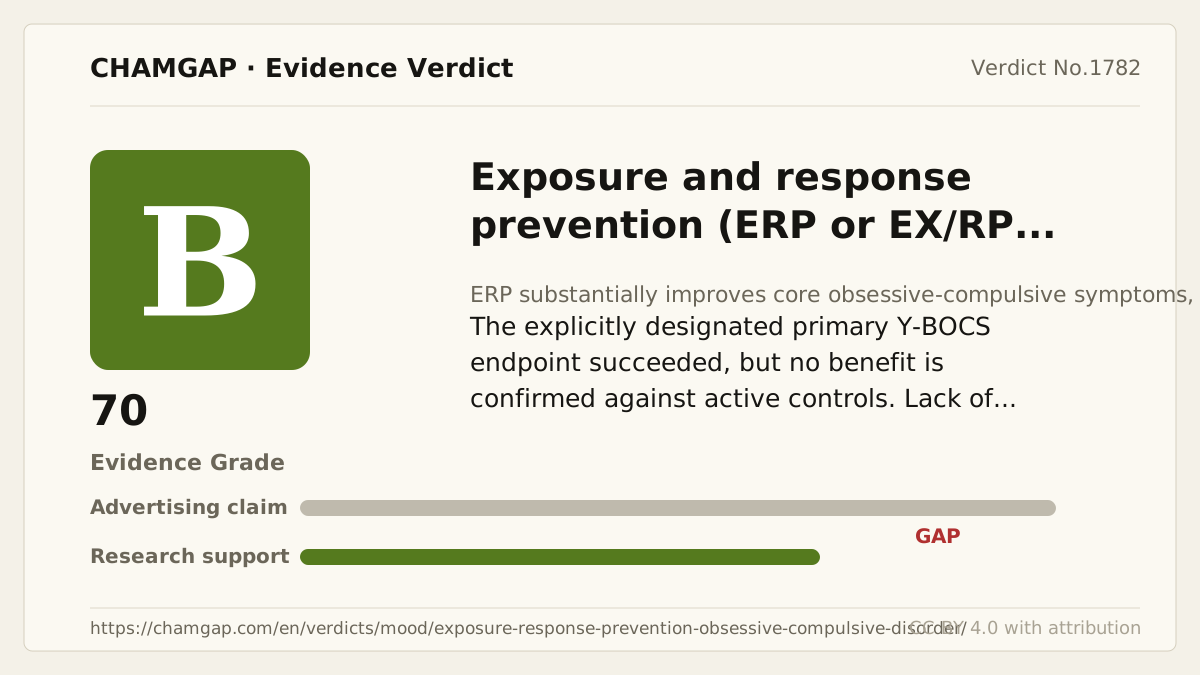
research showsThe grade is B. Foa 2005 allocated 149 people, but 27 withdrew immediately after learning assignment, leaving 122 treatment entrants in the actual primary mixed-model analysis. The primary Y-BOCS outcome favored ERP over placebo, and CGI response was 62% versus 8% among treatment entrants and 86% versus 10% among completers. Symptoms are treatment goals rather than surrogates. Patients and therapists cannot be blinded to psychotherapy, inactive or waitlist controls inflate effects, and researcher allegiance remains important, preventing an A grade.
ads claimPromotion may present ERP as a rapid universal cure. The studied protocol required intensive exposure and homework, some patients dropped out or did not respond, and skilled tailoring is important.
Useful facts when choosing a product
- The Foa protocol delivered fifteen two-hour weekday exposure sessions over three weeks, followed by weekly meetings and homework.
- ERP gradually exposes patients to feared cues while they practice refraining from compulsions or rituals.
- Anxiety can temporarily rise during treatment, so comorbidity and acute risk should be assessed and treatment delivered by a trained clinician.
Chamgap Semantic Classification Code
Candidate index · review held
X.exposure-and-response-prevention.environmental.obsessive-compulsive-symptoms-and-improved-treatment-response.reduce.MULTIBehaviors, exposures and policies > Exposure and response prevention > Environmental exposure > obsessive-compulsive symptoms and improved treatment response > Reduction claim > Multiple: primary unresolved
An automated migration candidate, not an issued permanent code; exact claim scope remains under review. This machine-generated migration candidate helps retrieval but is not a permanent assignment. The original verdict ID and URL remain authoritative.
What the research actually shows
Foa et al. allocated 149 participants across four groups, but 27 withdrew after learning assignment and 122 entered treatment. The actual primary Y-BOCS mixed-model analysis used these 122 entrants and favored ERP over placebo. In the ERP arm, 29 entered treatment and 21 completed; CGI response was 62% and 86%, respectively. In the placebo arm, 26 entered and 20 completed; response was 8% and 10%. The trial received public NIMH funding. Reid 2021 synthesized 36 randomized trials with 2,020 patients, finding g=0.74 across all controls but g=-0.05 against other active psychological therapies; only eight studies were at low risk of bias.
Why this is classified as B (72)
The explicitly designated direct symptom primary endpoint, Y-BOCS, succeeded in a public-funded randomized trial; CGI was a separate responder measure. However, no benefit is confirmed against active controls: Reid 2021 found g=-0.05 against active psychological therapy, and only eight of 36 trials were at low risk of bias. Lack of blinding and inflation against inactive or pill-placebo controls yield B with 72 points.
Counterpoint. The 86% figure is a completer result that excludes dropouts. The more conservative response among all 122 treatment entrants was 62%.
Rejudgment record. Cross-check applied — Treated obsessive-compulsive symptoms as direct therapeutic targets and accepted the successful primary endpoint and replicated randomized evidence, while deducting for unavoidable psychotherapy unblinding, inactive-control inflation, and researcher allegiance
| Endpoint | P | Symptom or function itself is the target - including patient reports and performance tests |
| Replication | R2 | Independently replicated across trials |
| Independence | I2 | Decisive evidence is publicly or non-profit funded |
| Effect size | E+ | Meets the clinically important threshold |
Stored derived and displayed grades match; this is not a current recalculation or validity check (B).
Sub-claim grades by effect
This ingredient is marketed for several effects. A single overall grade blends strong and weak claims together, so each effect is graded separately here. The overall grade reflects the strongest disconfirming or core claim.
| Effect (sub-claim) | Grade | Basis |
|---|---|---|
| Reduced obsessive-compulsive symptom severity | B | The primary Y-BOCS outcome succeeded and multiple randomized trials support the direction. |
| Increased treatment response | B | Response was 62% versus 8% among treatment entrants, while the 86% completer figure excludes dropouts. |
| Superior to other active psychological therapies | D | Meta-analysis found no superiority over active psychological therapies, with g=-0.05. |
Cross-check — AI research and Codex final gate
Evidence Table
| Study | Design | Sample | Funding | Endpoint | Result | Weight |
|---|---|---|---|---|---|---|
| Foa EB et al. 2005 | Randomized assessor-blinded pill-placebo and active-controlled trial | 149 allocated; 27 withdrew immediately after assignment; 122 treatment entrants in the actual primary analysis | Public funding from the United States NIMH grants MH-45404 and MH-45436 | Primary Y-BOCS outcome and CGI treatment response | The primary Y-BOCS outcome succeeded. ERP CGI response was 62% among entrants and 86% among completers, versus 8% and 10% with placebo. | Pivotal public-funded direct randomized trial |
| Reid JE et al. 2021 | Systematic review and meta-analysis of randomized trials | 36 randomized trials and 2,020 participants | No dedicated funding source reported in the article; academic meta-analysis | End-of-trial obsessive-compulsive symptom scores | The effect was g=0.74 across all controls, but g=-0.05 against active psychological therapy and g=0.02 without suspected researcher allegiance. | Confirms replication while defining bias limits |
Receipt — 2 References
All 2 cited sources were verified for existence at the original page (as of 2026-07-24).
Final verification and publication gate: Codex · Evidence date: 2026-07-24 · Corrections: none
Cite this verdict
[Chamgap] Exposure and response prevention x symptoms and response in obsessive-compulsive disorder — Evidence Grade B·72. 2 cited sources checked. Source: https://chamgap.com/en/verdicts/mood/exposure-response-prevention-obsessive-compulsive-disorder/ · CC BY 4.0CC BY 4.0 — free to use with attribution; do not distort grades, numbers, or verdict meaning.
What this document does and does not do
Chamgap is an information source. It reports what research has and has not confirmed; it does not tell readers what to take or buy. That decision belongs to readers and, when needed, medical or legal professionals. This verdict reflects literature available up to the search date and may change as new research appears. Nothing here is medical advice.