
Continuation or maintenance ECT,
does it really help with Prevention of one-year depressive-episode relapse and psychiatric hospitalization when added to medication after remission with acute ECT?
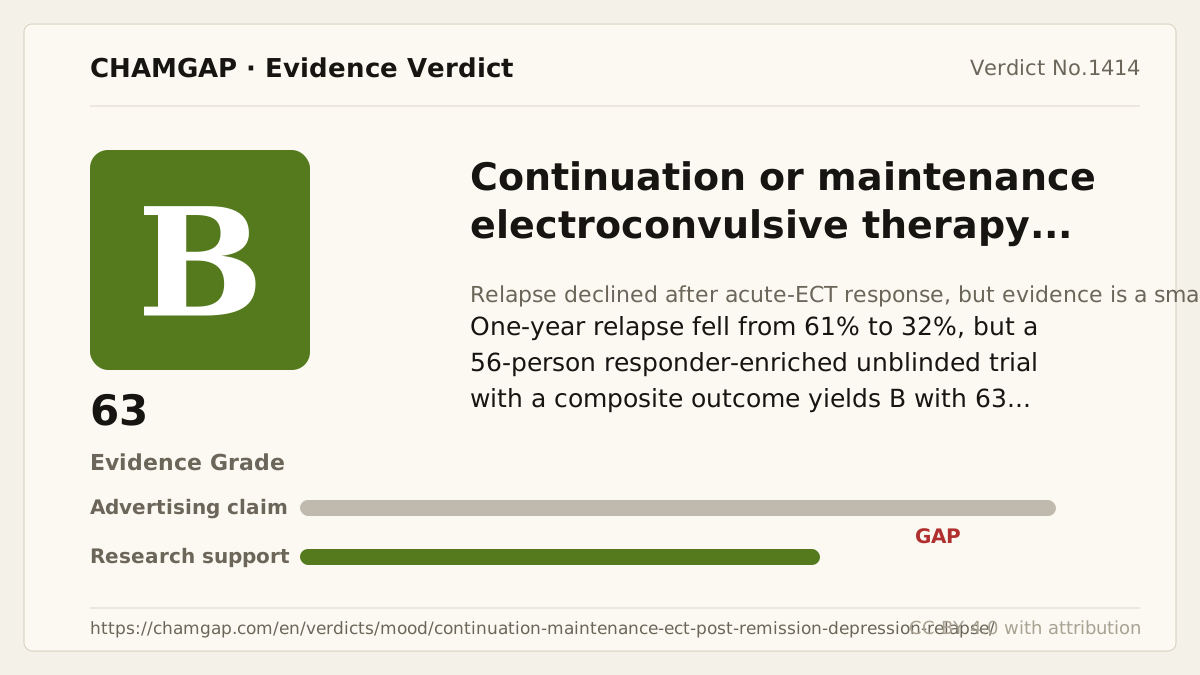
research showsContinuation or maintenance ECT added to pharmacotherapy is rated B for severe depression that has responded or remitted with acute ECT. A randomized Swedish trial of 56 participants reduced one-year relapse from 61% with pharmacotherapy alone to 32% with combined treatment. Relapse, however, was a composite of symptom score, psychiatric inpatient care, suicide, or suspected suicide, and the independent effect on hospitalization was not reported. The small, unblinded, responder-enriched design prevents an A grade.
ads claimMaintenance ECT can be presented as reliably preventing recurrence and admission after remission. About one third of the combined-treatment arm still relapsed within one year, and hospitalization was one component of the composite relapse definition rather than an independently significant outcome.
Useful facts when choosing a product
- Continuation ECT commonly refers to spaced treatment during the months immediately after acute therapy, while maintenance ECT generally refers to longer repeated treatment.
- The procedure induces a therapeutic seizure with electrical stimulation under general anesthesia and muscle relaxation and is used in addition to medication.
- Transient confusion, headache, muscle pain, nausea, and memory impairment can occur, and autobiographical memory should be monitored during repeated treatment.
- Anesthetic, airway, and cardiovascular risks require assessment and consent for each session, with driving and decision restrictions following clinical instructions.
Chamgap Semantic Classification Code
Candidate index · review held
P.continuation-or-maintenance-electroconvulsive-therapy.device.depressive-episode-relapse-and-psychiatric-hospitalization-when-added-to-medication-after-remission-with-acute-ect.prevent.addonProcedures, devices and tests > Continuation or maintenance electroconvulsive therapy > Device delivered > depressive-episode relapse and psychiatric hospitalization when added to medication after remission with acute ECT > Occurrence-prevention claim > Added intervention on common background care
An automated migration candidate, not an issued permanent code; exact claim scope remains under review. This machine-generated migration candidate helps retrieval but is not a permanent assignment. The original verdict ID and URL remain authoritative.
What the research actually shows
Nordenskjöld and colleagues randomized 56 patients with unipolar or bipolar depression who had responded to acute ECT to pharmacotherapy alone or pharmacotherapy plus 29 continuation ECT treatments. The one-year composite relapse rate was 61% versus 32%, with a Cox hazard ratio of 2.32, and cognitive and memory measures remained stable among nonrelapsing participants. In a 37-person single-blind multicenter trial by Martínez-Amorós and colleagues, nine-month relapse was 61.1% versus 35.3%, but the prematurely terminated study was underpowered and nonsignificant. Direction is promising, while precision and generalizability remain limited.
Why this is classified as B (63)
The absolute one-year relapse reduction was 29 percentage points in a randomized trial, but the sample contained only 56 participants, treatment was unblinded, and only acute-ECT responders were randomized. Psychiatric admission was a component of the composite definition rather than an independent outcome, and the small supportive trial was nonsignificant, giving B with 63 points.
Counterpoint. The treatment can be meaningful for acute-ECT responders with high relapse risk and prior maintenance failures. Shared decision-making must include cognitive burden, anesthesia risk, access, and preferences.
Rejudgment record. Cross-check applied — Accepted the randomized one-year relapse result of 61% versus 32% after acute-ECT response, while applying a ceiling for the 56-person sample, lack of blinding, responder enrichment, composite relapse definition, and absence of an independent hospitalization effect. At cross-check the score was lowered to 63 for the small enriched sample and the null ECT-vs-drug comparison in other trials such as CORE (grade B retained).
Sub-claim grades by effect
This ingredient is marketed for several effects. A single overall grade blends strong and weak claims together, so each effect is graded separately here. The overall grade reflects the strongest disconfirming or core claim.
| Effect (sub-claim) | Grade | Basis |
|---|---|---|
| Prevention of depressive relapse within one year after response to acute ECT | B | A 56-person randomized trial found 61% versus 32%, but it was responder-enriched and unblinded with a composite outcome. |
| Prevention of depressive relapse at nine months after remission with acute ECT | C | A 37-person supportive trial found 35.3% versus 61.1%, but the difference was not statistically significant. |
| Prevention of psychiatric hospitalization within one year | C | Hospitalization was a component of the composite relapse definition, and its independent effect was not reported. |
Cross-check — AI research and Codex final gate
Evidence Table
| Study | Design | Sample | Funding | Endpoint | Result | Weight |
|---|---|---|---|---|---|---|
| Nordenskjöld A et al. 2013 | Unblinded randomized pharmacotherapy-controlled trial at four hospitals | 56 responders to acute ECT | Swedish public and regional research support | Composite depressive relapse within one year | Relapse was 61% with pharmacotherapy alone versus 32% with combined continuation ECT, with a Cox hazard ratio of 2.32. | Pivotal direct randomized trial limited by small sample, responder enrichment, and a composite outcome |
| Martínez-Amorós E et al. 2021 | Multicenter single-blind randomized pharmacotherapy-controlled trial | 37 remitters after acute bilateral ECT | Spanish public research support | Depressive relapse at nine months | Relapse was 61.1% with pharmacotherapy alone versus 35.3% with combined maintenance ECT, but the difference was not statistically significant. | Directionally supportive but prematurely terminated and underpowered |
Receipt — 2 References
All 2 cited sources were verified for existence at the original page (as of 2026-07-23).
Final verification and publication gate: Codex · Evidence date: 2026-07-23 · Corrections: none
Cite this verdict
[Chamgap] Continuation or maintenance ECT x prevention of depressive relapse after acute-ECT remission — Evidence Grade B·63. 2 cited sources checked. Source: https://chamgap.com/en/verdicts/mood/continuation-maintenance-ect-post-remission-depression-relapse/ · CC BY 4.0CC BY 4.0 — free to use with attribution; do not distort grades, numbers, or verdict meaning.
What this document does and does not do
Chamgap is an information source. It reports what research has and has not confirmed; it does not tell readers what to take or buy. That decision belongs to readers and, when needed, medical or legal professionals. This verdict reflects literature available up to the search date and may change as new research appears. Nothing here is medical advice.