
Clozapine,
does it really help with Prevention of suicide attempts and hospitalization to prevent suicide in high-risk schizophrenia or schizoaffective disorder?
research showsClozapine is rated B because a direct randomized trial found less suicidal behavior than with olanzapine in high-risk schizophrenia or schizoaffective disorder. In the two-year, 980-participant InterSePT trial, the hazard ratio for the composite suicidal-behavior endpoint was 0.76 (95% CI 0.58 to 0.97); suicide attempts numbered 34 versus 55 and hospitalizations to prevent suicide numbered 82 versus 107. The primary assessment combined attempts, preventive hospitalization, and marked worsening of suicidality, treating clinicians were unmasked, and completed suicides were not reduced, with five versus three deaths. Agranulocytosis and other serious harms, plus mandatory blood monitoring, remain separate under safety.
ads claimThe phrase 'the only drug that prevents suicide' can expand fewer attempts and preventive hospitalizations into definitive prevention of suicide death. The evidence concerns closely monitored clozapine treatment plus crisis care in high-risk schizophrenia or schizoaffective disorder.
Useful facts when choosing a product
- Clozapine is a prescription dibenzodiazepine atypical antipsychotic marketed under names including Clozaril.
- Because of severe neutropenia and agranulocytosis risk, absolute neutrophil counts are required before and during treatment according to national and product-specific monitoring procedures.
- Myocarditis or cardiomyopathy, seizures, orthostatic hypotension, severe constipation or bowel obstruction, sedation, and metabolic adverse effects require attention.
- Medication alone does not manage an acute suicide crisis; immediate risk assessment, a protected setting, specialist mental-health care, and crisis intervention are required.
Chamgap Semantic Classification Code
Candidate index · review held
M.clozapine.UNK.suicide-attempts-and-hospitalization-to-prevent-suicide-in-high-risk-schizophrenia-or-schizoaffective-disorder.prevent.activeMedicinal interventions > Clozapine > Unknown > suicide attempts and hospitalization to prevent suicide in high-risk schizophrenia or schizoaffective disorder > Occurrence-prevention claim > Active comparator
An automated migration candidate, not an issued permanent code; exact claim scope remains under review. This machine-generated migration candidate helps retrieval but is not a permanent assignment. The original verdict ID and URL remain authoritative.
What the research actually shows
Meltzer and the International Suicide Prevention Trial Study Group randomized 980 patients at high risk because of a previous attempt or current suicidal ideation to clozapine or olanzapine. Contact frequency was equal between groups and an independent masked board adjudicated events, although treating clinicians were unmasked and could institute necessary rescue measures. The composite suicidal-behavior endpoint, attempts, and preventive hospitalizations were lower over two years, while completed suicides numbered five with clozapine and three with olanzapine. Later meta-analytic evidence supports the direction of benefit for suicidal behavior, but randomized evidence remains centered on InterSePT.
Why this is classified as B (74)
The 980-participant randomized active-control InterSePT trial showed a hazard ratio of 0.76 for composite suicidal behavior and fewer attempts and preventive hospitalizations, all direct clinical events. A single trial, composite endpoint, unmasked treatment, no reduction in completed suicide, and limited confirmatory randomized evidence yield B with 74 points. Agranulocytosis, myocarditis, seizures, bowel obstruction, and metabolic harms are separate safety concerns.
Counterpoint. Clozapine can be an important option for schizophrenia-spectrum patients with recurrent suicidal behavior, whether or not treatment resistance is the sole issue. Initiation and maintenance require specialist prescribing and hematologic, cardiac, gastrointestinal, neurologic, and metabolic monitoring.
Rejudgment record. New verdict — Accepted the InterSePT two-year randomized active-control evidence in 980 patients, including a suicidal-behavior hazard ratio of 0.76 and fewer attempts and preventive hospitalizations, while accounting for one pivotal trial, a composite endpoint, unmasked treating clinicians, no reduction in completed suicide, and limited confirmatory randomized evidence
Sub-claim grades by effect
This ingredient is marketed for several effects. A single overall grade blends strong and weak claims together, so each effect is graded separately here. The overall grade reflects the strongest disconfirming or core claim.
| Effect (sub-claim) | Grade | Basis |
|---|---|---|
| Reduced suicidal behavior in high-risk schizophrenia or schizoaffective disorder | B | The InterSePT composite suicidal-behavior hazard ratio was 0.76, but it is one active-control trial. |
| Reduced suicide attempts | B | Direct clinical events were lower over two years, with 34 attempts on clozapine versus 55 on olanzapine. |
| Reduced hospitalization to prevent suicide | B | Preventive hospitalizations were 82 versus 107, with a borderline P value of 0.05 and unmasked treating clinicians. |
Cross-check — AI research and Codex final gate
Evidence Table
| Study | Design | Sample | Funding | Endpoint | Result | Weight |
|---|---|---|---|---|---|---|
| Meltzer HY et al. and International Suicide Prevention Trial Study Group. 2003 | Two-year multicenter randomized active-control trial with masked event adjudication | 980 high-suicide-risk patients with schizophrenia or schizoaffective disorder | Novartis Pharmaceuticals Corp, with additional grants from the William K. Warren Research Foundation and Donald Test Foundation Trust | Composite of suicide attempts, hospitalization to prevent suicide, and marked worsening of suicidality | Suicidal behavior HR 0.76 (95% CI 0.58 to 0.97), attempts 34 versus 55, preventive hospitalizations 82 versus 107; suicide deaths 5 versus 3. | Pivotal randomized evidence on direct clinical events |
| Forte A et al. 2021 | Systematic review and random-effects meta-analysis of comparative suicidal-behavior studies | Synthesis of reports comparing clozapine with newer antipsychotic medicines | Academic synthesis with heterogeneous funding across included studies | Suicidal behavior and suicidal risk | Supported a direction of reduced suicidal risk with clozapine, while heterogeneity and dependence on InterSePT remained. | Later synthesis with limited confirmatory strength |
Receipt — 2 References
All 2 cited sources were verified for existence at the original page (as of 2026-07-22).
Final verification and publication gate: Codex · Evidence date: 2026-07-22 · Corrections: none
Cite this verdict
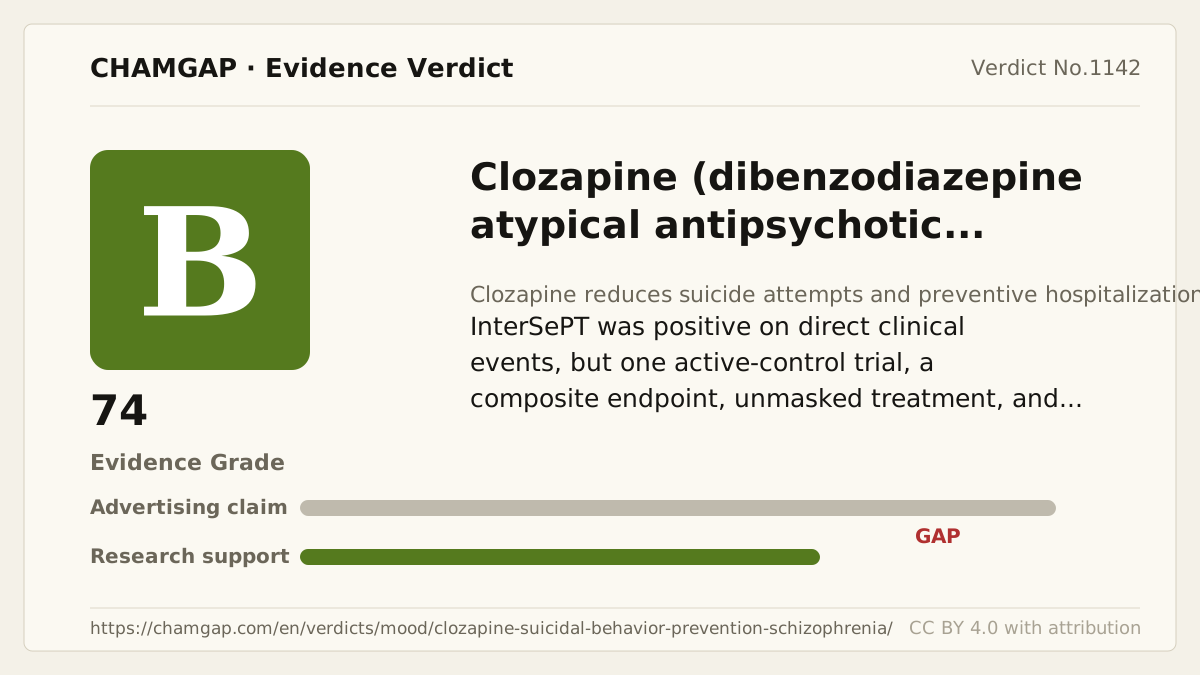
[Chamgap] Clozapine x prevention of suicidal behavior in high-risk schizophrenia or schizoaffective disorder — Evidence Grade B·74. 2 cited sources checked. Source: https://chamgap.com/en/verdicts/mood/clozapine-suicidal-behavior-prevention-schizophrenia/ · CC BY 4.0CC BY 4.0 — free to use with attribution; do not distort grades, numbers, or verdict meaning.
What this document does and does not do
Chamgap is an information source. It reports what research has and has not confirmed; it does not tell readers what to take or buy. That decision belongs to readers and, when needed, medical or legal professionals. This verdict reflects literature available up to the search date and may change as new research appears. Nothing here is medical advice.