
Testicular red and near-infrared photobiomodulation,
does it really help with Increased blood testosterone, libido, and vitality in healthy men?
research showsThe claim that testicular red or near-infrared exposure raises blood testosterone, libido, and vitality in healthy men is rated ?. Available human PBM research concentrates on other indications such as pain, skin, musculoskeletal, and cognitive outcomes, while male-infertility research addresses semen outcomes. No peer-reviewed randomized human intervention trial was found for this exact site, population, and efficacy claim. Animal, in vitro, and personal before-and-after results are not human efficacy evidence.
ads claimMarketing leaps from rodent Leydig-cell or injury models and general PBM studies to the clinical conclusion that shining an LED on the testes raises male hormones and libido.
Useful facts when choosing a product
- Home red and near-infrared panels vary substantially in wavelength, irradiance, distance, exposure time, and heat production.
- Sale of a skin or general-wellness device does not constitute regulatory authorization for testicular exposure or testosterone enhancement.
- The testes are temperature sensitive, so overheating, skin burns, and possible reproductive-tissue effects matter; long-term safety of direct testicular exposure is not established.
Chamgap Semantic Classification Code
Candidate index · review held
P.testicular-red-and-near-infrared-photobiomodulation.device.blood-testosterone-libido-and-vitality.increase.UNKProcedures, devices and tests > Testicular red and near-infrared photobiomodulation > Device delivered > blood testosterone, libido, and vitality > Increase claim > Unknown
An automated migration candidate, not an issued permanent code; exact claim scope remains under review. This machine-generated migration candidate helps retrieval but is not a permanent assignment. The original verdict ID and URL remain authoritative.
What the research actually shows
Son 2025 assessed 15 meta-analyses, 204 randomized trials, more than 9,000 participants, and 35 health endpoints, but none concerned testicular exposure for male testosterone, libido, or vitality. Eghbaldoost 2023 reviewed male-infertility PBM research involving 14 in vitro studies and human randomized evidence totaling 70 men, but focused on sperm, semen, and infertility rather than this claim in healthy men. Results from injured-animal testis models are not direct human evidence.
Why this is classified as ?
No peer-reviewed randomized human intervention trial was identified for testicular PBM in healthy men measuring testosterone, libido, or vitality, so the grade is ? with a null score.
Counterpoint. Symptoms attributed to low testosterone require repeated morning blood testing and clinical evaluation of sleep, obesity, medicines, and endocrine causes.
Rejudgment record. Cross-check applied — Cross-checked a broad PBM clinical umbrella review and a systematic review of male-infertility PBM but identified no peer-reviewed randomized human intervention trial of testicular red or near-infrared exposure measuring blood testosterone, libido, or vitality in healthy men; therefore applied ? for no human efficacy literature
Sub-claim grades by effect
This ingredient is marketed for several effects. A single overall grade blends strong and weak claims together, so each effect is graded separately here. The overall grade reflects the strongest disconfirming or core claim.
| Effect (sub-claim) | Grade | Basis |
|---|---|---|
| Increased blood testosterone in healthy men | ? | No peer-reviewed randomized human intervention trial of testicular PBM was found. |
| Increased libido in healthy men | ? | No human intervention trial links PBM at this site to libido. |
| Increased vitality in healthy men | ? | No human intervention efficacy literature matches this claim. |
Cross-check — AI research and Codex final gate
Evidence Table
| Study | Design | Sample | Funding | Endpoint | Result | Weight |
|---|---|---|---|---|---|---|
| Son Y et al. 2025 | Umbrella review of meta-analyses of randomized PBM trials | Fifteen meta-analyses, 204 randomized trials, over 9,000 participants, and 35 outcomes | South Korean public research support; no competing interests reported | Multiple pain, function, skin, cognitive, and other health outcomes | No endpoint addressed testicular exposure for testosterone, libido, or vitality in healthy men. | Exact-claim gap in broad clinical literature |
| Eghbaldoost A et al. 2023 | Systematic review of low-level laser therapy for male infertility | 477 in vitro semen samples and 70 men in randomized evidence; 14 in vitro studies and one double-blind trial | Academic research; see article disclosures | Sperm, semen, and male-infertility measures | Adjacent reproductive research exists, but it did not test blood testosterone, libido, or vitality in healthy men. | Adjacent literature confirming the exact-claim gap |
Receipt — 2 References
All 2 cited sources were verified for existence at the original page (as of 2026-07-23).
Final verification and publication gate: Codex · Evidence date: 2026-07-23 · Corrections: none
Cite this verdict
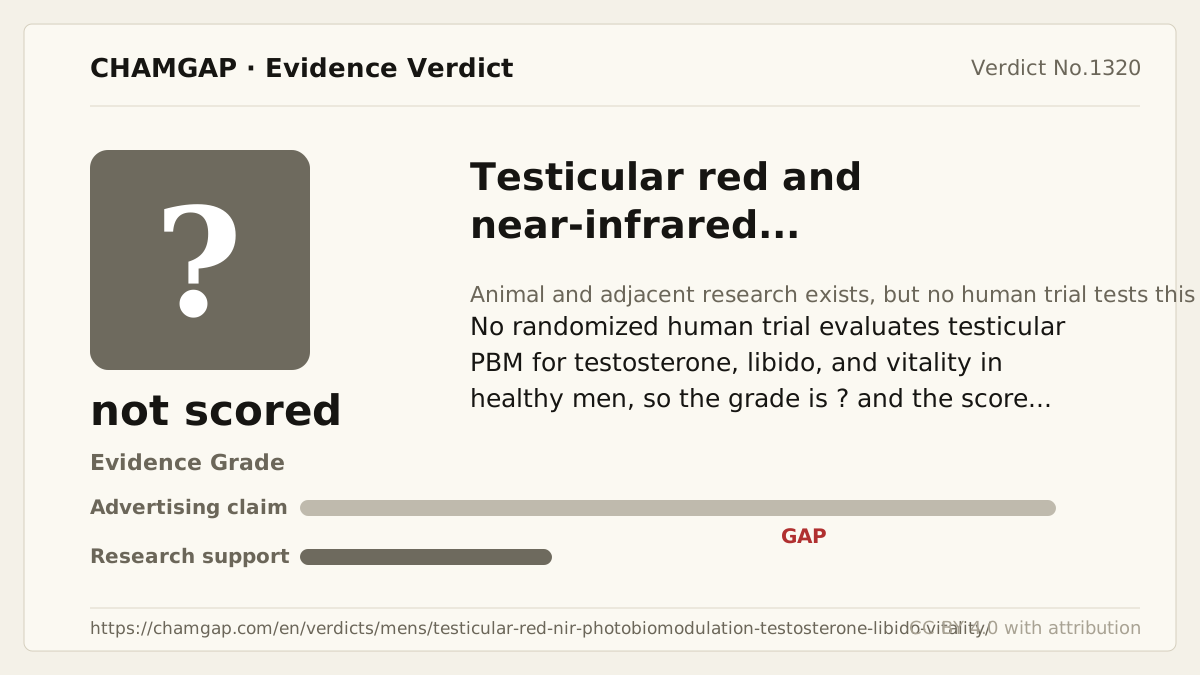
[Chamgap] Testicular red and near-infrared photobiomodulation x increased testosterone, libido, and vitality — Evidence Grade ?. 2 cited sources checked. Source: https://chamgap.com/en/verdicts/mens/testicular-red-nir-photobiomodulation-testosterone-libido-vitality/ · CC BY 4.0CC BY 4.0 — free to use with attribution; do not distort grades, numbers, or verdict meaning.
What this document does and does not do
Chamgap is an information source. It reports what research has and has not confirmed; it does not tell readers what to take or buy. That decision belongs to readers and, when needed, medical or legal professionals. This verdict reflects literature available up to the search date and may change as new research appears. Nothing here is medical advice.