
Tamsulosin,
does it really help with BPH urinary symptom improvement leading to prevention of acute urinary retention and surgery?
research showsTamsulosin improves urinary symptoms and maximum flow rate over the short term, but the expanded claim that this leads to prevention of acute urinary retention and BPH-related surgery is unsupported and rated C. Four-year CombAT recorded more retention or surgery with tamsulosin alone than with dutasteride or combination therapy. The alpha blocker in MTOPS was doxazosin, not tamsulosin, so MTOPS is class-level indirect evidence; alpha-blocker monotherapy did not reduce progression to retention or surgery as much as finasteride. The symptom-relief-to-prevention expansion therefore receives 45 points. Orthostatic hypotension, dizziness, ejaculatory dysfunction, and intraoperative floppy iris syndrome are separate safety issues.
ads claimPromotional language can convert a faster urine stream into claims that the prostate shrinks and retention or surgery is prevented. Tamsulosin relaxes smooth muscle; it is not a prostate-shrinking drug.
Useful facts when choosing a product
- Tamsulosin is a prescription alpha-1 blocker used for lower urinary tract symptoms attributed to BPH. Approved doses and release formulations differ by product, so the prescription and label should be followed.
- Its action reduces smooth-muscle tone in the prostate and bladder neck but does not shrink prostate tissue. A 5-alpha-reductase inhibitor or combination therapy is considered separately when prostate size and progression risk are high.
- Dizziness, orthostatic hypotension, syncope, and ejaculatory dysfunction can occur. Before cataract or glaucoma surgery, patients should disclose current or prior exposure so the surgeon can prepare for intraoperative floppy iris syndrome.
- Symptom relief does not replace evaluation for acute retention, recurrent urinary infection, hematuria, impaired renal function, or bladder stones, and follow-up should not be stopped without medical advice.
Chamgap Semantic Classification Code
Candidate index · review held
M.tamsulosin.UNK.bph-urinary-symptom-improvement-leading-to-prevention-of-acute-urinary-retention-and-surgery.prevent.placeboMedicinal interventions > Tamsulosin > Unknown > BPH urinary symptom improvement leading to prevention of acute urinary retention and surgery > Occurrence-prevention claim > Placebo
An automated migration candidate, not an issued permanent code; exact claim scope remains under review. This machine-generated migration candidate helps retrieval but is not a permanent assignment. The original verdict ID and URL remain authoritative.
What the research actually shows
In Abrams 1995, 296 men received tamsulosin 0.4 mg or placebo for 12 weeks, with better maximum flow and symptom scores on tamsulosin. A 756-participant United States phase 3 trial likewise found 0.4 mg and 0.8 mg superior to placebo on AUA symptom scores and maximum flow. CombAT assigned 4,844 men to tamsulosin, dutasteride, or both for four years; combination therapy reduced acute urinary retention or surgery versus tamsulosin but not versus dutasteride. MTOPS used doxazosin, not tamsulosin, in 3,047 men. Doxazosin reduced overall clinical progression, but alpha-blocker monotherapy did not reduce retention and invasive therapy as much as finasteride. MTOPS is therefore class-level indirect evidence, not direct tamsulosin evidence.
Why this is classified as C (45)
Multiple randomized trials provide direct positive evidence for short-term symptom and maximum-flow improvement, making that subclaim B. Four-year CombAT nevertheless showed more limited prevention of retention and surgery with tamsulosin alone than with dutasteride or combination treatment. MTOPS used doxazosin rather than tamsulosin and is class-level indirect evidence; alpha-blocker monotherapy did not lower progression to retention or surgery as much as finasteride. The symptom-surrogate expansion is unsupported and receives C with 45 points. Safety is assessed separately.
Counterpoint. Tamsulosin is a reasonable prescription option when rapid symptom relief is the goal. When prevention of progression matters in a man with a large prostate, prostate volume, PSA, residual urine, complication risk, and patient preferences should guide discussion of another drug or combination therapy.
Rejudgment record. New verdict — Accepted randomized evidence for short-term symptom and flow improvement, but applied C to the unsupported prevention expansion because CombAT showed more limited prevention with tamsulosin monotherapy, while MTOPS used doxazosin rather than tamsulosin and provided only indirect class evidence that alpha-blocker monotherapy did not reduce progression to retention or surgery as much as finasteride
Sub-claim grades by effect
This ingredient is marketed for several effects. A single overall grade blends strong and weak claims together, so each effect is graded separately here. The overall grade reflects the strongest disconfirming or core claim.
| Effect (sub-claim) | Grade | Basis |
|---|---|---|
| Improvement of BPH urinary symptoms and maximum flow | B | Multiple placebo-controlled trials improved short-term symptom scores and urinary flow. |
| Symptom improvement leading to prevention of acute retention and BPH surgery | C | CombAT favored dutasteride or combination therapy, and indirect doxazosin evidence from MTOPS showed less prevention with alpha-blocker monotherapy than with finasteride. |
| Reduction in prostate volume | F | Tamsulosin relaxes smooth muscle but is not a prostate-shrinking medicine. |
Cross-check — AI research and Codex final gate
Evidence Table
| Study | Design | Sample | Funding | Endpoint | Result | Weight |
|---|---|---|---|---|---|---|
| Abrams P et al. 1995 | Multicenter randomized double-blind placebo-controlled trial | 296 men with symptomatic BPH | Limited reporting; European Tamsulosin Study Group | Maximum urinary flow and Boyarsky symptom score | Twelve weeks of tamsulosin 0.4 mg significantly improved maximum flow and symptom score versus placebo. | Direct short-term symptom efficacy |
| Roehrborn CG et al. 2010 CombAT | Four-year multicenter randomized double-blind parallel-group trial | 4,844 men with BPH at elevated progression risk | Sponsored by GlaxoSmithKline | Time to first acute urinary retention or BPH-related surgery | Combination therapy reduced risk versus tamsulosin alone but not significantly versus dutasteride alone. | Key direct progression endpoint |
| McConnell JD et al. 2003 MTOPS | Long-term multicenter randomized double-blind placebo-controlled trial | 3,047 men with BPH; mean follow-up 4.5 years | Primarily public support from the United States NIDDK and NIH | Clinical progression, acute retention, incontinence, renal impairment, and invasive therapy | Doxazosin reduced overall progression, while reductions in acute retention and invasive therapy occurred with finasteride and combination therapy. | Alpha-blocker class cross-check |
Receipt — 4 References
All 4 cited sources were verified for existence at the original page (as of 2026-07-20).
Final verification and publication gate: Codex · Evidence date: 2026-07-20 · Corrections: none
Cite this verdict
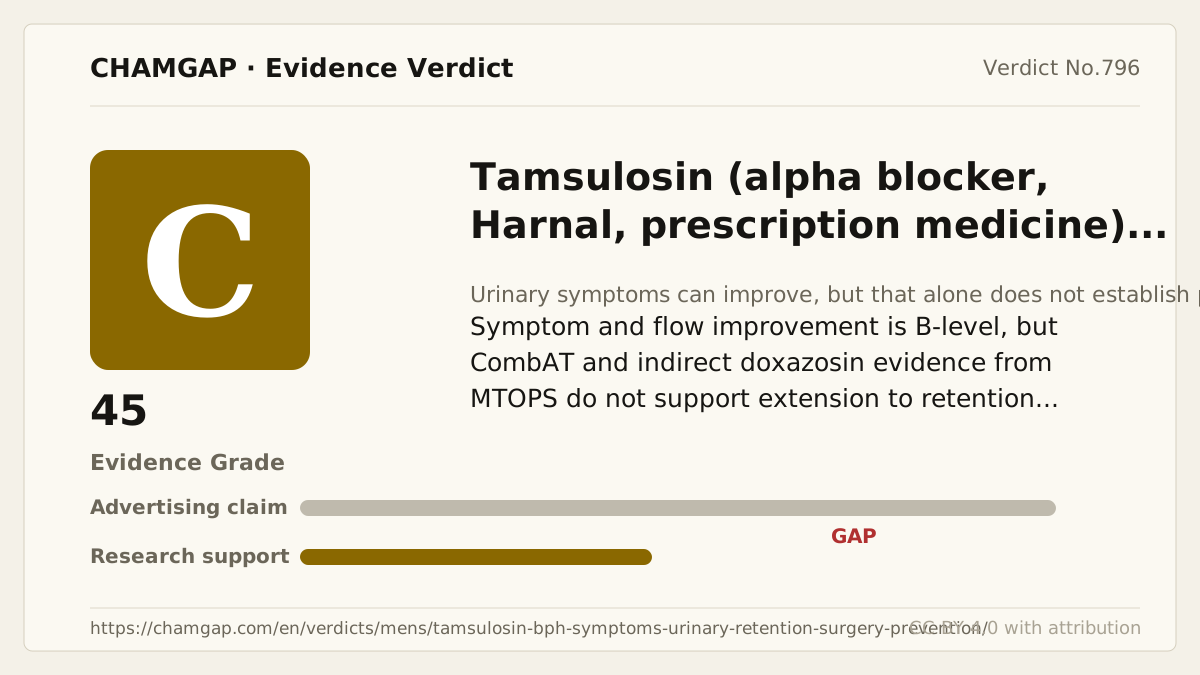
[Chamgap] Tamsulosin x BPH symptom improvement and prevention of urinary retention and surgery — Evidence Grade C·45. 4 cited sources checked. Source: https://chamgap.com/en/verdicts/mens/tamsulosin-bph-symptoms-urinary-retention-surgery-prevention/ · CC BY 4.0CC BY 4.0 — free to use with attribution; do not distort grades, numbers, or verdict meaning.
What this document does and does not do
Chamgap is an information source. It reports what research has and has not confirmed; it does not tell readers what to take or buy. That decision belongs to readers and, when needed, medical or legal professionals. This verdict reflects literature available up to the search date and may change as new research appears. Nothing here is medical advice.