
Seven-day antibiotic therapy,
does it really help with Noninferior symptom resolution versus 14 days in afebrile men with UTI?
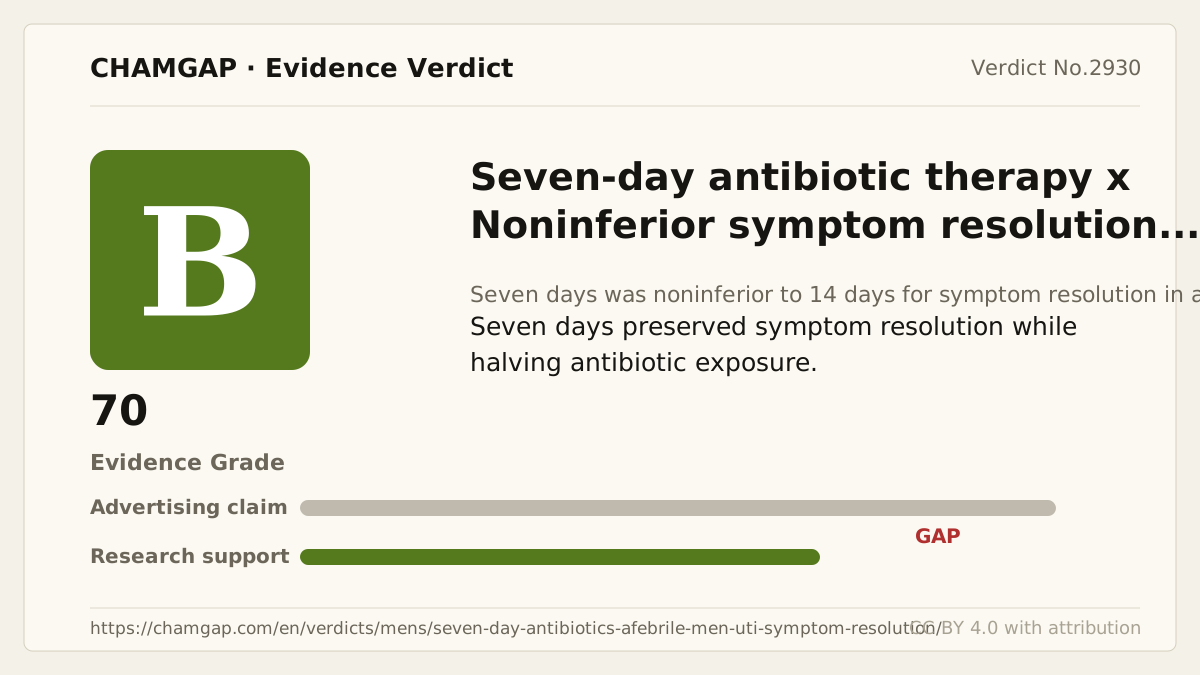
research showsGrade B. In the prespecified adherent analysis, symptom resolution was 122/131 (93.1%) versus 111/123 (90.2%), difference +2.9 points, with a one-sided 97.5% CI lower bound of -5.2 points. This stayed above the prespecified -10-point margin.
ads claimThe benefit of doing less is equal symptom resolution with less exposure. Adverse events were 28/136 (20.6%) versus 33/136 (24.3%), difference -3.7 points; no inferential test was reported for this comparison. Reduced exposure plausibly lowers selection pressure, but this trial did not prove less individual resistance.
Useful facts when choosing a product
- Ciprofloxacin or trimethoprim-sulfamethoxazole was used.
- The study ran at two US VA centers.
- It does not apply to febrile men.
Chamgap Semantic Classification Code
Candidate index · review held
M.antibiotic-therapy.UNK.symptom-resolution.noninferior.placeboMedicinal interventions > antibiotic therapy > Unknown > symptom resolution > Noninferiority claim > Placebo
An automated migration candidate, not an issued permanent code; exact claim scope remains under review. This machine-generated migration candidate helps retrieval but is not a permanent assignment. The original verdict ID and URL remain authoritative.
What the research actually shows
All 272 completed follow-up. The prespecified primary analysis was the adherent as-treated population of 254, 131 versus 123; the all-randomized consistency analysis was 91.9% versus 90.4%, difference +1.5 points, lower bound -5.8. A per-protocol-type primary analysis is conventional in noninferiority, while the noninferiority design itself remains a listed limitation.
Why this is classified as B (70)
A publicly funded RCT met the prespecified symptom noninferiority margin; one noninferiority-design limitation gives B with 70 points.
Counterpoint. Do not extend to febrile UTI, prostatitis, or other drugs.
Rejudgment record. Cross-check applied — Patient-reported symptom resolution met the prespecified -10-point noninferiority margin, with noninferiority design counted as one limitation
| Endpoint | P | Symptom or function itself is the target - including patient reports and performance tests |
| Replication | R1 | Single confirmatory trial |
| Independence | I2 | Decisive evidence is publicly or non-profit funded |
| Effect size | E+ | Meets the clinically important threshold |
Stored derived and displayed grades match; this is not a current recalculation or validity check (B).
Sub-claim grades by effect
This ingredient is marketed for several effects. A single overall grade blends strong and weak claims together, so each effect is graded separately here. The overall grade reflects the strongest disconfirming or core claim.
| Effect (sub-claim) | Grade | Basis |
|---|---|---|
| Noninferior symptom resolution with seven days | B | The prespecified margin was met. |
| Symptom recurrence by 28 days | D | 9.9% vs 12.9%, with a wide CI. |
Cross-check — AI research and Codex final gate
Evidence Table
| Study | Design | Sample | Funding | Endpoint | Result | Weight |
|---|---|---|---|---|---|---|
| Drekonja et al. 2021 | Double-blind placebo-controlled noninferiority RCT | 272 randomized; 254 in prespecified primary analysis | US Department of Veterans Affairs Cooperative Studies Program | Resolution of UTI symptoms within 14 days after therapy | 93.1% vs 90.2%, difference +2.9 points, one-sided 97.5% CI -5.2 points to infinity; margin -10 points | Publicly funded patient-centered noninferiority evidence |
Receipt — 3 References
All 3 cited sources were verified for existence at the original page (as of 2026-08-26).
Final verification and publication gate: Codex · Evidence date: 2026-08-26 · Corrections: none
Cite this verdict
[Chamgap] Benefit of 7-Day Antibiotic Therapy for Noninferior Symptom Resolution in Afebrile Men with Urinary Tract Infection — Evidence Grade B·70. 3 cited sources checked. Source: https://chamgap.com/en/verdicts/mens/seven-day-antibiotics-afebrile-men-uti-symptom-resolution/ · CC BY 4.0CC BY 4.0 — free to use with attribution; do not distort grades, numbers, or verdict meaning.
What this document does and does not do
Chamgap is an information source. It reports what research has and has not confirmed; it does not tell readers what to take or buy. That decision belongs to readers and, when needed, medical or legal professionals. This verdict reflects literature available up to the search date and may change as new research appears. Nothing here is medical advice.