
Resveratrol,
does it really help with Increased total and free testosterone and improved male vitality in middle-aged men?
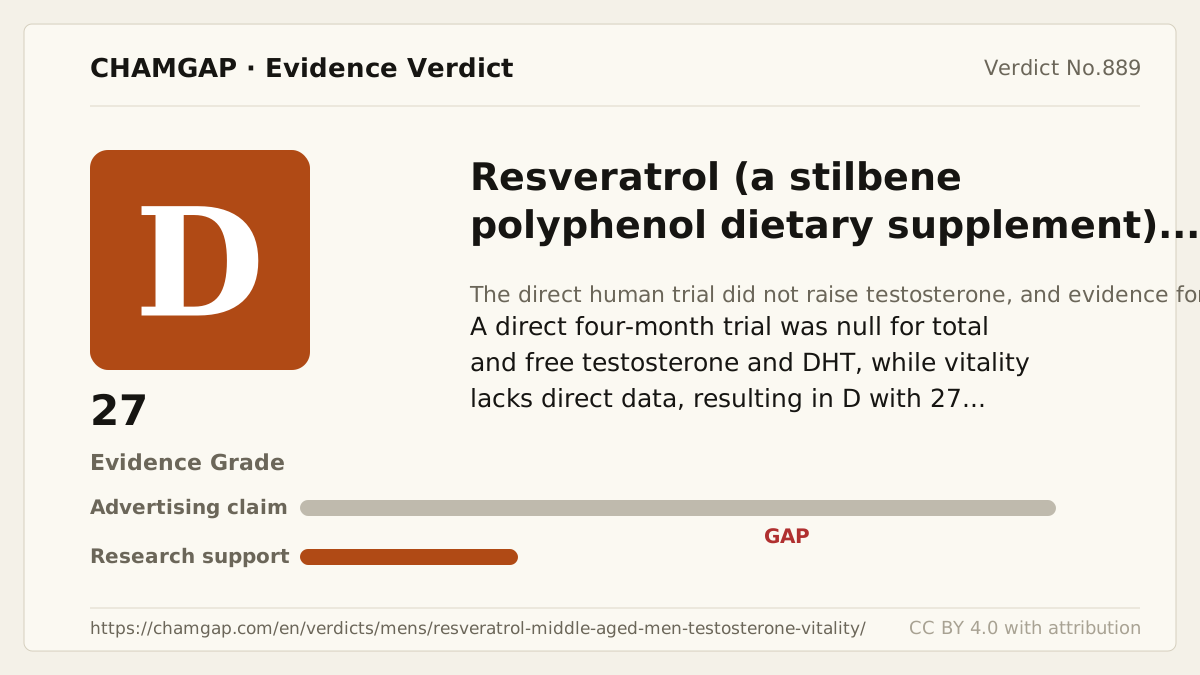
research showsResveratrol is rated D for raising total and free testosterone in middle-aged men. In a four-month double-blind randomized trial of 66 middle-aged men with metabolic syndrome, neither 150 mg/day nor 1,000 mg/day changed total testosterone, free testosterone, DHT, PSA, or prostate volume versus placebo. The high dose instead lowered androgen precursors including DHEA and DHEAS. No eligible direct clinical efficacy outcome testing male vitality itself was identified, so that subclaim is rated unknown. This verdict is separate from verdict 090 on anti-aging and cardiovascular claims.
ads claimMarketing connects antioxidant or energy-metabolism mechanisms and animal reproductive-hormone findings to a human testosterone booster and better libido, strength, or vitality. The direct human trial did not raise hormones, and a matched vitality endpoint was not identified.
Useful facts when choosing a product
- This verdict concerns male-hormone and vitality claims in middle-aged men and is separate from verdict 090 on anti-aging and cardiovascular claims.
- The direct trial gave 150 mg/day or 1,000 mg/day for four months to men with metabolic syndrome, so it does not represent all middle-aged men or patients with confirmed hypogonadism.
- Resveratrol is rapidly conjugated after oral absorption and has low free-compound bioavailability; differences in purity, dose, and formulation can alter exposure.
- High doses can cause diarrhea, abdominal pain, and nausea, and possible CYP-enzyme or anticoagulant interactions and debated estrogen-receptor activity warrant caution.
Chamgap Semantic Classification Code
Candidate index · review held
S.resveratrol.UNK.total-and-free-testosterone-and-improved-male-vitality.increase.placeboSupplements and nutraceuticals > Resveratrol > Unknown > total and free testosterone and improved male vitality > Increase claim > Placebo
An automated migration candidate, not an issued permanent code; exact claim scope remains under review. This machine-generated migration candidate helps retrieval but is not a permanent assignment. The original verdict ID and URL remain authoritative.
What the research actually shows
Kjaer and colleagues in 2015 assigned 66 middle-aged men with metabolic syndrome to placebo or two resveratrol doses for four months. Total testosterone measured by LC-MS/MS, calculated free testosterone, and DHT did not differ among the three groups, and PSA and prostate volume were unchanged. DHEA and DHEAS fell with 1,000 mg/day. A 2024 systematic review compiled about 200 resveratrol studies but found no conclusive basis for recommending it for any condition and called for larger high-quality trials.
Why this is classified as D (27)
The most direct four-month double-blind trial of 66 men found no rise in total testosterone, free testosterone, or DHT versus placebo. No direct male-vitality clinical endpoint was available, and preclinical signals or metabolic effects from other indications cannot be transferred to a male-hormone claim. The direct human null result gives D with 27 points; gastrointestinal, interaction, and receptor-related concerns remain separate safety issues.
Counterpoint. Fatigue, low libido, or reduced strength calls for assessment of sleep, mood, medicines, obesity, metabolic disease, and properly timed morning testosterone. Resveratrol should not substitute for validated diagnosis and treatment of hypogonadism.
Rejudgment record. New verdict — Applied rule ② for a direct human null result because neither dose raised total testosterone, free testosterone, or DHT in a four-month double-blind placebo-controlled trial of 66 middle-aged men with metabolic syndrome and no direct male-vitality clinical endpoint was available
Sub-claim grades by effect
This ingredient is marketed for several effects. A single overall grade blends strong and weak claims together, so each effect is graded separately here. The overall grade reflects the strongest disconfirming or core claim.
| Effect (sub-claim) | Grade | Basis |
|---|---|---|
| Increased total testosterone in middle-aged men | D | Both doses were null in a four-month double-blind trial of 66 middle-aged men with metabolic syndrome. The result is not extrapolated to all middle-aged men. |
| Increased free testosterone and DHT in middle-aged men | D | Free testosterone and DHT did not differ in men with metabolic syndrome. This population does not represent all middle-aged men or patients with confirmed hypogonadism. |
| Improved vitality in middle-aged men | ? | The 66-person metabolic-syndrome trial did not measure vitality, and no direct vitality outcome was identified for middle-aged men generally. |
Cross-check — AI research and Codex final gate
Evidence Table
| Study | Design | Sample | Funding | Endpoint | Result | Weight |
|---|---|---|---|---|---|---|
| Kjaer TN et al. 2015 | Randomized double-blind placebo-controlled single-center dose trial | 76 men aged 30 to 60 with metabolic syndrome randomized and 66 analyzed | Supported by the Danish Council for Strategic Research and several nonprofit foundations | Total and free testosterone, DHT, sex hormones, PSA, and prostate volume | Neither 150 mg/day nor 1,000 mg/day differed from placebo for total or free testosterone or DHT, while the high dose lowered DHEA and DHEAS. | Key direct null randomized trial |
| Brown K et al. 2024 | Systematic review of purified-resveratrol clinical trials | About 200 studies across at least 24 indications over 20 years | Academic systematic review; funding varied across included trials | Clinical efficacy, biomarkers, pharmacokinetics, and safety across conditions | It found no conclusive clinical basis for recommending resveratrol for any indication and called for larger high-quality trials. | Context for the overall clinical evidence base |
Receipt — 2 References
All 2 cited sources were verified for existence at the original page (as of 2026-07-20).
Final verification and publication gate: Codex · Evidence date: 2026-07-20 · Corrections: none
Cite this verdict
[Chamgap] Resveratrol x increased testosterone and vitality in middle-aged men — Evidence Grade D·27. 2 cited sources checked. Source: https://chamgap.com/en/verdicts/mens/resveratrol-middle-aged-men-testosterone-vitality/ · CC BY 4.0CC BY 4.0 — free to use with attribution; do not distort grades, numbers, or verdict meaning.
What this document does and does not do
Chamgap is an information source. It reports what research has and has not confirmed; it does not tell readers what to take or buy. That decision belongs to readers and, when needed, medical or legal professionals. This verdict reflects literature available up to the search date and may change as new research appears. Nothing here is medical advice.