
Red ginseng oil KGC11o,
does it really help with Improved prostate health, nocturia, and urinary symptoms?
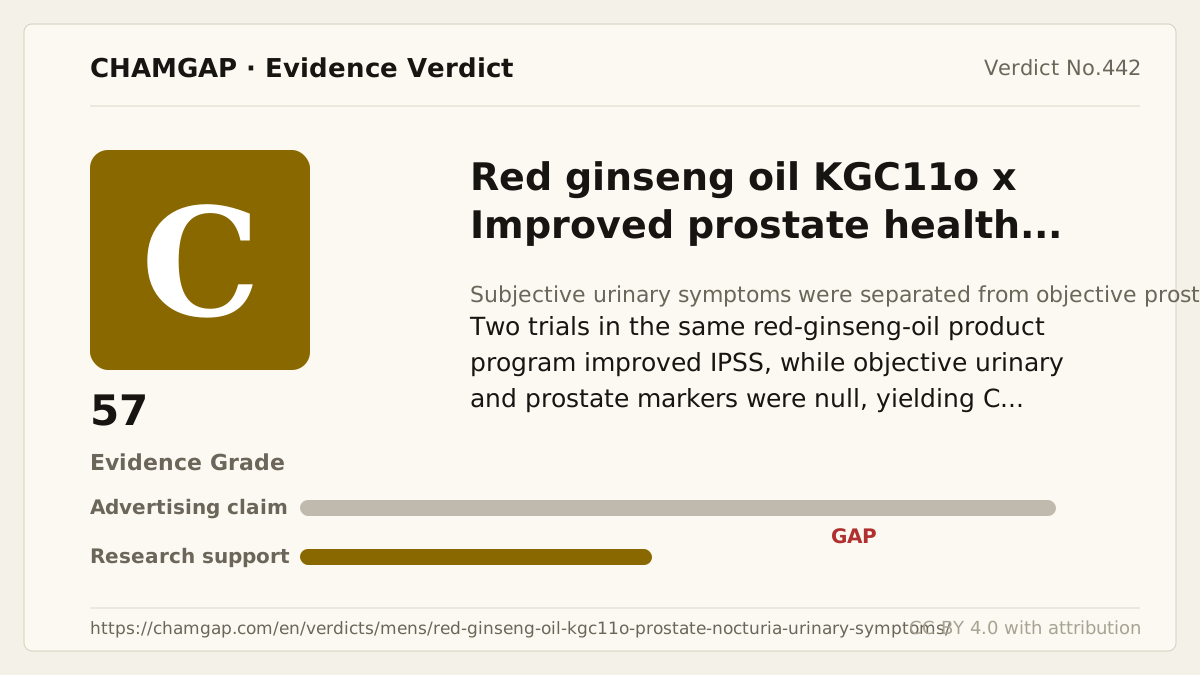
research showsRXGIN red ginseng oil in the KGC11o product line improved total IPSS and self-reported symptoms, including nocturia, in 12-week placebo-controlled trials at 500 and 1,000 mg/day. Evidence remains concentrated in the same manufacturing process and product program, and maximum urinary flow, postvoid residual, PSA, and hormones were not significant in the 500 mg trial. Individual regulatory recognition confirms that studies exist but does not replace independent replication, so the grade is C.
ads claimImmune and fatigue reputation from general red ginseng or saponin studies cannot be transferred to prostate efficacy of this oil fraction. KGC11o is a supercritical-extracted, nonsaponin-rich oil fraction; claims of shrinking the prostate or replacing medication for nocturia exceed the trials.
Useful facts when choosing a product
- The Korean individually recognized ingredient is red ginseng oil KGC11o, recognition number 2022-33, with wording that it may help maintain prostate health.
- The official daily intake is 500-1,000 mg/day of KGC11o.
- The trial product was supercritical-carbon-dioxide-extracted RXGIN oil in capsules, not ordinary red ginseng concentrate or a saponin product.
- It is intended for adult men; caution is listed for cardiovascular disease and concurrent diabetes drugs or anticoagulants.
Chamgap Semantic Classification Code
Candidate index · review held
UNK.red-ginseng-oil-kgc11o.UNK.prostate-health-nocturia-and-urinary-symptoms.improve.placeboUnknown > Red ginseng oil KGC11o > Unknown > prostate health, nocturia, and urinary symptoms > Improvement claim > Placebo
An automated migration candidate, not an issued permanent code; exact claim scope remains under review. This machine-generated migration candidate helps retrieval but is not a permanent assignment. The original verdict ID and URL remain authoritative.
What the research actually shows
The Piao 2024 trial gave RXGIN 1,000 mg/day or placebo for 12 weeks to men with IPSS scores of 8-19; 88 completed, and total, voiding, storage, and nocturia scores improved. A 2026 low-dose trial randomized 100 men and had 89 completers; 500 mg/day improved 12-week IPSS and nocturia, but maximum urinary flow, postvoid residual, PSA, and hormones were not significant. Suppression of prostate enlargement and inflammation has been reported in a KGC11o animal model, which does not establish human prostate-volume or progression effects. Korean regulatory recognition in 2022 lists 500-1,000 mg/day, but recognition is not independent clinical replication.
Why this is classified as C (57)
IPSS and nocturia are positive in two trials within the same product program, placing the claim at upper C. Objective flow, residual, PSA, and human prostate-structure outcomes are null or unestablished, and branded-product concentration prevents B. The score is 58.
Counterpoint. An independent multicenter trial should control standard-treatment use and assess flow, residual volume, prostate volume, and long-term treatment need alongside IPSS.
Rejudgment record. New verdict — Accepted positive IPSS trials for the KGC11o or RXGIN single product, did not use regulatory recognition as grade evidence, and separated null objective flow, residual, and PSA outcomes
Sub-claim grades by effect
This ingredient is marketed for several effects. A single overall grade blends strong and weak claims together, so each effect is graded separately here. The overall grade reflects the strongest disconfirming or core claim.
| Effect (sub-claim) | Grade | Basis |
|---|---|---|
| IPSS voiding and storage symptoms | C | Positive at 500 and 1,000 mg/day in trials from the same product program |
| Nocturia | C | Improved as an IPSS subitem in two 12-week trials |
| Objective prostate and urinary function | D | Human prostate volume is unestablished, and maximum flow, postvoid residual, and PSA were null in the low-dose trial |
Cross-check — AI research and Codex final gate
Evidence Table
| Study | Design | Sample | Funding | Endpoint | Result | Weight |
|---|---|---|---|---|---|---|
| Piao et al. (2024) | Twelve-week randomized double-blind placebo-controlled trial | 88 | KGC supplied the product and related researchers participated; government grant support | Primary IPSS; IIEF, maximum flow, and postvoid residual | Improved total and subscale IPSS, including nocturia | Key |
| Low-dose RXGIN trial (2026) | Twelve-week randomized double-blind placebo-controlled trial | 89 | Same RXGIN product program | Primary IPSS; IIEF-5, PSA, hormones, maximum flow, and postvoid residual | Positive IPSS and nocturia; null PSA, hormones, maximum flow, and postvoid residual | Key |
| Lee et al. (2022) | Testosterone-induced benign-prostatic-hyperplasia rat experiment | Korea Ginseng Corporation researchers participated | Prostate weight, histology, and inflammation | Signal for suppression of prostate enlargement | Preclinical |
Receipt — 4 References
All 4 cited sources were verified for existence at the original page (as of 2026-07-17).
Final verification and publication gate: Codex · Evidence date: 2026-07-17 · Corrections: none
Cite this verdict
[Chamgap] Red ginseng oil KGC11o x prostate health, nocturia, and urinary symptoms — Evidence Grade C·57. 4 cited sources checked. Source: https://chamgap.com/en/verdicts/mens/red-ginseng-oil-kgc11o-prostate-nocturia-urinary-symptoms/ · CC BY 4.0CC BY 4.0 — free to use with attribution; do not distort grades, numbers, or verdict meaning.
What this document does and does not do
Chamgap is an information source. It reports what research has and has not confirmed; it does not tell readers what to take or buy. That decision belongs to readers and, when needed, medical or legal professionals. This verdict reflects literature available up to the search date and may change as new research appears. Nothing here is medical advice.