
Radical prostatectomy,
does it really help with Reduction of prostate-cancer mortality and all-cause mortality in localized prostate cancer?
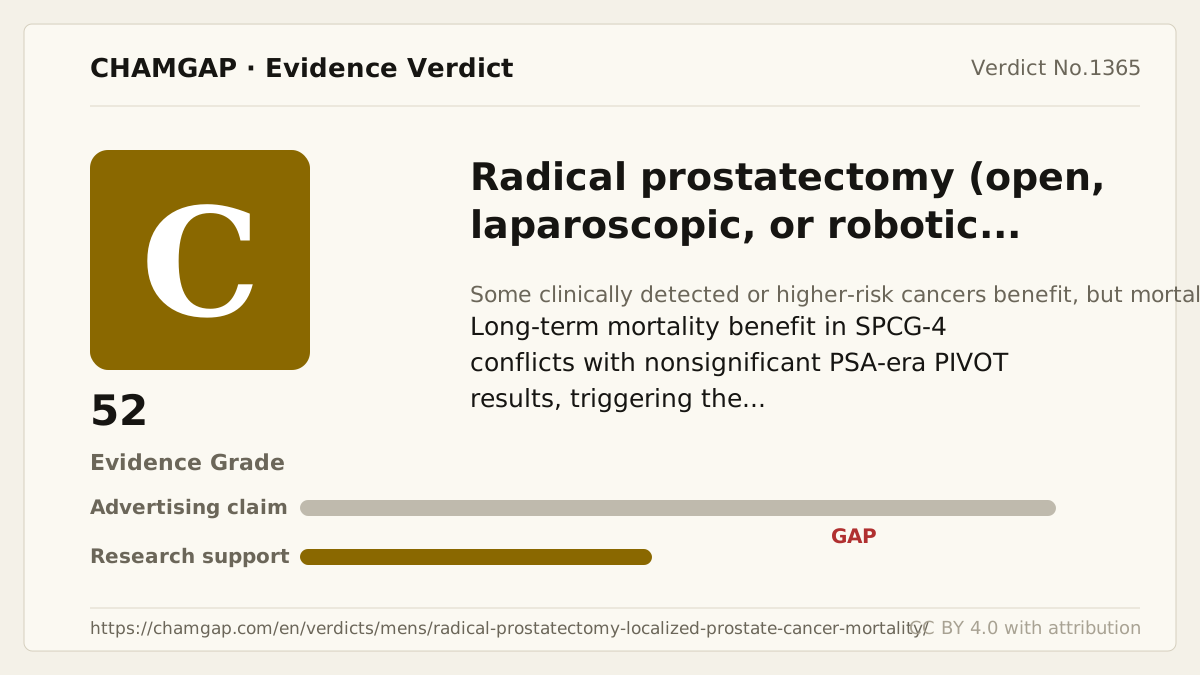
research showsRadical prostatectomy is rated C because large randomized trials conflict on prostate-cancer and all-cause mortality. In predominantly clinically detected cancer, 29-year SPCG-4 follow-up found 71 versus 110 prostate-cancer deaths and lower all-cause mortality, whereas PIVOT in the PSA era did not show significant reductions in either mortality outcome after nearly 20 years. Absolute benefit is particularly uncertain in low-risk screen-detected disease.
ads claimClaims that robotic surgery extends life or preserves urinary and sexual function for every localized cancer exceed the evidence. Robotic, laparoscopic, and open surgery are approaches, while mortality benefit depends on tumor risk and life expectancy.
Useful facts when choosing a product
- Radical prostatectomy removes the prostate and seminal vesicles, sometimes with pelvic lymph nodes, through an open, laparoscopic, or robotic approach.
- Urinary incontinence and erectile dysfunction are major long-term harms, and bleeding, infection, thrombosis, anastomotic stricture, and anesthesia complications can occur.
- Active surveillance is an important option for low-risk localized cancer, while radiation and hormone-based combinations are alternatives for selected intermediate- or high-risk disease.
Chamgap Semantic Classification Code
Candidate index · review held
P.radical-prostatectomy.procedural.prostate-cancer-mortality-and-all-cause-mortality-in-localized-prostate-cancer.reduce.UNKProcedures, devices and tests > Radical prostatectomy > Procedural > prostate-cancer mortality and all-cause mortality in localized prostate cancer > Reduction claim > Unknown
An automated migration candidate, not an issued permanent code; exact claim scope remains under review. This machine-generated migration candidate helps retrieval but is not a permanent assignment. The original verdict ID and URL remain authoritative.
What the research actually shows
SPCG-4 randomized 695 men with localized prostate cancer to surgery or watchful waiting. At 29 years, prostate-cancer deaths were 71 versus 110 and all-cause deaths were 261 versus 292. PIVOT randomized 731 PSA-era patients to surgery or observation and, after nearly 20 years, reported a borderline all-cause hazard ratio of 0.84 and no statistically significant difference in prostate-cancer or treatment mortality.
Why this is classified as C (52)
Mortality benefit in SPCG-4 conflicts with nonsignificant PIVOT results, and benefit in low-risk PSA-detected disease is uncertain, yielding C with 52 points.
Counterpoint. Individual decisions should incorporate grade, stage, PSA, life expectancy, imaging and biopsy findings, baseline urinary and sexual function, and tradeoffs among surgery, radiation, and surveillance.
Rejudgment record. New verdict — Applied the conflicting-large-trial rule because long-term SPCG-4 reductions in prostate-cancer and all-cause mortality conflict with the absence of significant mortality reduction in PSA-era PIVOT, while accounting for surveillance as an alternative in low-risk disease
Sub-claim grades by effect
This ingredient is marketed for several effects. A single overall grade blends strong and weak claims together, so each effect is graded separately here. The overall grade reflects the strongest disconfirming or core claim.
| Effect (sub-claim) | Grade | Basis |
|---|---|---|
| Reduction of prostate-cancer mortality | C | SPCG-4 was positive, whereas PIVOT was not statistically significant. |
| Reduction of all-cause mortality | C | SPCG-4 found a reduction, while long-term PIVOT results were borderline and inconsistent. |
| Mortality reduction in low-risk PSA-detected disease | C | Absolute benefit is uncertain, and active surveillance is an important alternative. |
Cross-check — AI research and Codex final gate
Evidence Table
| Study | Design | Sample | Funding | Endpoint | Result | Weight |
|---|---|---|---|---|---|---|
| Bill-Axelson A et al. SPCG-4. 2018 | Twenty-nine-year follow-up of a randomized trial of radical prostatectomy versus watchful waiting | 695 men | Swedish Cancer Society and other public or nonprofit support | Prostate-cancer death, all-cause death, and metastasis | Prostate-cancer deaths were 71 versus 110; all-cause deaths were 261 versus 292. | Long-term positive large randomized trial |
| Wilt TJ et al. PIVOT. 2017 | Long-term follow-up of a randomized trial of radical prostatectomy versus observation | 731 men | United States Department of Veterans Affairs and other public support | All-cause and prostate-cancer or treatment mortality | Neither mortality outcome was significantly reduced after nearly 20 years. | Conflicting large PSA-era randomized trial |
Receipt — 2 References
All 2 cited sources were verified for existence at the original page (as of 2026-07-23).
Final verification and publication gate: Codex · Evidence date: 2026-07-23 · Corrections: none
Cite this verdict
[Chamgap] Radical prostatectomy x reduction of prostate-cancer mortality and all-cause mortality in localized prostate cancer — Evidence Grade C·52. 2 cited sources checked. Source: https://chamgap.com/en/verdicts/mens/radical-prostatectomy-localized-prostate-cancer-mortality/ · CC BY 4.0CC BY 4.0 — free to use with attribution; do not distort grades, numbers, or verdict meaning.
What this document does and does not do
Chamgap is an information source. It reports what research has and has not confirmed; it does not tell readers what to take or buy. That decision belongs to readers and, when needed, medical or legal professionals. This verdict reflects literature available up to the search date and may change as new research appears. Nothing here is medical advice.